2026.02.15
12:30 am question for google/AI
Q:
Who is Wolfhilde von Schlittenfahrt?
A:
Based on the provided search results, Wolfhilde von Schlittenfahrt appears to be a fictitious character, specifically a "sexy, new intern in Schinkel's office" who introduces her own "stratagems" into a narrative involving dueling strategies and a secret "Von Kleist Society".
Context: She is associated with the architectural website Quondam and, specifically, discussions about Schinkel and "Kohlhaas".
Artistic/Fictional Role: In 2025 she is mentioned in relation to "READYMADE HEIRLOOMS" in an Instagram post by Stephen Lauf.
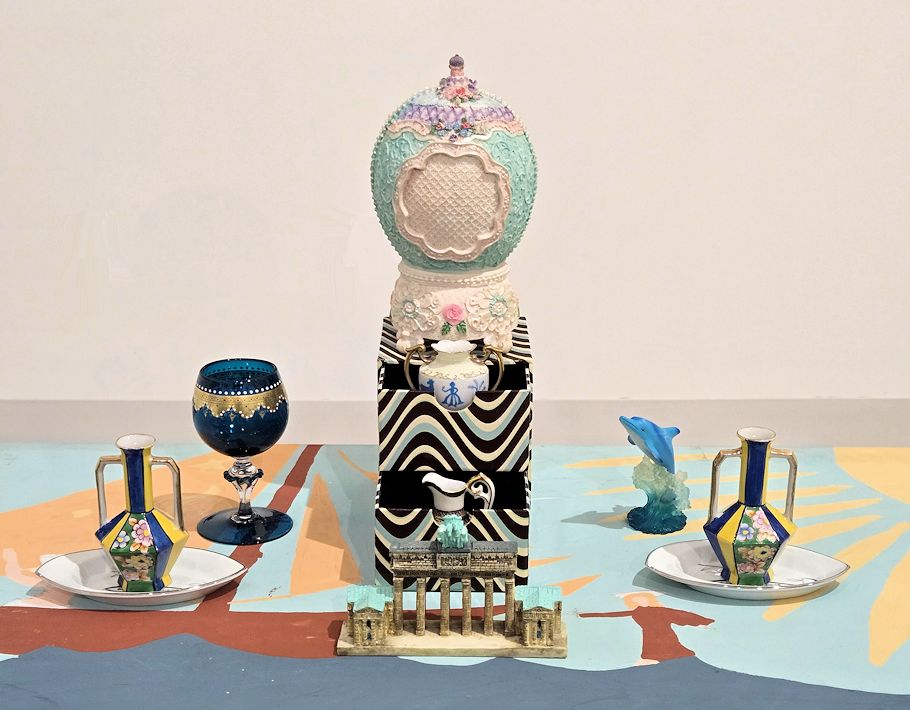
Wolfhilde von Schlittenfahrt Readymade Heirlooms . . . Untitled WvSRH 001
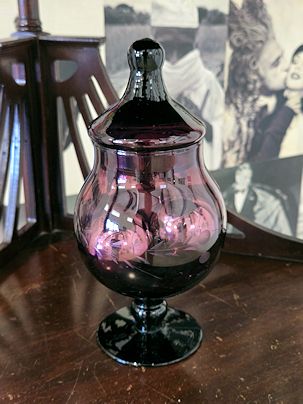 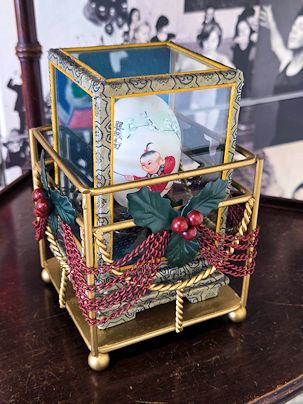 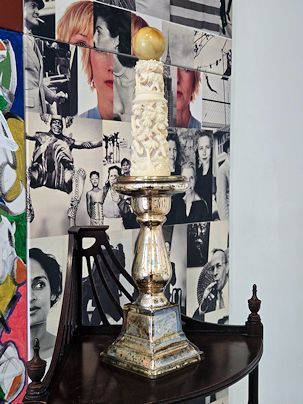
Concoction, Pair of Balls . . . Merry Boxed Egg, Miss . . . What Religion Is This Again?
Today's Tableau
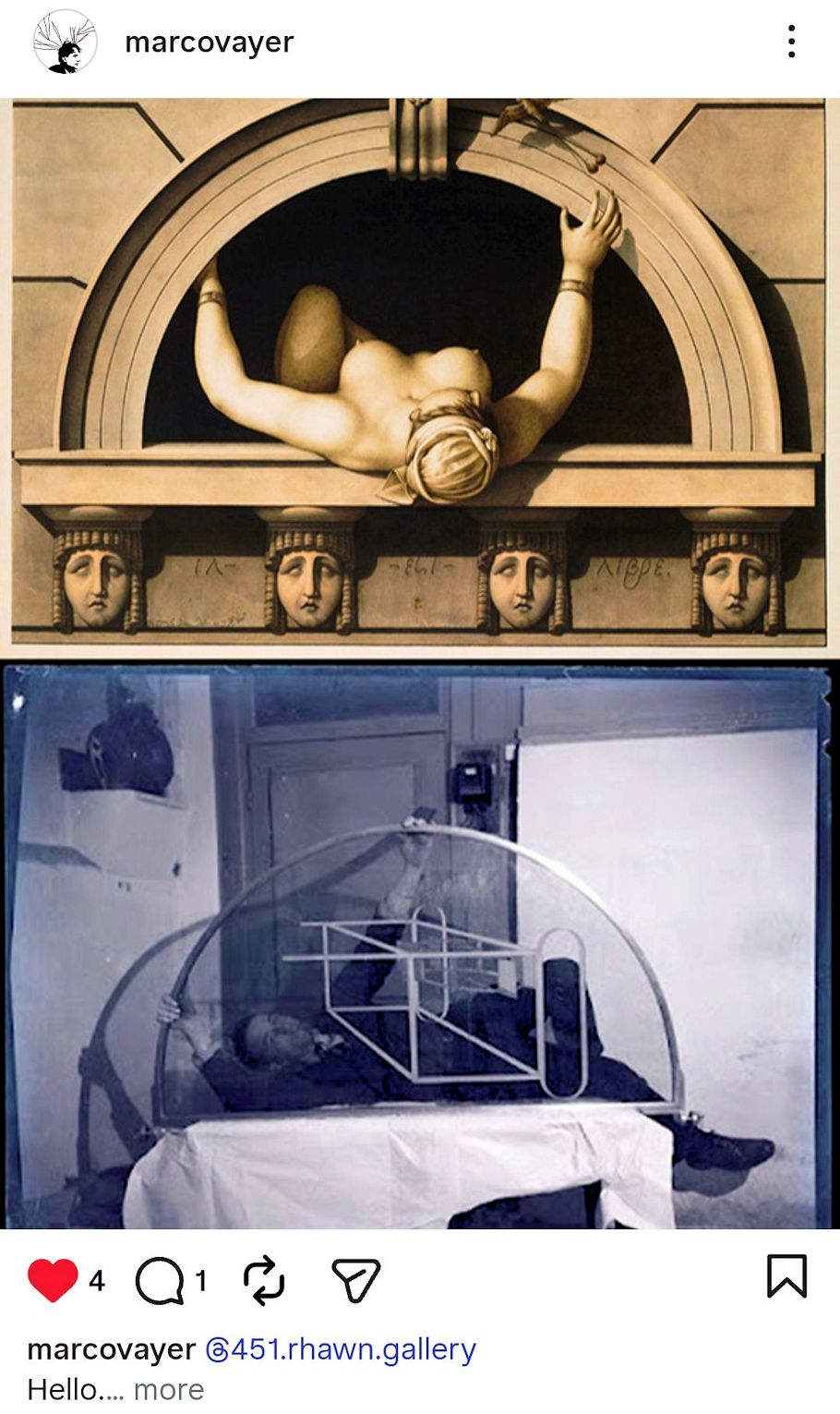
marcovayer @451.rhawn.gallery
Hello.
You know, I think I already wrote to you about this, but Philippe Duboy was one of my teachers at the Nantes School of Fine Arts in 1983. He was the first person to tell me about Marcel Duchamp.
At the time, he was preparing his book on Jean Jacques Lequeu and his intuition that Marcel Duchamp had connected with JJ Lequeu's work while he was a librarian at the Sainte Geneviève library in Paris.
Unfortunately, Duboy's book, which is a very good book on Jean Jacques Lequeu, is a very bad book on Marcel Duchamp.
He suggests that Marcel Duchamp tampered with JJ Lequeu's original documents, but Duboy provides no evidence or seriously referenced indications.
I fear that this possible relationship between Lequeu's work and Duchamp's, as suggested by Duboy, is a “fantasy.”
Nevertheless, there remains Marcel Duchamp's nod to Lequeu with this photograph of the “slide” taken by Man Ray in 1920, which echoes Jean Jacques Lequeu's 1799 drawing entitled “Il est libre” (He is free) (?)
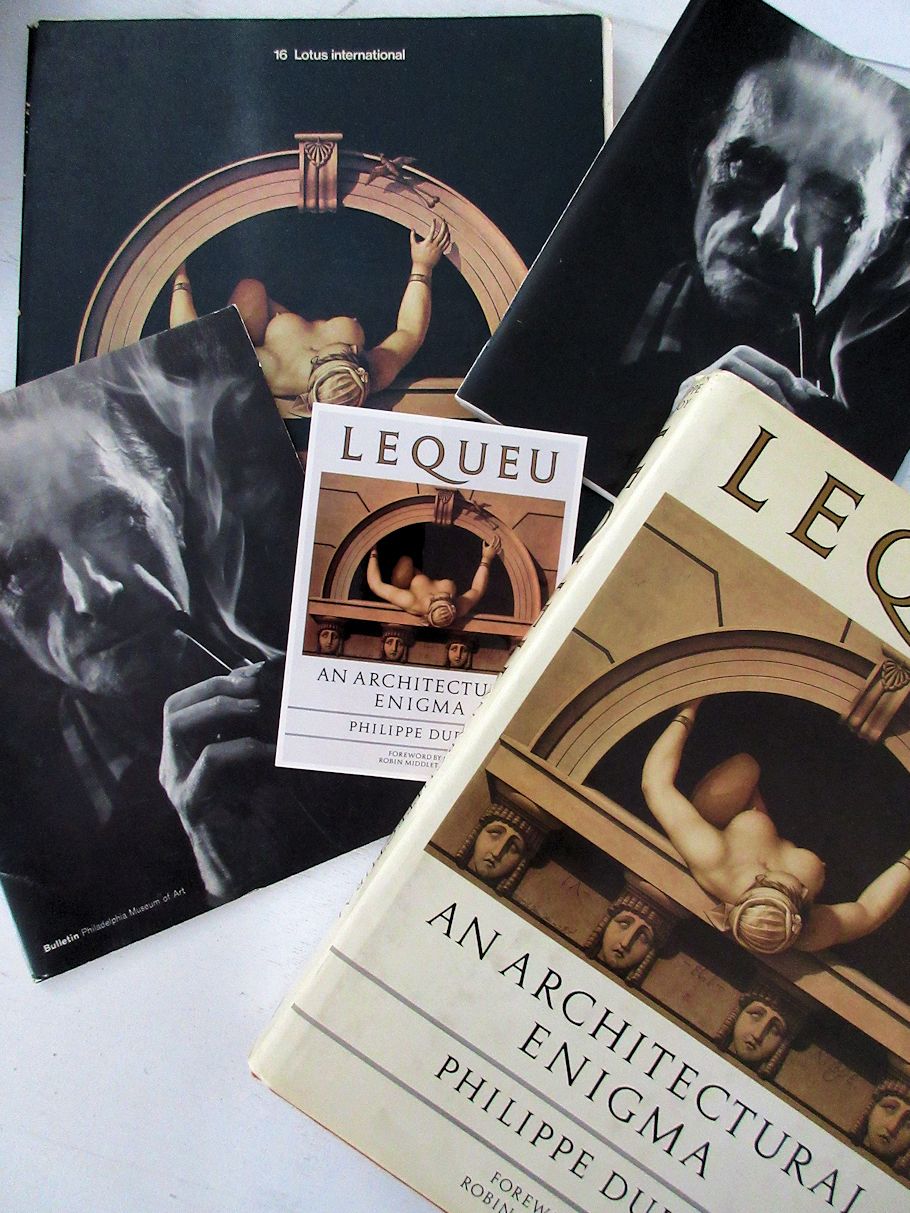
451.rhawn.gallery . . . the greatest value of Duboy's LEQUEU book is its high-grade degree of multivalency, with a particular valence a la mode Duchampian (among others). My introduction to Duchamp occurred at the Philadelphia Museum of Art late spring 1972 (me 16 years old) when, after seeing the LARGE GLASS for the first time and being disappointed that the museum would exhibit a big piece of cracked glass, a tiny (yet ultimately resounding) click was heard in my head upon reading Duchamp's title of the work. My introduction to Duboy vis-a-vis Lequeu was in 3rd year architecture studio early 1979 upon reading LOTUS INTERNATIONAL 16 for the first time--Lequeu's "il est libre" is on the cover. Now, presently, "enigma . . . or knot" is mostly about said multivalency.
451.rhawn.gallery . . . ps . . . soon after reading Duchamp's title for the LARGE GLASS I went into the room in the corner. I looked at the old door which didn't make sense because it didn't go anywhere and the title affixed to this room made even less sense. A few weeks later I again went into the room in the corner, but this time the museum guard noticed my frustration and said I needed to look into the door. "What do you mean?" "There's two holes you can look through." This 1972 advance ultimately led to my 'discovery' of ETANT DONNES's back door sometime 2000 or 2001 and announcing said 'discovery' on the bulletin board at marcelduchamp.net 2002.07.10
-- and I still haven't gotten out of bed yet!
Re: Today's Tableau
2021.02.15
13:27
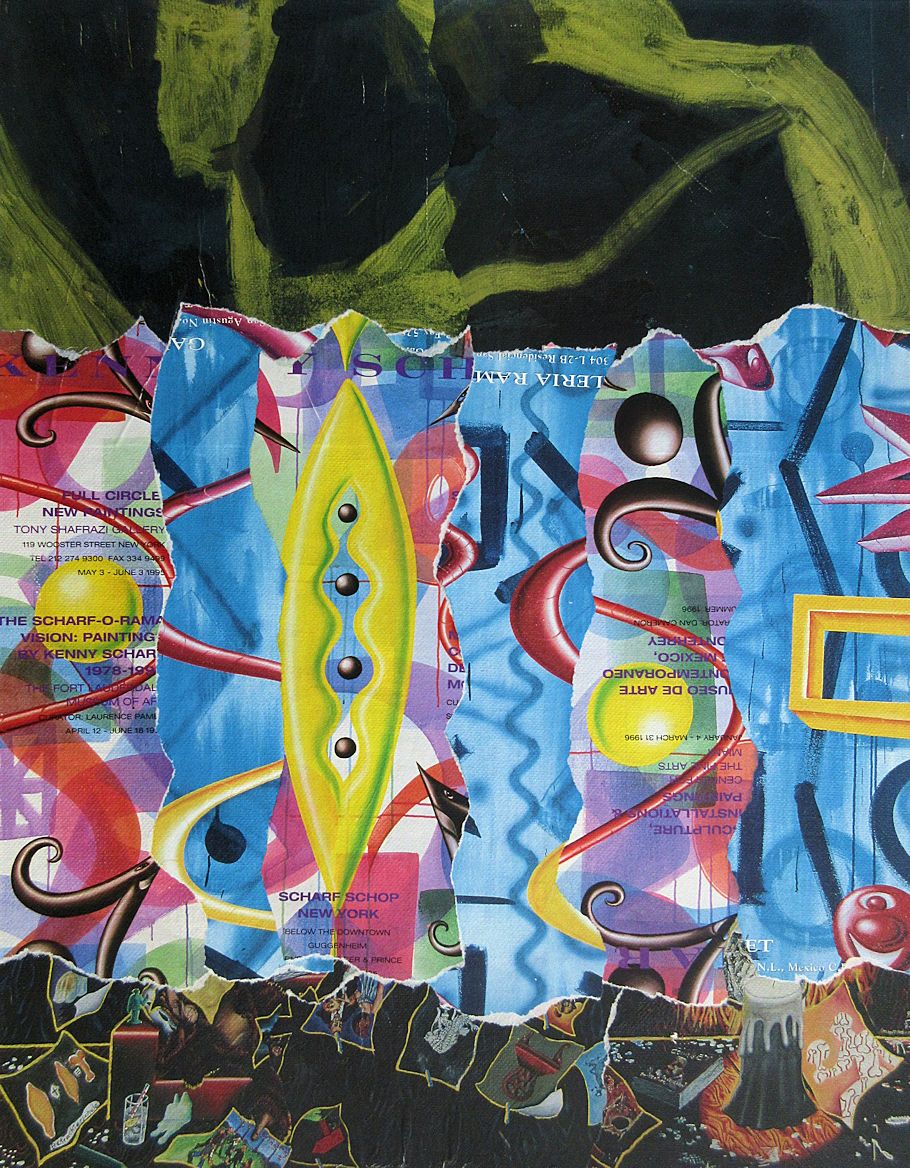
Untitled
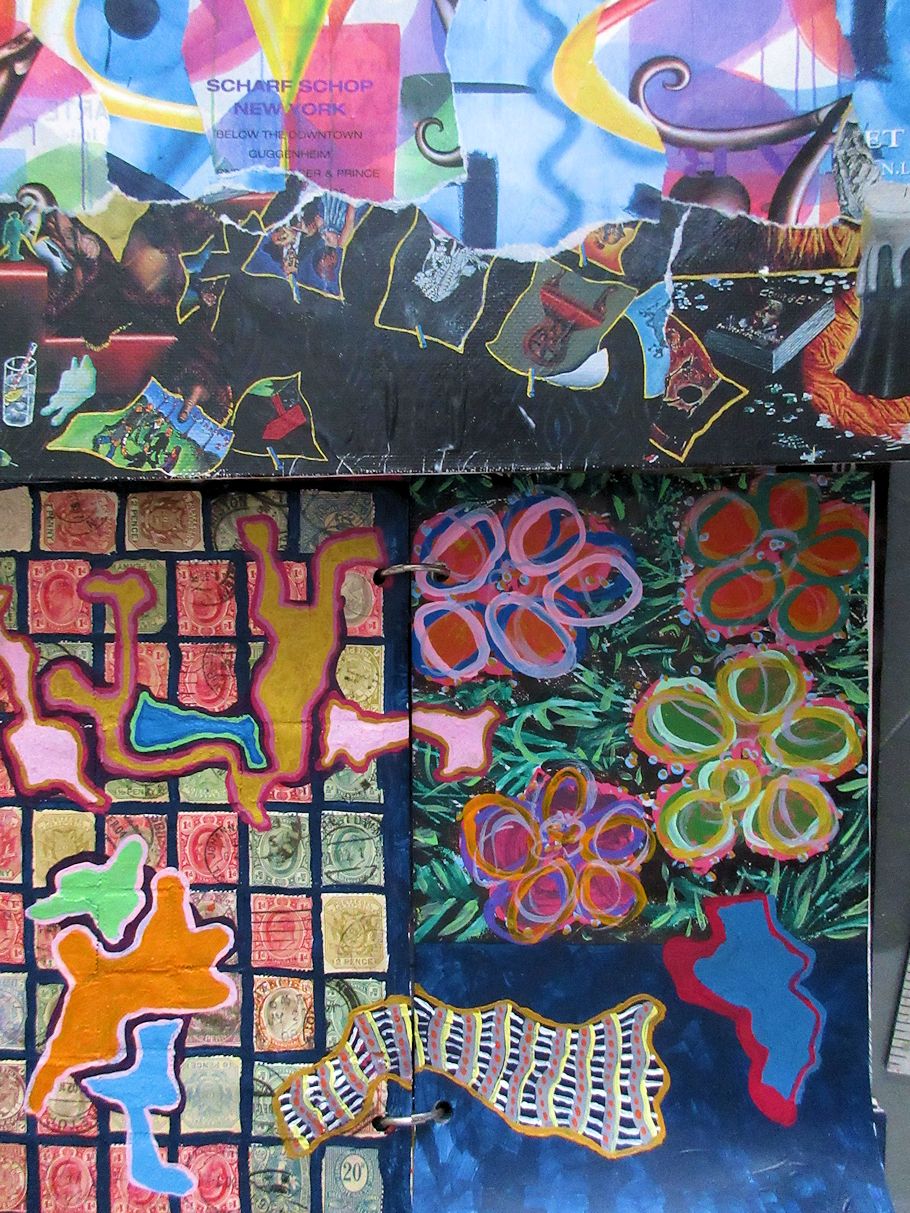
15:48
2013.02.15
What are architects immediately critical of when entering a building?
I'm writing a movie about a sharp-witted, film-analyzing architect who finds a traveling, web-trolling film writer stealing all her design ideas. Working title: She Said She Said.
2003.02.15
Re: bankruptcy exhaustion and closure
What value is there in basing judgment on a supposition (i.e., what will be thought a hundred years from now) that the outcome of which is completely unknown.
Haven't you yourself just based your thinking on a "fluid" boundary? Thus, to use your own qualifications, what you suggest about postmodern art being very potentially mediocre is itself very potentially mediocre.
Everything you just wrote is itself a response to an "unknown value." So, which are you, the true artist or the divine fool? Moreover, isn't an ingenuine pretender the same as a non-pretender, thus the real thing?
some new rules?
chronosomatics 00 : The Timepiece of Humanity 01 : an interpretive method that deals with the interrelationship between chronological or historical sequence and consecutive transverse sections of the human body 02 : a metaphorical link between specific points in time with specific points on or in the human body 03 : a theory whereby the morphology and physiology of the human body is seen as representative of the complete continuum of human existence 04 : the calendar incarnate
The main reason why I don't feel bankrupt, exhausted or closed.
1983.02.15
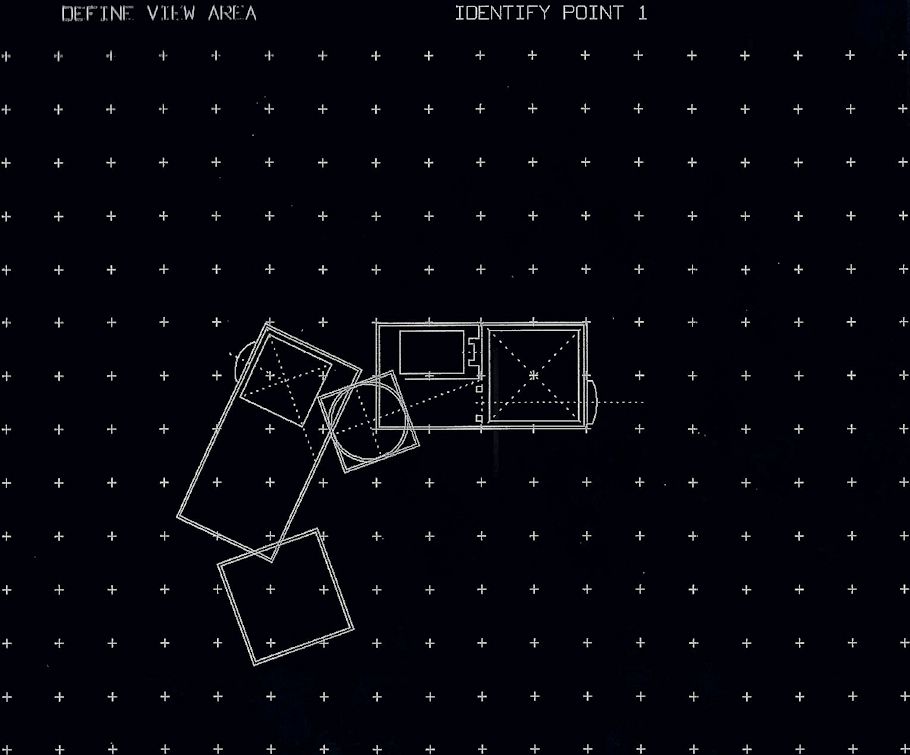
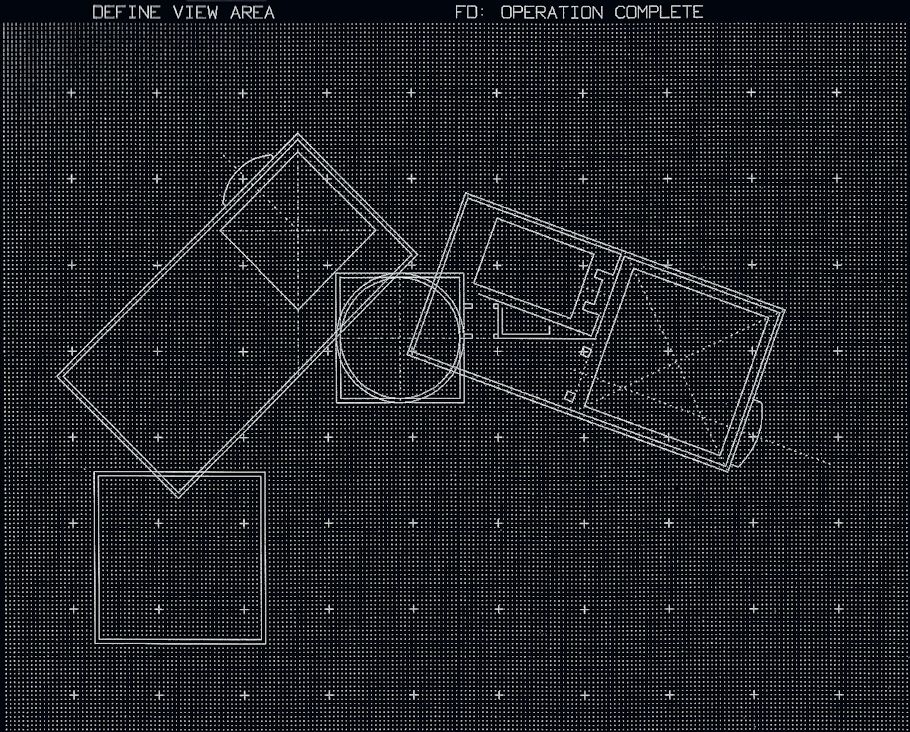
INTERGRAPH training
1963.02.15
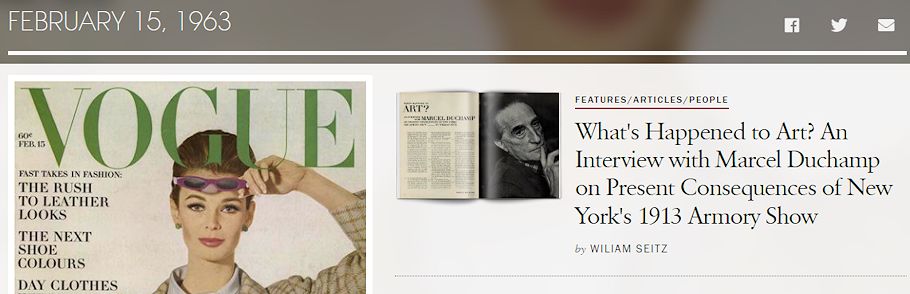 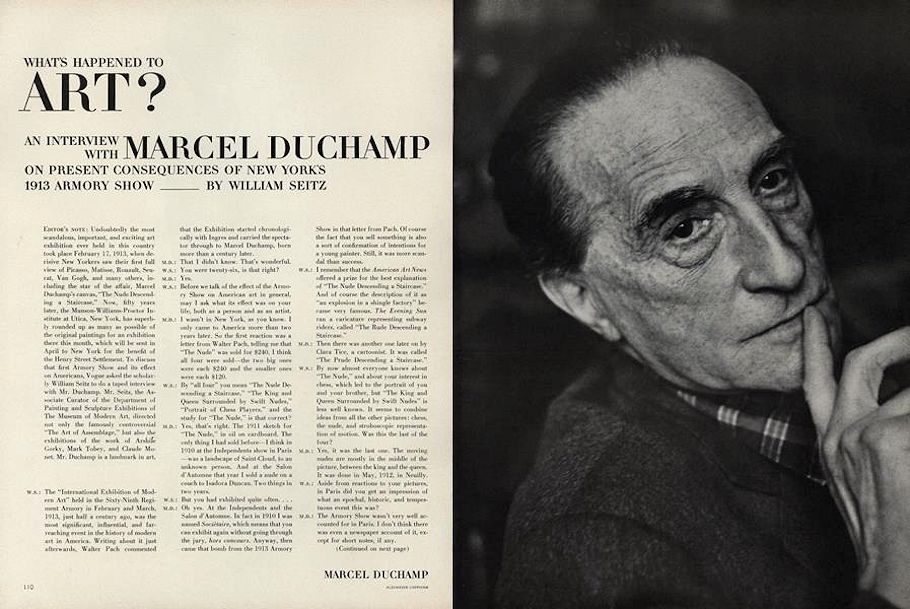
Although the Ephemerides devote a full page transcription of the William Seitz interview of Marcel Duchamp, it is by no means the entire interview. Here is just one example of the Ephemerides omissions:
W.S.: Just since 1950--since the success of the "New York School"--one could cite many instances of works worth five hundred or a thousand dollars that today are worth thirty times that amount. In 1945 none of the avant-garde artists in New York--Arshile Gorky is one example--dreamed their works would ever sell at $10,000 and more.
M.D.: Exactly. It's a post-war phenomenon, decidedly. Between 1946 and now the thing has become a crazy machine of money.
W.S.: In the early thinking about modern art one finds a constant objection to "materialism." Artists spoke in terms of spiritual against material values. Are they fighting against them any longer?
M.D.: No. They accept them--because there is nothing else to do, probably. It's much too strong a courant d'air--a draft that you can not go against or you lose all your vitality.
W.S.: Do you feel there is now a capitulation on the part of the artist to materialism?
M.D.: Yes, it is a capitulation. It seems today that the artist couldn't survive if he didn't swear allegiance to the good old mighty dollar. That shows how far the integration has gone.
W.S.: But even you were greatly helped by a sympathetic and enlightened collector, Walter Arensberg, when you came to this country.
M.D.: Oh yes, but that's a different thing, if you consider that there are thirty-five pieces in the Philadelphia Museum, and that those thirty-five pieces were bought over a period of thirty-five years. I couldn't even live off it, because I remember giving French lessons in New York in '16, '17 and '18. I was very happy to give a few French lessons. It was a form of freedom.
In the case of Arensberg and myself it was a question of $200, $300 each time and no more. I don't think Arensberg ever gave me a check for $1000. I remember he paid the rent for my studio a year or two when I was on Sixty-seventh Street--that was in exchange for "The Large Glass," which I was then working on.
|