2026.08.07
Ein unbekannter Untergrund/Künstler
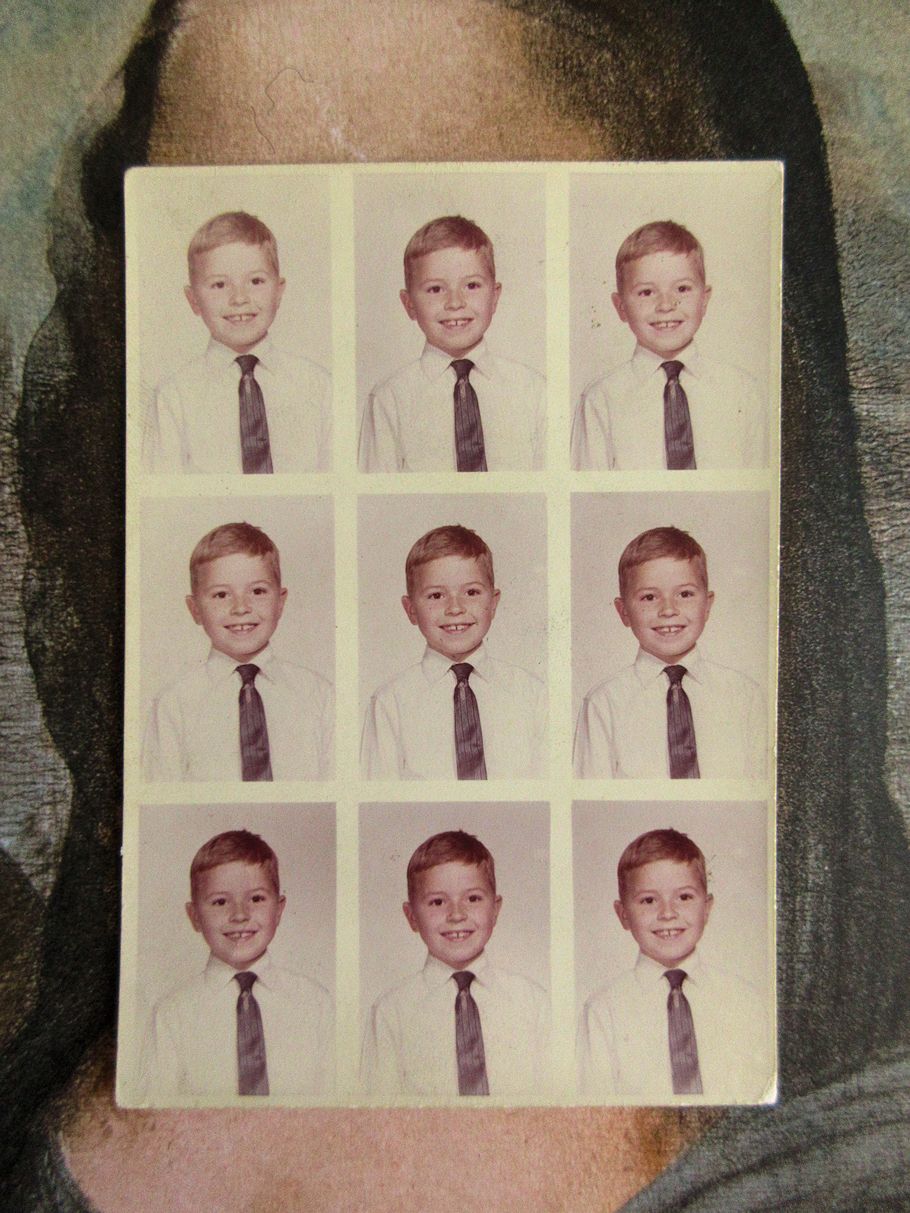
1962 age 6 Stephen Lauf, first grade school portrait, Saint Ambrose Parish School, Philadelphia.
1893 age 6 Thus far there is no record of what Marcel Duchamp did in 1893, but Claude Monet returned to Rouen in the spring of 1893 for his second consecutive winter-into-spring painting campaign. He produced over 30 oil paintings of the Gothic structure, capturing the fleeting transformations of light, atmosphere, and weather. Monet rented spaces directly across from the cathedral. In 1893, he famously worked from the front room of a dressmaker's shop on the second floor of the Bureau des Finances.
2017.08.07
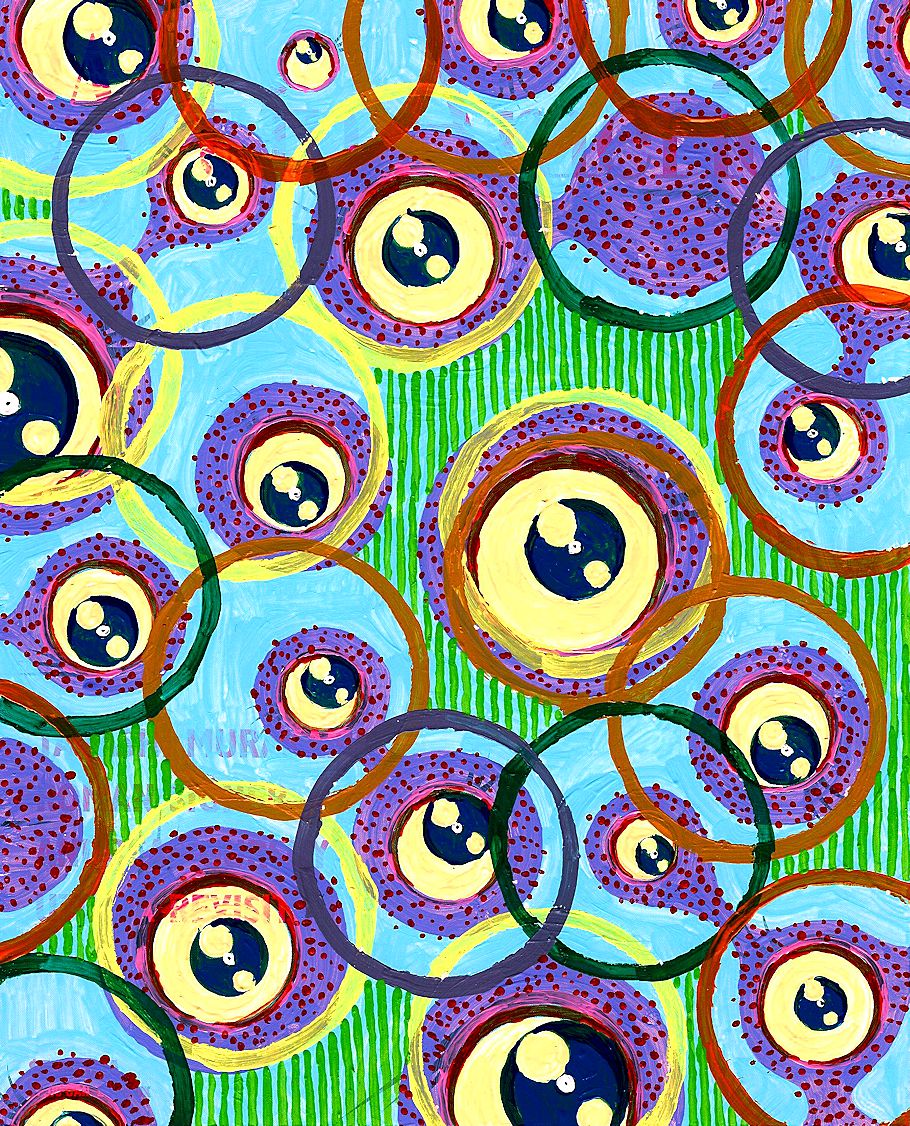
zero seven two
2006.08.07
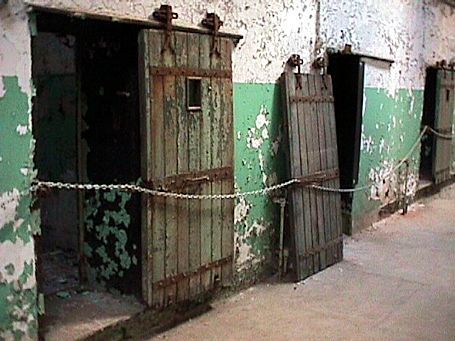
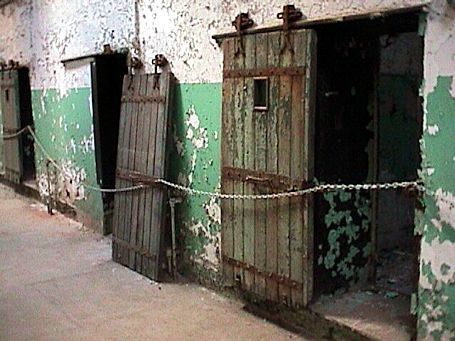
Symmetrical Confinement
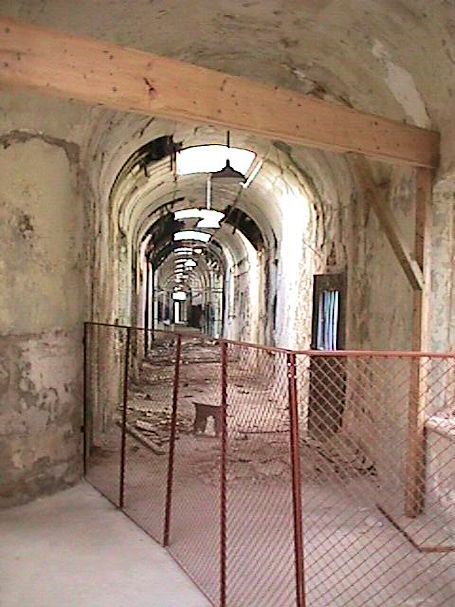 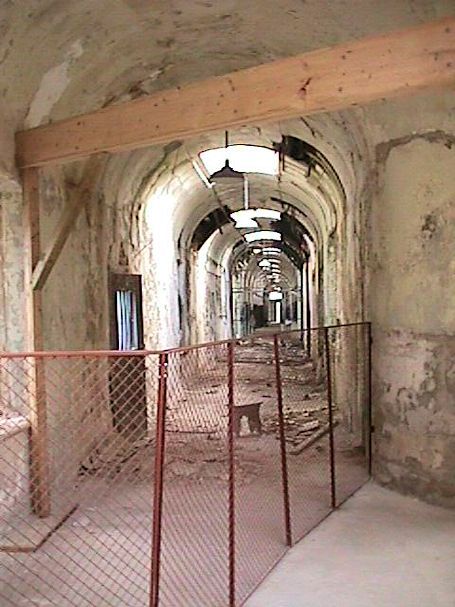
9
16
2005.08.07
"How Did This Happen Revisited"
They all realized something was up when, at LIVE8 Philadelphia, Duchamp was always having these intense conversations with Adam. Marcel and Robert just told eveyone that they were enjoying each other's Philadelphia Museum of Art anecdotes, seeing how the Adam drawing room from Lansdowne House is situated directly above the Duchamp gallery. Well, it all became clear what was going on at the performance of Duchamp's The Lucky Bums 4 August 2005. Marcel had asked Robert to design the sets for the play, and to "Do Vanbrugh."
The Lucky Bums was a smash hit! Now everyone's reading The Good Soldier while remembering Grace, Rainier, Maria and Otto in the title roles. And boy does Marcel know how to strictly adhere to an existing narrative.
As a surprise to everyone, Vanbrugh was the guest of honor at the performance, and, as he liked the play so much, he immediately decided to deliver a paper for the Horace Trumbauer Architecture Fan Club Convention the very next day, hence "How Did This Happen Revisited." Everyone's still amazed by all the disclosures.
archinecters@theEncantadas.sex
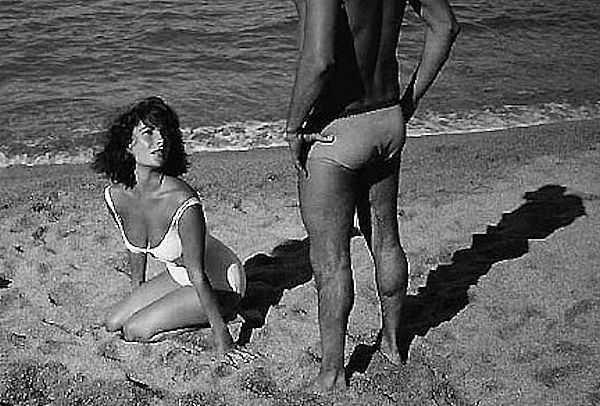
"Why am I suddenly thinking of cucumber slices, caviar and Sociables crackers?"
1945.08.07
1945. Tuesday, Lake George
Before lunch, on the balcony overlooking the lake, Denis de Rougemont asks Duchamp for examples in his Infra-mince category [29.7 .193 7] apart from the one he has seen on the back cover of View [15.3.1945]: "When the tobacco smoke also smells of the mouth which exhales it the two odours are married by infra-mince."
"Indeed, one can hardly give anything but a few examples," replies Duchamp. "It's something that still defies our scientific definitions. I chose on purpose the word mince [thin] which is a human, affective word and not a precise laboratory measure. The noise or music which corduroy trousers make, when one moves," he says, pointing to his own, "pertains to infra-mince. The hollow in paper between the front and the back of a thin sheet... It's a category," Duchamp continues, "which has occupied me a great deal over the last ten years [29.7 .193 7]. I believe that by the infra-mince one can pass from the second to the third dimension. To be studied!"
"Have you noticed," enquires Duchamp a little later, "that I can see you looking, see you seeing, but I cannot hear you listening, nor taste you tasting, and so forth?"
At lunch, de Rougemont remarks how soothing and satisfying the view [2.8.1945] through the pines of the distant mountains is to him.
"No doubt you are long-sighted," says Duchamp. "Wait--an instant-theory which has just occurred to me: the long-sighted are unhappy in the cities because their gaze is constantly blocked against a wall, which creates an inexplicable, physical discomfort. On the contrary, the short-sighted are at home in the cities, but feel lost and sort of dizzy in front of a landscape like this one. To be verified, of course."
Ephemerides
1943.08.07
1943. Saturday, New York City
Stefi and Frederick Kiesler dine at seven with Mary Reynolds and Marcel (at Mary's apartment, 28 West 11th Street?).
Ephemerides
1912.08.07
1912. Wednesday, Munich
It is now little more than five weeks since Duchamp settled into his small rented room at 65 Barerstrasse [1.7.1912] in the heart of Schwabing. He has discovered the cafes where the artists meet, noticed the Picassos in the Odeonsplatz, bought a copy of Kandinsky's book Über das Geistige in der Kunst, insbesondere in der Malerei, which is in all the bookshops, and goes to the Alte Pinakothek every day.
One of the popular arts in this region is Hinterglasbilder (or behind-glass pictures), in which saints and seasons are painted in pure colours, rendered more vivid and luminous by the transparent glass; Duchamp has already made three drawings, the first entitled La Mariée mise à nu par les Célibataires. Subtitled "Mechanics of Modesty, mechanical Modesty", with dart-like movements a central figure is aggressively stripped bare by two others, "like the Christ... " admits Duchamp.
Both the other drawings are entitled Vierge as though, to borrow an expression from the Futurists, Duchamp is asserting that" [his] hands are sufficiently chaste to start everything again". Indeed the next step is a canvas, Le Passage de fa 'Vierge à fa Mariée, which is not "a physiological passage", but "a passage in my life of painting, one after the other--a pun again. A pun in the title, that idea of the titles... The pun is a poetic element like rhyme. A rhyme is a poem."
Literary influence in his work is nothing new but since he saw a performance at the Theatre Antoine of Impressions d'Afrique [10.6.1912], Duchamp has fallen under the spell of Raymond Roussel. The play has given him "the general approach" to Roussel's unique method of writing. Applying to pictorial art this process of "juxtalinear translation" (as he describes the formula of homophone in which two words or phrases sounding the same but with different meanings determine the narration), Duchamp realizes that he can kick over the traces and create something entirely new.
To his grandmother Marie Nicolle, Duchamp writes: "Life here very agreeable, but am missing the intimacy of Neuilly." He posts the card, representing Schloss Nymphenburg, which "has the pretension to recall Versailles" [26.4.1910] at the post office nearby on the corner of Nordendstrasse and Adalbertstrasse.
Ephemerides
|