2026.01.29 / 1960.01.29
Bamberger's Window Display
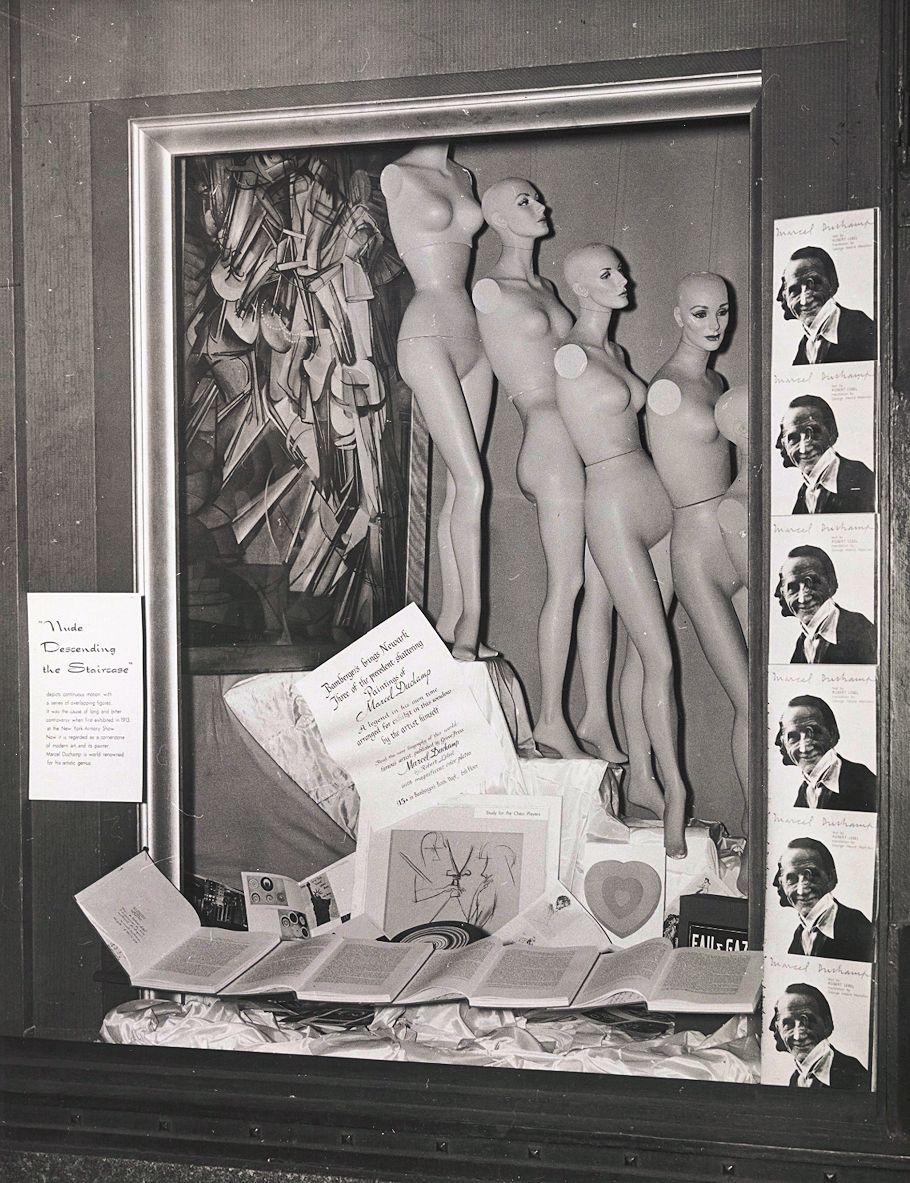
Marcel Duchamp Bamberger's Window Display Alexina and Marcel Duchamp Papers Philadelphia Art Museum
Bamberger's Window Display is not included within Arturo Schwarz's The Complete Works of Marcel Duchamp, revised and expanded paperback edition published 2000.
Apparently, Bamberger's Window Display was first written about and illustrated within Jennifer Gough-Cooper and Jacques Caumont's Marcel Duchamp: Work and Life/Ephemerides on and About Marcel Duchamp and Rrose Selavy 1887-1968 (1993).
Unless I am mistaken, the best essay of Bamberger's Window Display and the story behind it is Hellmut Wohl's "Duchamp in Newark" in The Burlington Magazine (Jan., 2003):
On 29th January 1960 Marcel Duchamp installed a display in a shop window of Bamberger's department store in Newark, New Jersey. ... "That day, M. Duchamp and I took the Pennsylvania Railroad to Newark station, a taxicab to the store, and went directly to the prop department. I remember Duchamp asking for four female mannequines, three boxes of different height to form a stair, and a phonograph turntable. When asked what color the wigs should be, his eyes began to dance. He said, 'No wigs, thank you.' When asked what angle for the arms, he answered, 'No arms thank you.' When asked what kind of clothes, he answered, 'No clothes thank you.' He set about directing an angled placement of the painting, the mannequins on the stairs to be set at 90 degrees to the picture, and unwrapped a roto relief (a series of his graphic disks in a frame) which he put on the working turntable, sending spirals of color up and down in front of one's eye. It was all dazzling.
After conferring with the marketing people at the store, Duchamp and I got back on the Pennsylvania Railroad with a muffin and a Coke, looking forward to some good press and good book sales, But we never expected what did happen. Two days later, I received a call from my contact at Bamberger's, reporting that this great artistic effort was backfiring on the store: the naked mannequins had outraged the populace of Newark, and the window had to go.
The next day, we boarded the train once again, taxied to the store and returned to the prop department. We all went into the window to dismantle it. He and I took several of the books and the roto relief back onto the train and into the Pennsylvania station. On the way home, an extraordinarily charming M. Duchamp offered me the roto relief as consolation for the failed effort." --Letter from Phyllis Bellows Wender to Hellmut Wohl, 17th March 2002.
I wonder if there will be a reenactment of this short-lived tableau in the forthcoming Marcel Duchamp exhibitions at the Museum of Modern Art and the Philadelphia Art Museum later this year.
2025.01.29
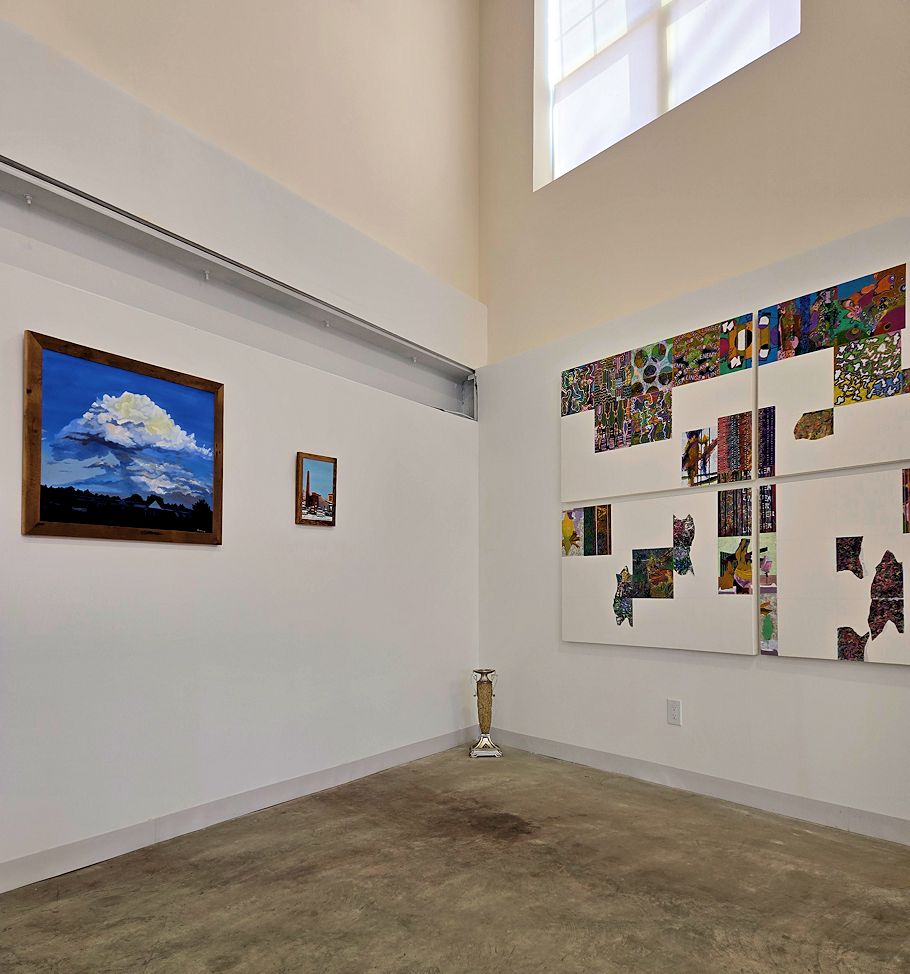
451 Rhawn Gallery
2024.01.29
14:22
16:02
2017.01.29
10:37
2008.01.29
who wants to poche?
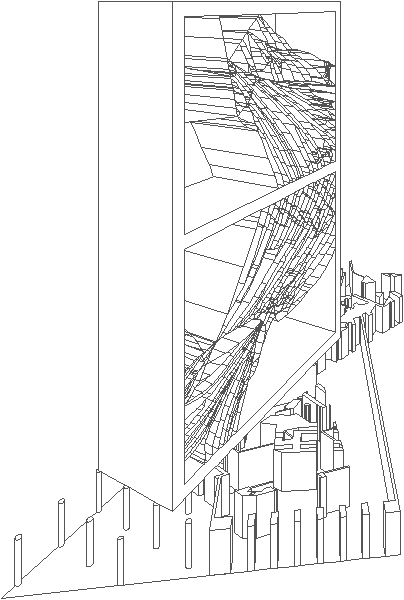
...(sideways extruded) condo for readymade artists atop (upward extruded) Calder Museum that ain't happening
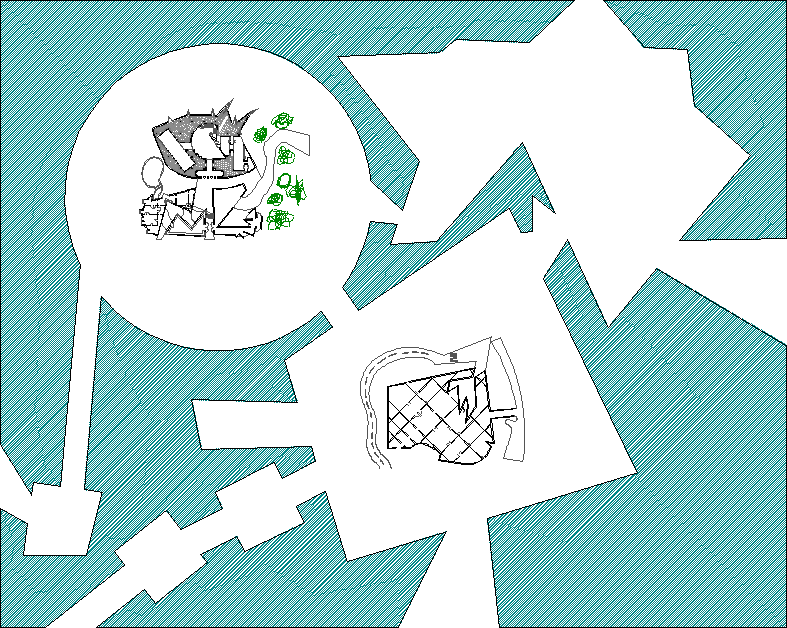
Suburban Poché
2007.01.29
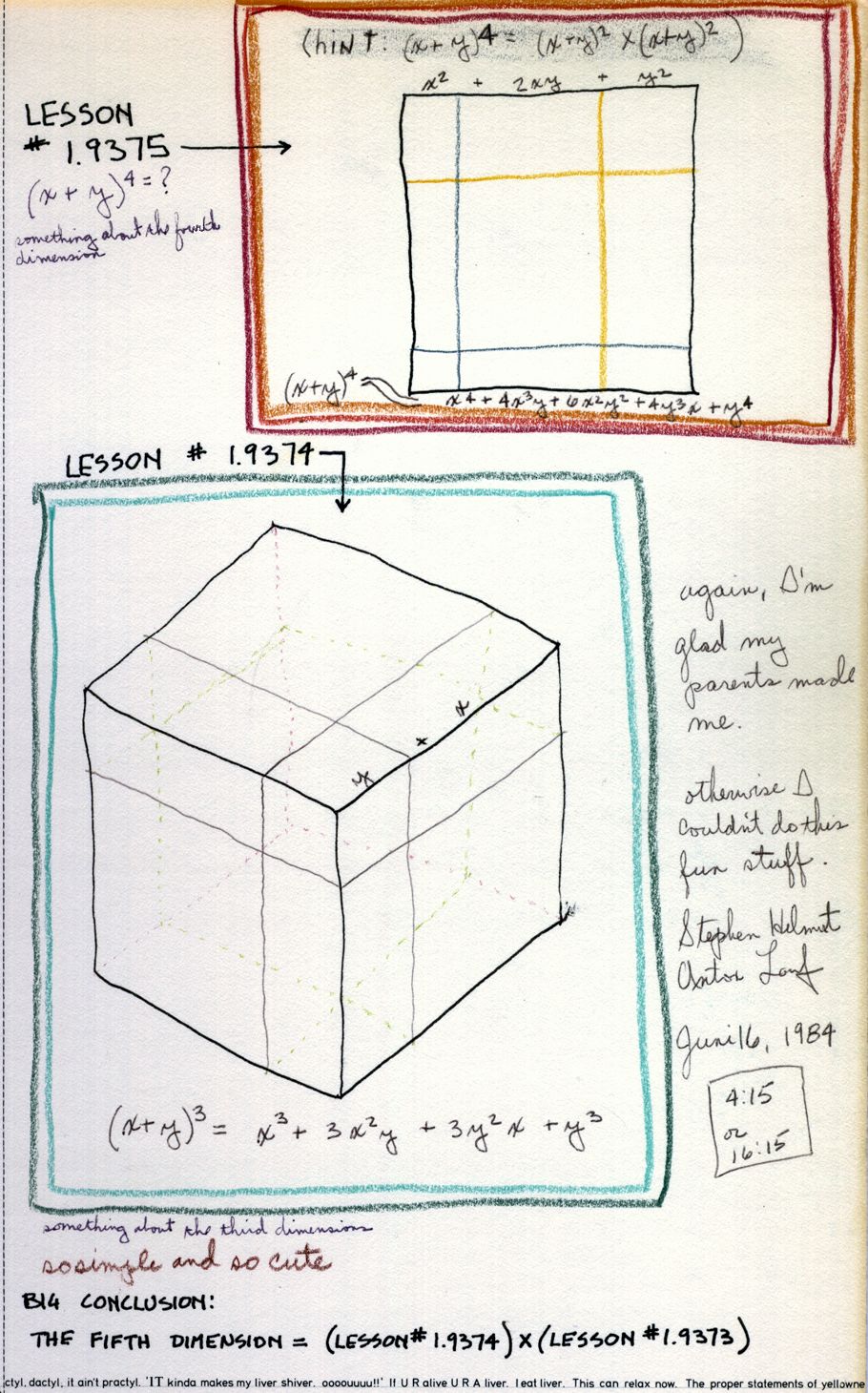
if you can draw...
sperm + egg = ego
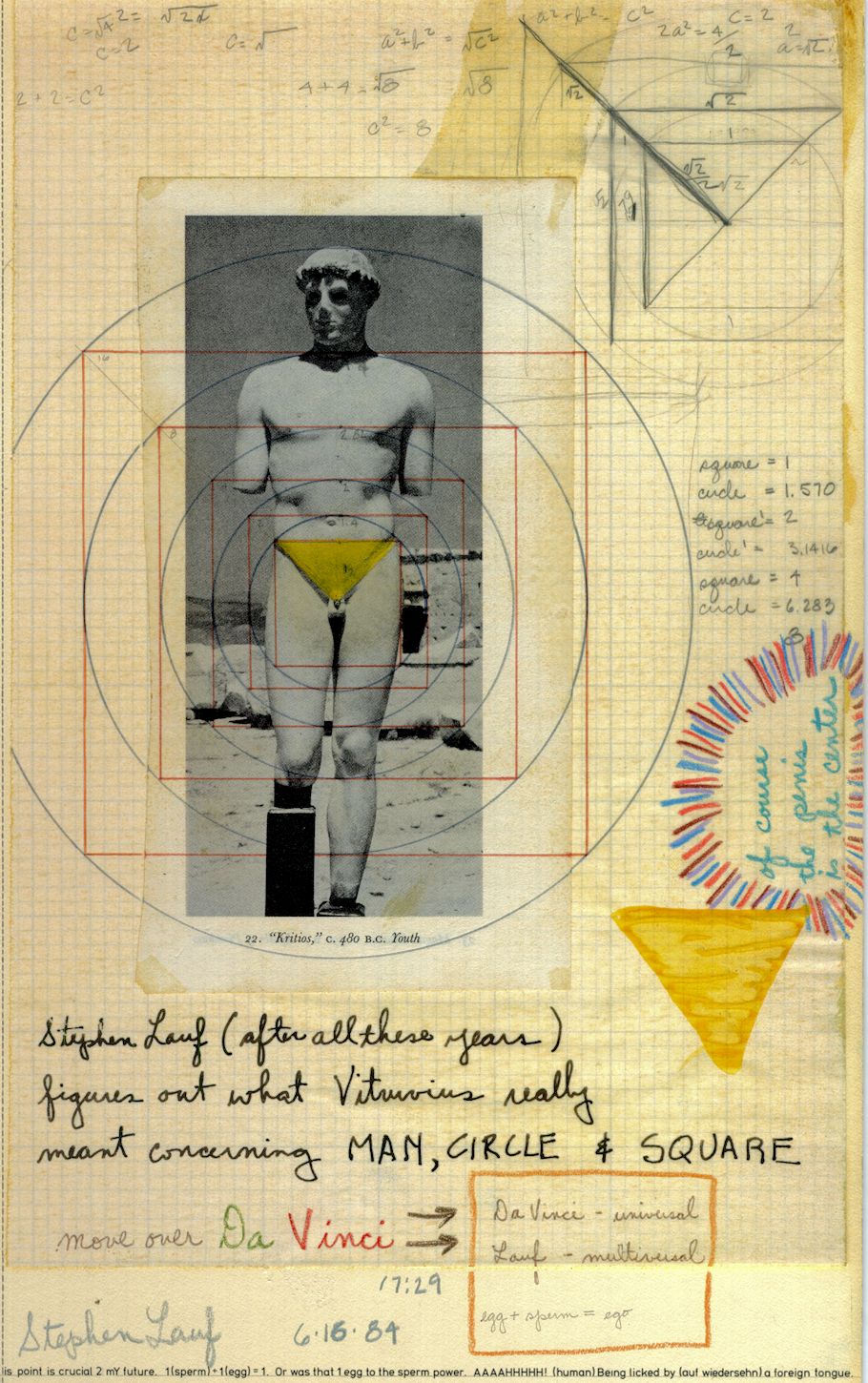
if you can draw...
2 = odd, DICK
2003.01.29
Re: Matthew Barney in the New Yorker
going to pieces
Bombastic Piece No. 3
the author stripped bare by his bachelors, even
Bombastic Piece No. 4
tender Bjork chops
I was on Iceland twice before Bjork.
She was born exactly 31 years before Quondam, however.
2001.01.29
munus
It is becoming more and more clear that Piranesi was well aware of Tertullian's De Spectaculis text, and indeed utilized it while planning out the Ichnographia Campus Martius. First it was the passage regarding the Equiria, and now there are passages regarding "munus", a death rite, where death games accompanied the funeral day. It is this new knowledge that explains the two circuses within the Bustum Hadriani.
1992.01.29
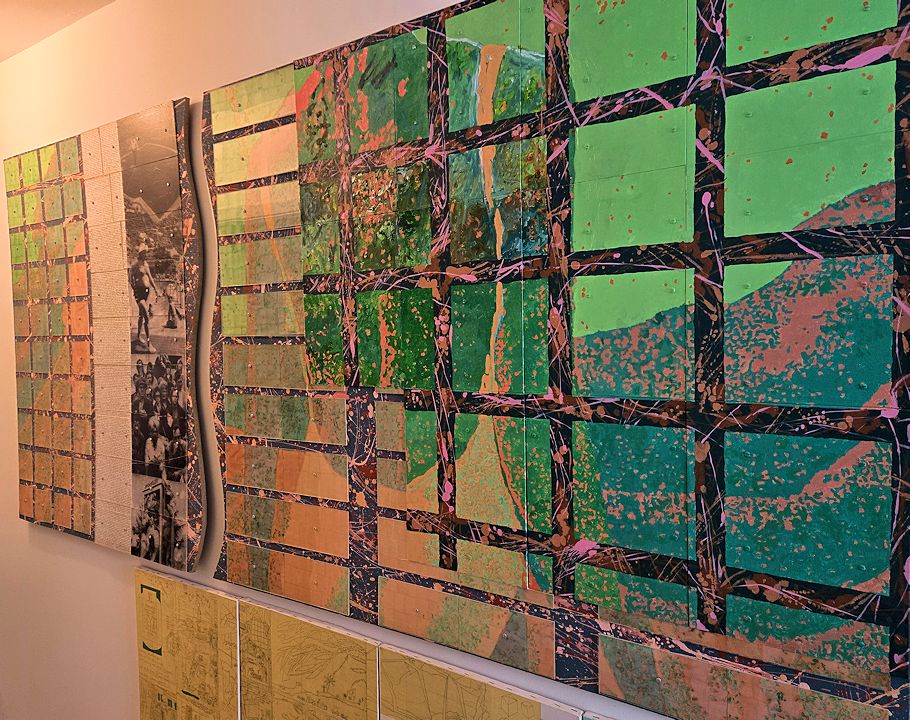
(so-called) Birth of Venus in a Dream 4
1985.01.29

detail of The Final/Unfinished Dick Manifesto
1967.01.29
1967. Sunday, New York City
On learning from Dorival that the Philadelphia Museum of Art has accepted to lend seven of his works to Paris but has refused Rouen [13.1.1967], Duchamp writes to Dr. Evan Turner to ask him whether he might reconsider his decision. "My point is that Rouen is as important as Paris under the circumstances," explains Duchamp. "as you know Rouen is my home town and the municipality is having a festival in honour of the four Duchamps. For the occasion they are also naming two streets after Jacques Villon and Raymond Duchamp-Villon [25.1.1967]."
Duchamp also points out that the painting would be away no more than three months, even with the two shows. and adds: "The museum in Rouen was built around 1880 and is a stone building of the type of architecture which offers all the guarantees of safety."
Ephemerides
1966.01.29
1966. Saturday, New York City
In response to a request from Mlle Olga Popovitch, curator of the Musée des Beaux-Arts in Rouen, who wishes to organize an exhibition of the three Duchamp brothers, Duchamp explains that, due to a clause in the deed of gift it is impossible for items from the Arensberg Collection to be away from Philadelphia for more that four months at a time. Therefore, the works which are to be lent in the exhibition taking place in June at the Tate Gallery will have to return across the Atlantic, and another show will have to be mounted at a later date.
"During my visit to France in the spring, I could visit you in Rouen to discuss all the details of this difficult enterprise," Duchamp proposes. "I would also like to ask you," he continues, "if you would accept the gift to the museum of Rouen of a certain number of paintings, watercolours, drawings, by my sister Suzanne Duchamp-Crotti?"
Ephemerides
1960.01.29
1960. Friday, Newark
At Bamberger's store, Duchamp finishes the installation which will remain in situ for a fortnight to publicize Lebel's book [6.11.1959]. A giant frame almost fills one of the display windows and behind it, Duchamp places Nu descendant un Escalier No.3 [29.4.1919] on a draped stand so that it appears in the upper left hand corner of the frame. Five naked articulated shop mannequins with neither wigs nor arms step gracefully one behind the other from the edge of the picture down several steps. The drawing, Portrait de Joueurs d'Echecs [17.12.1959] (the second of the two works of art lent by the Philadelphia Museum of Art [17.12.1959]) is placed centrally at the foot of the frame with an illustration of Cœurs Volants [16.8.1938] and Eau et Gaz à tous les Etages [[6.4.1959] to the right. In front of the frame several copies of Marcel Duchamp by Lebel are laid open and six copies of the dust-jacket illustrated with the double-exposure portrait photograph by Victor Obsatz are placed in a vertical column to the right of the frame.
While he is working, Duchamp notices a small crack in the glass at one of the corners of the Nude's frame.
Ephemerides
1954.01.29
1954. Friday, New York City
Duchamp recieves a telegram from Elizabeth Wrigley in Hollywood announcing the death of Walter Arensberg from a heart attack. He was seventy-five.
Neither Louise (who died on 25 November) nor Walter lived to see their collection, their life's work (which was donated on 27 December 1950), installed in the new galleries being built for it at the Philadelphia Museum of Art. The number of works by Duchamp, which the Arensbergs began to acquire soon after Walter Pach brought the young Frenchman to their apartment on 15 June 1915, became not only the largest but the most representative group of his work held anywhere.
Although they met regularly in New York until Duchamp went to Buenos Aires [14.8.1918], in 1921 the Arensbergs settled in California [15.11.1921] and, when he had ceased work on the Large Glass [5.2.1923], Duchamp returned to France.
Nevertheless, they corresponded and Duchamp assisted them with acquisitions proposing his own works when the occasion presented itself. In the summer of 1936 Duchamp had the opportunity to visit his friends in Hollywood [6.8.1936]; he went again to California [17.4.1949] a few months before the Arensberg Collection was shown at the Art Institute of Chicago [19.10.1949], and he joined them for a day or two in Chicago, when they traveled to see the exhibition and discuss giving their collection to the museum [12.12.1949].
A trusted friend, Duchamp represented the Arensbergs on a number of occasions, helping to negotiate satisfactory terms for the gift of the collection. Duchamp was even sent to Hollywood by the Metropolitan Museum for a long weekend [25.4.1950] which was the last time he saw them.
Ephemerides
|