2026.02.07
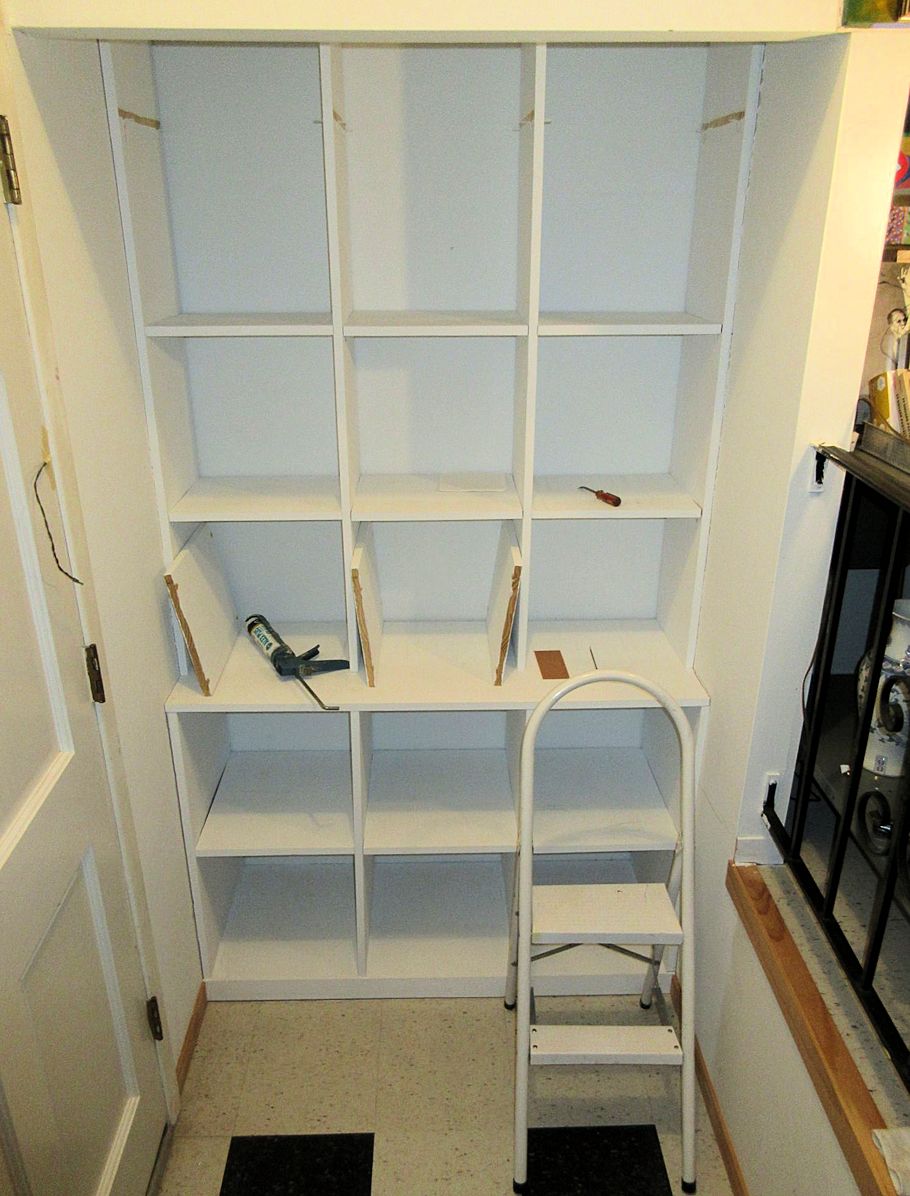
pretty much all fixed . . . I hope
another question for google/IQ
Q:
What is a concise explanation of Marcel Duchamp's notion of the infrathin?
A:
Marcel Duchamp’s notion of the infrathin (inframince) refers to the barely perceptible, minute interval or "gap" between two nearly identical states, objects, or moments. It represents a liminal, sensory reality that exists right at the edge of comprehension--too subtle to be measured, only felt or imagined.
Here are the key aspects of the concept:
Core Characteristics
Impossible to Define, Only Exemplified: Duchamp insisted it could not be logically defined, only understood through examples.
The "Same" but Different: It highlights the difference between things that seem identical, such as two items from the same mold.
Liminal States: It covers transitions, shadows, reflections, and temporal delays.
Famous Examples by Duchamp
To grasp the concept, Duchamp offered these iconic scenarios:
"The warmth of a seat which has just been left".
The gap between the sound of a gun firing and the appearance of the bullet hole.
When tobacco smoke still smells of the mouth that exhales it.
The sound of velvet trousers brushing together while walking.
In essence, the infrathin is the "aura of something that was"--the slippery, intangible space between presence and absence.
2025.02.07
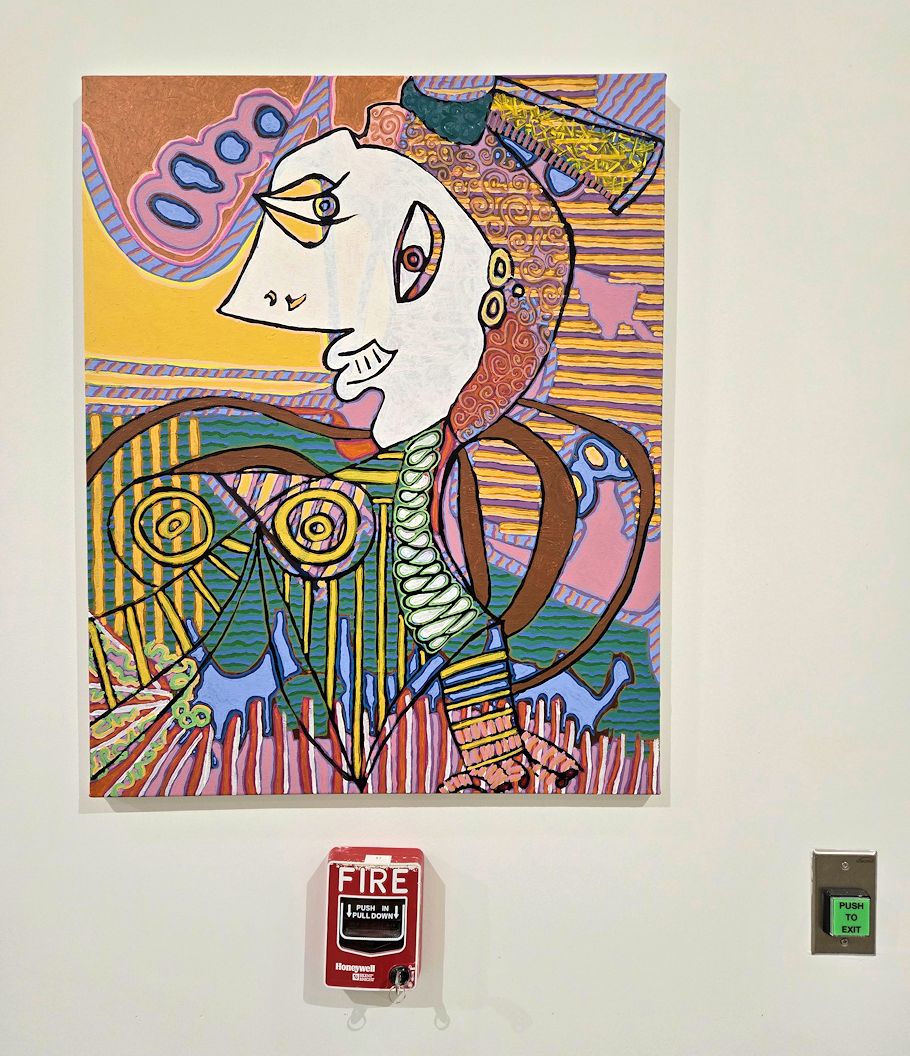
451 Rhawn Gallery
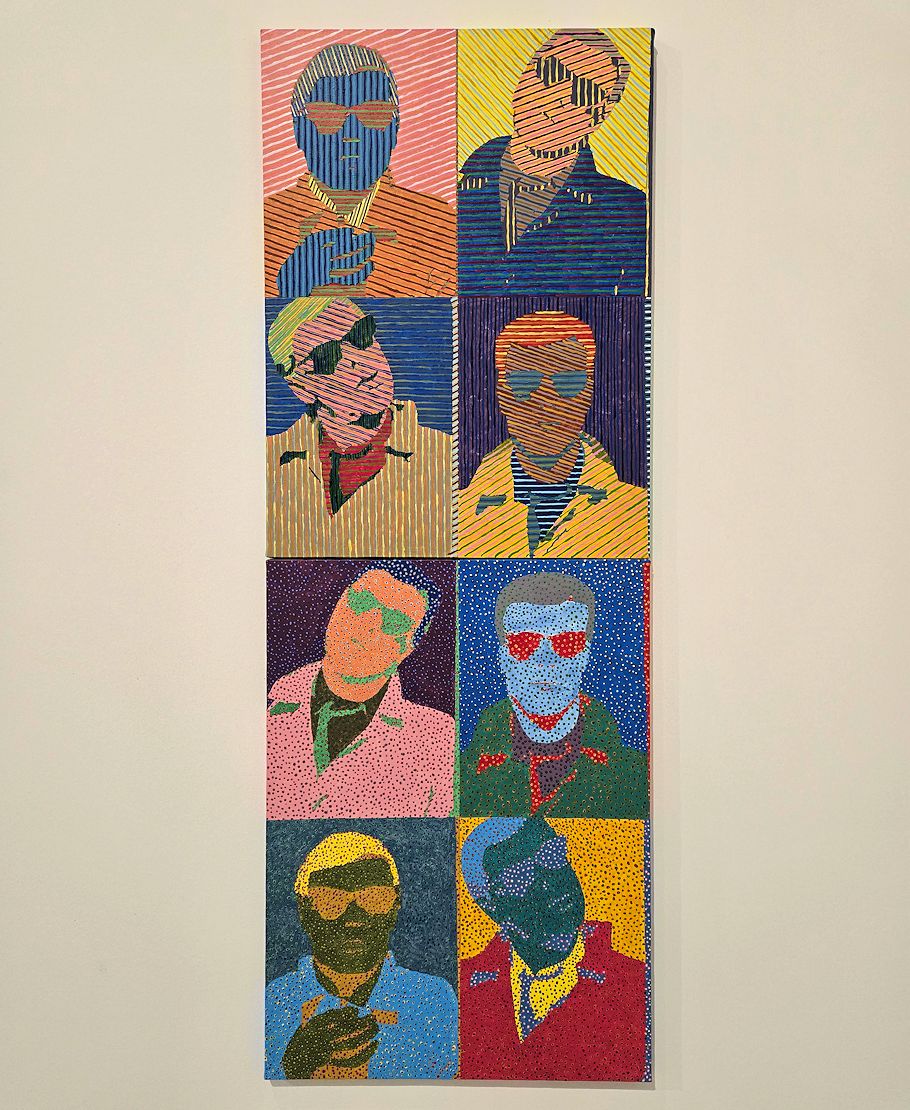
451 Rhawn Gallery
2024.02.07

Electric Car Caught on Fire
2019.02.07
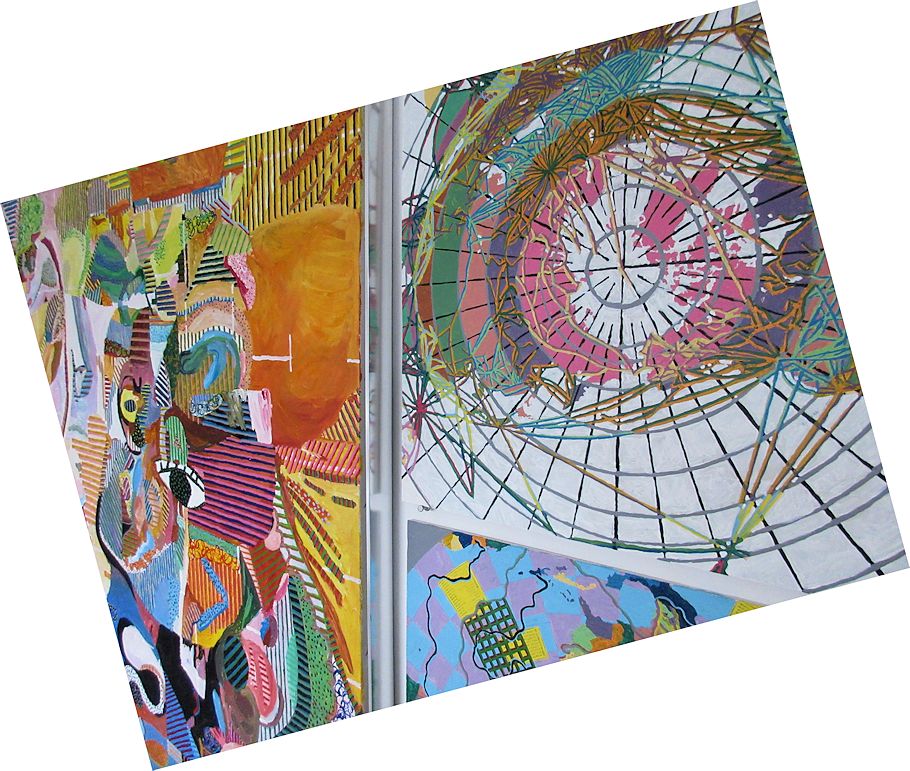
Untitled
2005.02.07
Re: thanks everyone
I'm not entirely sure, but I think the guard said it was Susan Sonnabend that fell over at the opening and cracked the large top glass pane of La Va's work at the top of the stairs (were the bar was). Anyway, whoever it was, she was wearing a big fur coat, thus uninjured.
Kiki Smith was there Saturday, and two (unsigned) from Artforum were there Friday evening.
You gotta love these artists that started in architecture.
Is it now time for hacking and cracking Louise Nevelson?
"The clues are what you're left with."
2003.02.07
Re: WTC Proposals
Wonder if any curators out there know where to find early 21st century religious art.
Re: You gotta keep makin' the art...
Weightlessness is more like it.
How do you say return from planetary orbit in German?
[Bombastic Piece No. 7]
1960.02.07
1960. Sunday, New York City
Cables Marceau announcing the time of his arrival in Philadelphia on Monday.
Ephemerides
1966.02.07
1966. Monday, New York City
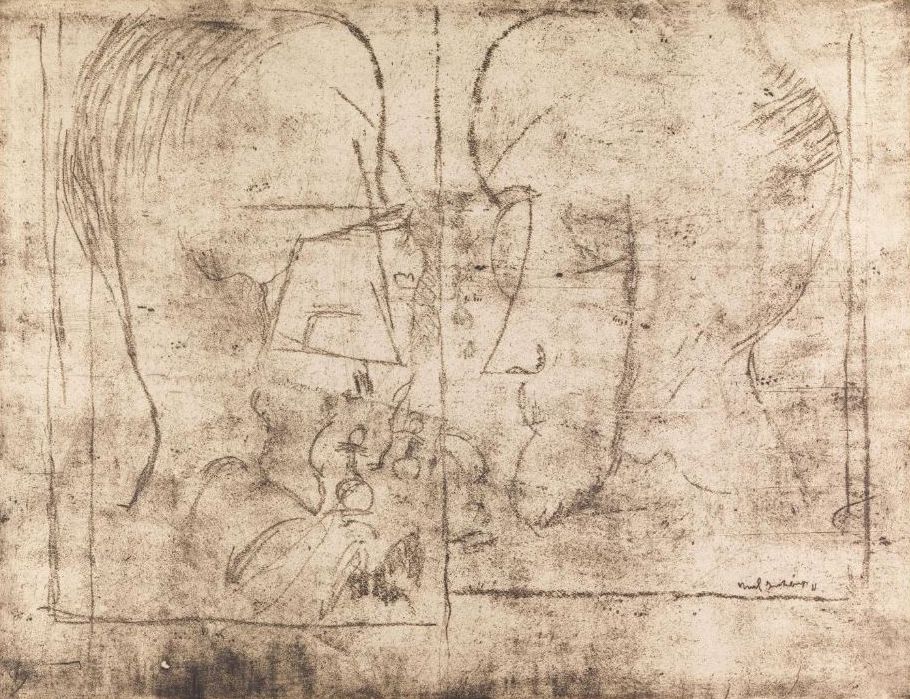
A star-studded list of more than forty artists have agreed to participate in "Hommage à Caïssa", an exhibition held at Cordier & Ekstrom for the benefit of the Marcel Duchamp Fund [18.5.1961] of the American Chess Foundation. In gratitude for the donations, Duchamp gives each artist a copy of Les Joueurs d'Echecs [11.5.1965], an etching he made specially in Paris at Stanley Hayter's studio.
On the roof of 978 Madison Avenue above the gallery, David Hare has devised an airborn sculpture of chesspieces and balloons which, to the surprise of the guests, explode one by one. Among the works of art exhibited in the gallery itself are the beautiful chess sets made by Max Ernst and Man Ray, and one by Salvador Dali in which fingers have become the chessmen. At the opening Duchamp plays chess with Dali.
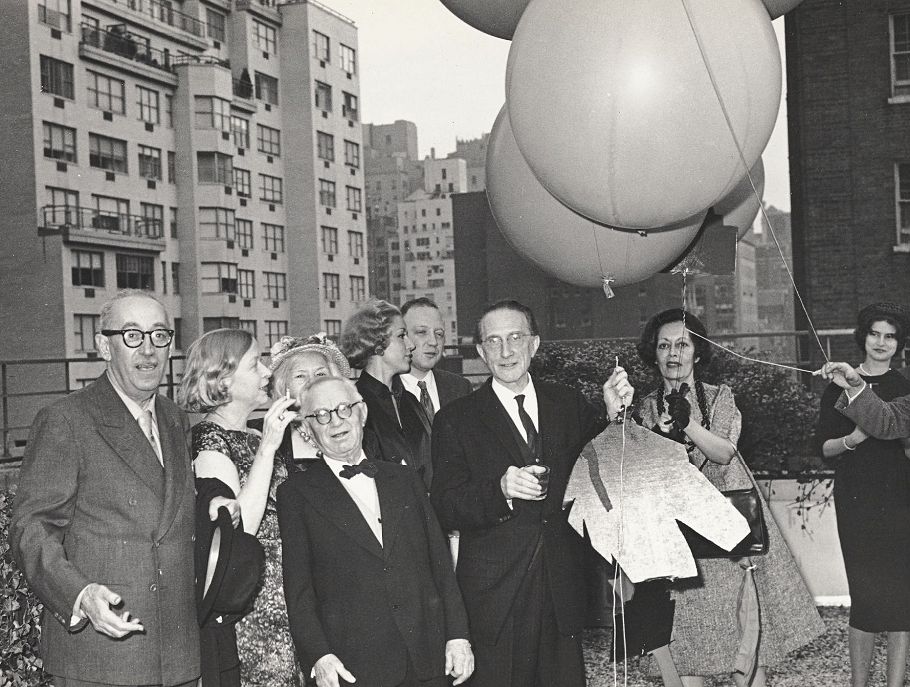
Marcel Duchamp holding on to some of David Hare's Gambit, conceptual kinetic chessmen sculptures in flight.
While Niki Ekstrom has invited top model Benedetta Barzini, who is wearing a long sleeveless, tiger-patterned dress, Andy Warhol has brought Velvet Underground to the opening.
"Andy's coming to the show was like a guerrilla attack," comments Nat Finkelstein, who was at the gallery to take photographs while Warhol filmed Duchamp. "So these people who were with Duchamp acted like defenders. who made sure that none of us would run over and bite him in the ankle..." Marcel let Warhol "arrange" him here and there with an amused smile.
Ephemerides
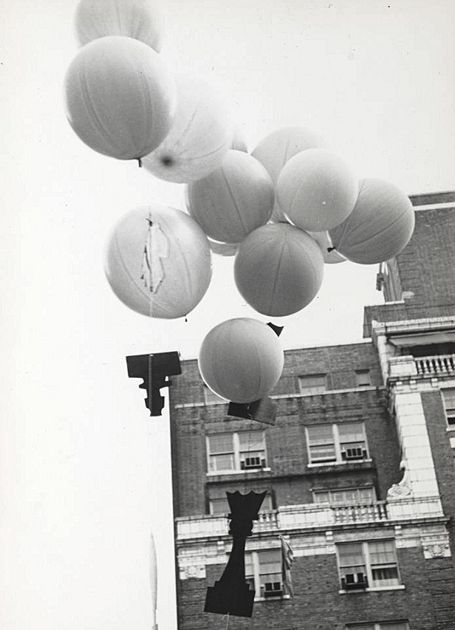 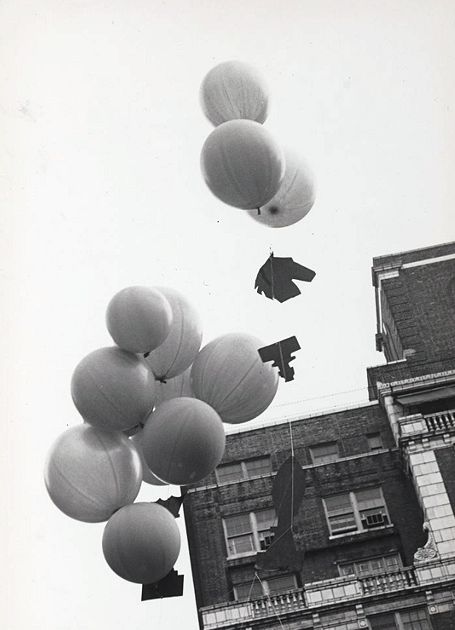
David Hare Gambit 1966
1954.02.07
1954. Sunday, New York City
Writing to Fiske Kimball, whom he saw recently in New York [22.1.1954], Marcel says: "I never expected [Walter Arensberg] to die of a heart attack [29.1.1954], and yet it is the weapon I would choose if I were asked." Grieved the Arensbergs did not live to see their remarkable collection of twentieth-century art installed at Philadelphia, Marcel insists: "we must listen to him dead or alive.
Stating quite clearly that he doesn't like the "Modern Museum" idea, which suggests "a dissociation of the two Institutions on the same location", Marcel asks Kimball why he doesn't have three separate openings: the Gallatin Collection in the spring, the Arensberg Collection in October, and the Modern Museum later.
Ephemerides
|