2026.10.07
mentions of Philadelphia within Lequeu: An Architectural Enigma
pages 70-71 within the "From Ledoux to Le Corbusier, The Rite of Neue Sachlichkeit chapter:
[Emil] Kaufmann's analysis of Lequeu's work, which began in Vienna, ended in the USA in Philadelphia in 1952, with his Three Revolutionary Architect, Boullée, Ledoux, and Lequeu published by the American Philosophical Society, and it was in Philadelphia that Marcel Duchamp was, so carefully, to supervise the display of his own principal works.
pages 76 ending the "From Ledoux to Le Corbusier, The Rite of Neue Sachlichkeit chapter:
Tropological space has thus widened to infinity between Vienna and Philadelphia. Von Lequeu bis Duchamp: Demountable Approximations, which became Duchamp's last major work, served him in the putting together of his most disconcerting work, Etant donnés . . . of 1946-66.
pages 98 within the "Demolishing an Architect: Le Corbusier chapter:
The Paris-Jura road', which in reality means Vienna-Philadelphia, culminated in Duchamp's last mysterious work, which is shown in a side room in the Philadelphia Museum of Art--though only since Le Corbusier's death in 1965. This is Etant donnés: 1° la chute d'eau, 2° le gaz d'éclairage (Given: 1. The Waterfall, 2. The Illuminating Gas), of 1946-66. Marcel Duchamp, the encyclopede, reinvented encyclopaedism with the help of Lequeu, the 'apprentice in the sun'.
All this comfirms my belief in the possibility of an unbekannt Philadelphian's multiversal sojourn throughout the entirity of Duboy's architecturally enigmatic text.
2024.10.07
Death of Philippe Duboy
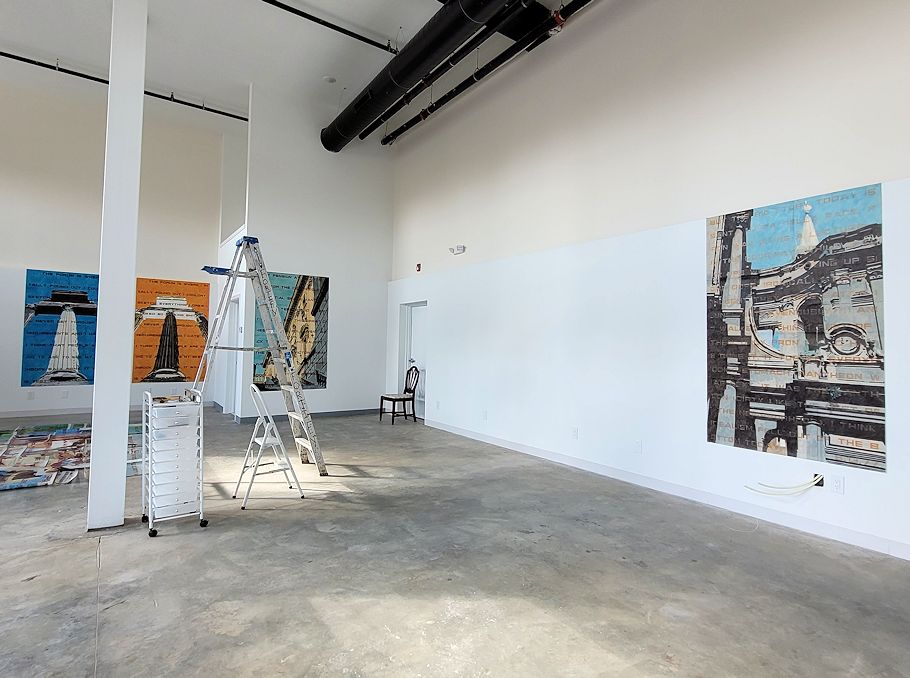
451 Rhawn Gallery
2019.10.07
The delirious museum
All museums carry within them the seed of their own delirium. To a greater or lesser degree they can be re-interpreted in terms of the breakdown of control and classification. This can happen in a number of ways: an obsessive level of control can be self-subverting, while its opposite, a state of chaos, can up-end perceived notions of the museum. Messiness, category confusion, theatricality, elaborate historical layering and museological fictionalizing can, singly or in combination, go towards creating the Delirious Museum. It is as if some of the museums that I describe are about to loose their grip on their contents and themselves. When asked by the curators of the Palais de Tokyo the question 'What do you expect from an art institution in the 21st century?' one participant said 'Cheap, fast and out of control.' This description applies equally to the Delirious Museum and to the delirious city.
Calum Storrie, The Delirious Museum: A Journey from the Louvre to Las Vegas, 2006, pp. 2-3.
2017.10.07
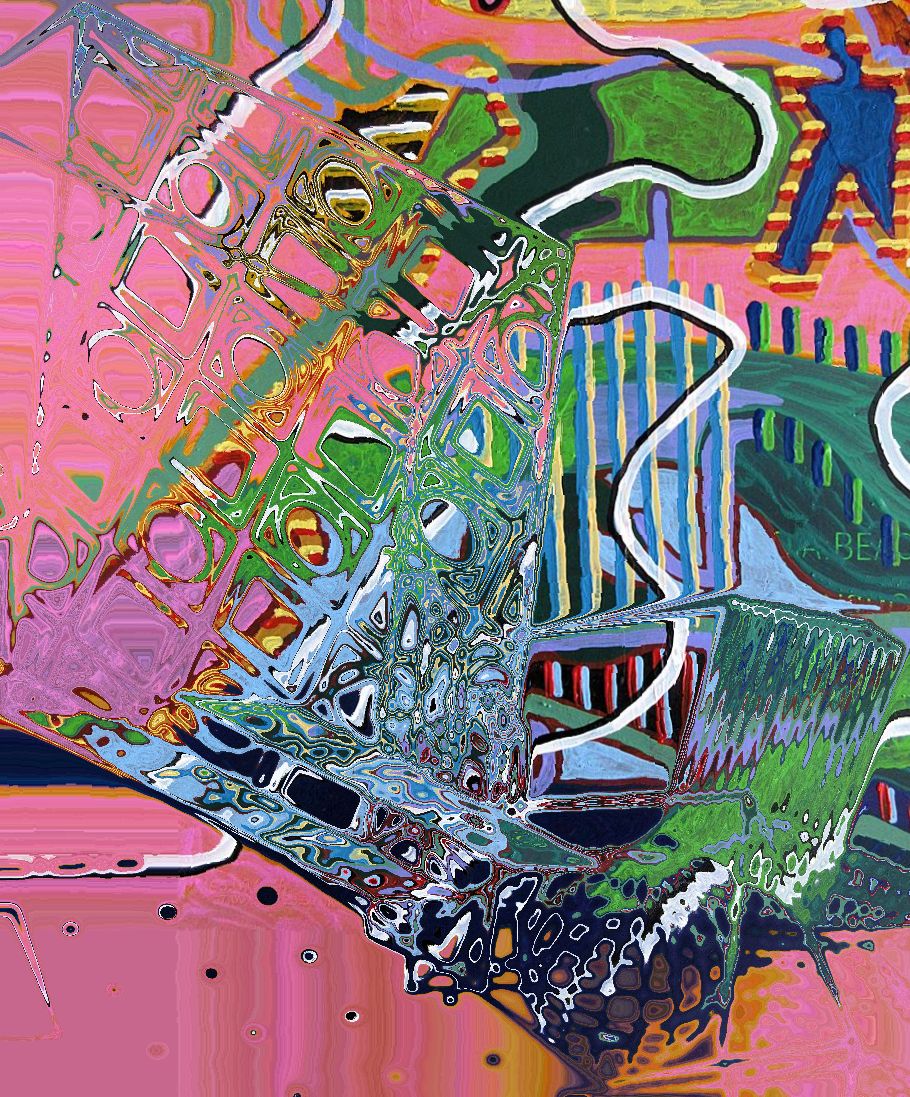
Virtual Painting 473
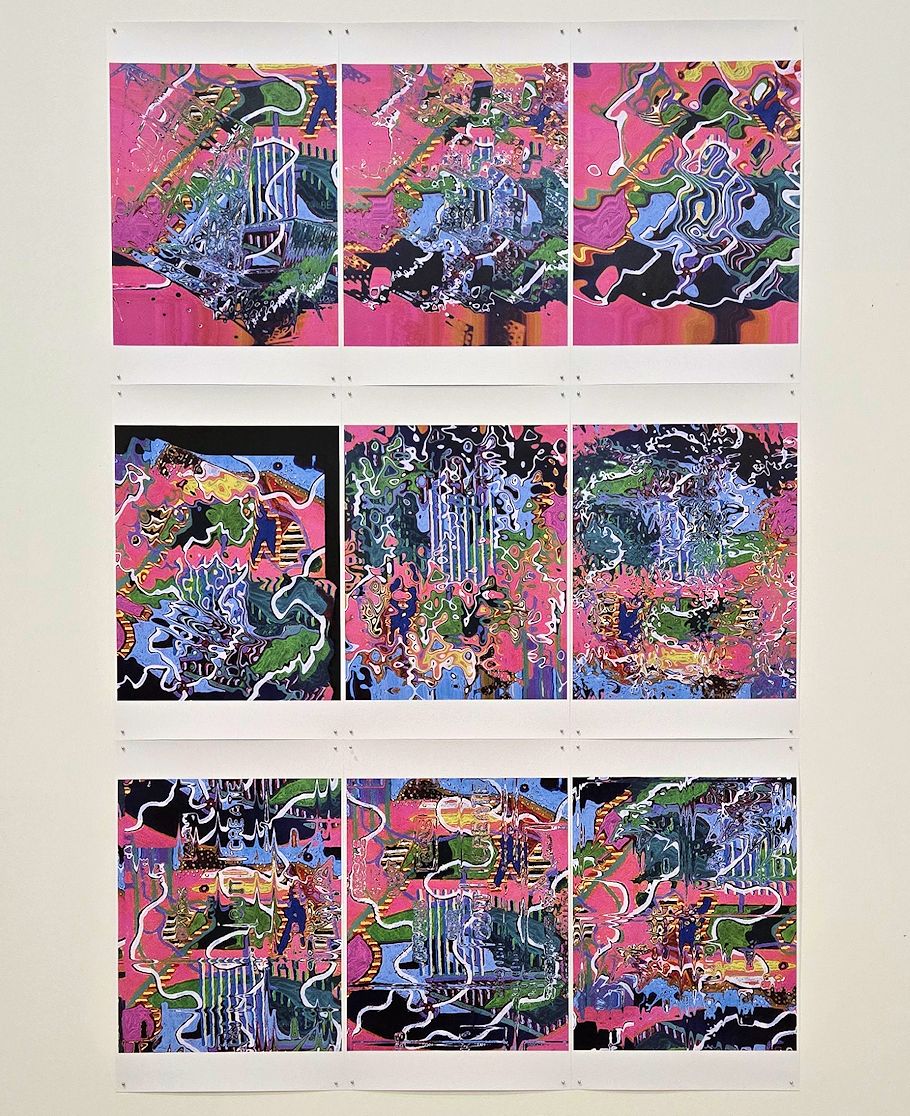
Virtual Paintings 473-481 451 Rhawn Gallery 2025.05.28
2015.10.07
7 October
Just started reading some Harman and already find myself wondering if the next step is "everything's the same thing."
then remembered
inside Elizabeth's restaurant, Savannah, Georgia, 1986
SL: Everything's the same thing.
JW: And what is that thing exactly?
...the three of them finished dinner and started dessert...
SL: It's all a wavelength.
JW: What?! (to HW) What's he saying?
HW: (laughing) ...the 'same thing'.
SL: Yeah, it's all a wavelength.
JW: (thoughtfully pausing, then) That's a good answer.
atypical
Combine architectural otherness (9340) with atypical/content of a museum (4783) to then begin atypical (8700). But I just remembered that architectural otherness was going to be a new Lequeu. Atypical itself can be a new Lequeu.
2004.10.07
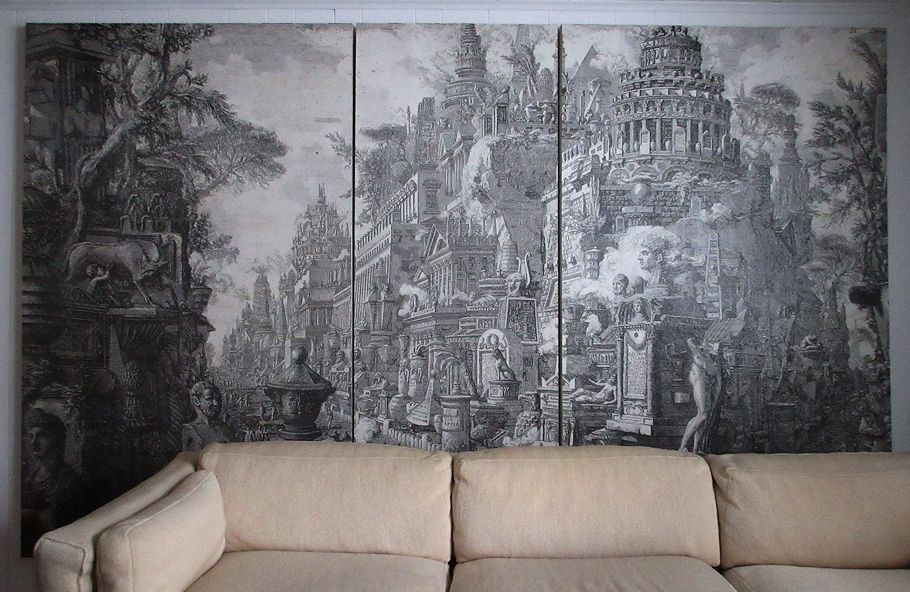
Stephen Lauf Prince of Traffic 2004.10.07
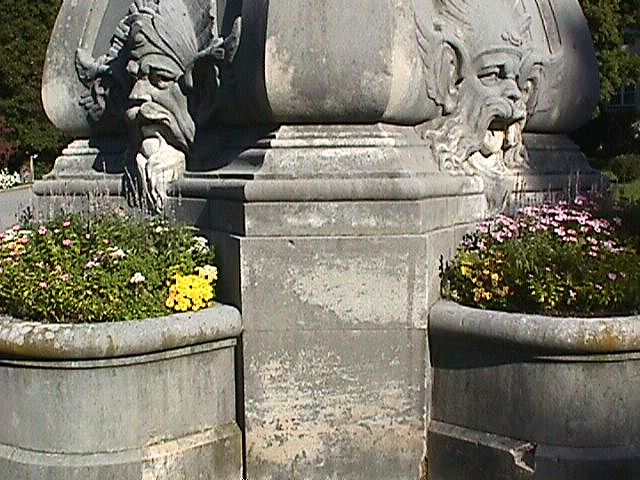
remains of the Whitemarsh Hall estate
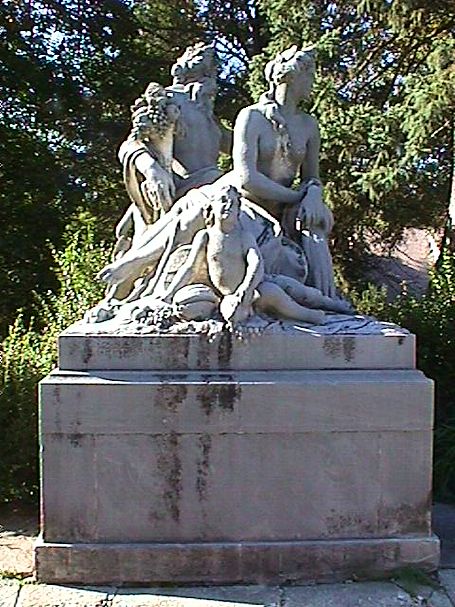 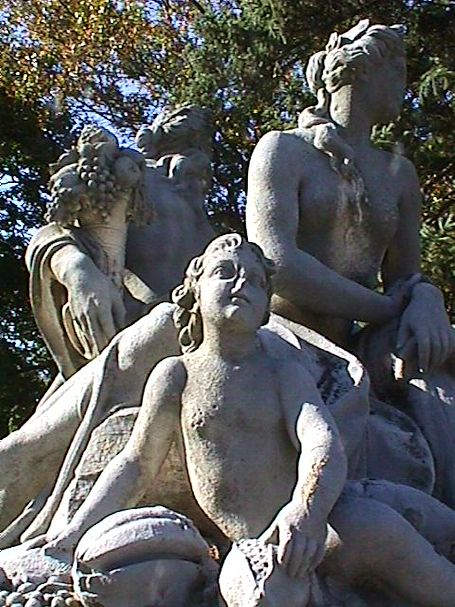
2000.10.07
Re: geometry notes
Could it be that human perception of space may be non-Euclidean, but that human imagination has evolved (so far) in a very Euclidean manner?
1963.10.07
1963. Monday, Pasadena
Duchamp's first major exhibition "By or of Marcel Duchamp or Rrose Sélavy" is installed in rooms surrounding the central courtyard of the Pasadena Art Museum. The first gallery is hung with the early work, the second with pictures and objects relating to chess, and a third is decorated with paintings from Duchamp's Cubist period, including the famous Nu descendant un Escalier [18.3.1912]. The replica of the Large Glass lent by the Moderna Museet [5.9.1961] dominates the main gallery, where the readymades are also shown; the optical experiments are reserved until last with Duchamp's own miniature museum: the Boîte-en-Valise [7.1.1941].
Orchestrated by Walter Hopps, the evening commences at six when the Duchamps are invited with the president and trustees of the museum and special guests, including the French consul, Richard Hamilton, Bill Copley, and Beatrice Wood from Ojai, to cocktails and dinner at the home of Mr and Mrs H. Leslie Hoffman at 1100 Avondale Road, San Marino.
To the special "black-tie" preview, held from eight -thirty until ten o'clock under the Asian-style turquoise tiled roof of the museum on North Los Robles Avenue, Hopps has invited artists, dealers and other personalities of the Southern Californian art world. Julian Wasser's camera captures Larry Bell, and also Dennis Hopper and Billy Al Bengston with Andy Warhol, who has an exhibition at the Ferus Gallery in Los Angeles.
The celebrations continue afterwards at the Hotel Green, where the first vice-president of the museum, Robert A. Rowan, and his wife Carolyn give a memorable reception which, Teeny says, is "more like a ball with music, champagne and dancing..." Beatrice Wood, who has brought Ram Pravesh Singh, dances indefatigably; before Wasser's camera Edward Ruscha holds a candle for a portrait with Patty Callahan, and all the artists, including Duchamp, sign a pink tablecloth. It is a marvellous evening.
Ephemerides
1947.10.07
1947. Tuesday, New York City
In the evening at seven-fifteen Marcel visits Stefi and Frederick Kiesler at 56 Seventh Avenue.
Ephemerides
1918.10.07
1918. Monday, Cannes
While working as a surgeon [1.1.1916] treating the wounded at Mourmelon in the Marne in 1916, Duchamp-Villon contracts a streptococcus infection [24.2.1918] through a graze on one of his hands, which results in blood-poisoning; painful abscesses appear on different parts of his body and although he is in the capable hands of the surgeon Gosset, he is greatly weakened by his suffering and does not survive the operation to remove the eighteenth abscess. At seven o'clock in the evening he dies, at the age of 42 in the military hospital 72, Montfleury. A telegram is sent to 7 Rue Lemaître, which his wife Yvonne [9.9.1903J receives on her return from Cannes after spending leave with her husband.
An assistant medical officer in the 68ème Régiment d'Artillerie à pied at the time of his death, Duchamp-Villon's name is inscribed in the register with the words: "Mort pour la France."
Ephemerides
|