2026.09.19
questions, answers, correction
question
What does it mean, now a days, when someone calls you an encyclopedist?
answer/AI Overview
When someone calls you an encyclopedist today, they are almost always using it metaphorically to mean that you have an incredibly vast, comprehensive, and detailed knowledge base across a wide variety of subjects.
Because almost no one writes paper encyclopedias for a living anymore, the term has evolved in modern conversation. Depending on the context and the speaker's tone, it carries a few distinct meanings:
1. The Walking Wikipedia (Complimentary)
Most frequently, it is a high compliment for a polymath or a generalist with a high-functioning memory.
What it implies: You are the person people turn to when they want to know the context, history, or mechanics of a random topic without having to look it up.
The vibe: "You have an incredibly deep and structured mind."
2. The Systematic Fact-Checker (Slightly Nerdy or Pedantic)
Because encyclopedias are strictly structured, heavily researched, and objective, calling someone an encyclopedist can point to how your brain organizes information.
What it implies: You don't just know random trivia; you understand the foundational facts, categories, and finer details of a topic. You might have a habit of correcting inaccuracies with clinical precision.
The vibe: "You are a human database, sometimes to a fault."
3. A Modern "Wikipedian" (Literal Digital Context)
If you operate in tech, open-source communities, or academia, the person might be comparing you to a dedicated internet archivist or Wikipedia editor. In the digital era, "modern encyclopedists" are the people who collaboratively write, edit, and organize the world's information for public consumption.
The Historical Subtext
If the person who called you this is a history buff, they might be referencing the Encyclopédistes of 18th-century France (like Denis Diderot and Voltaire). These thinkers were the champions of the Enlightenment. In this specific context, calling you an encyclopedist means you are someone who fights against ignorance, values scientific rationalism, and believes that spreading knowledge is essential to human progress.
question
What does it mean to be an encyclopedic artist?
answer/AI Overview
An encyclopedic artist is a creator whose work aims for vast, comprehensive coverage of human knowledge, culture, history, or the physical world.
Core Characteristics
Universal Scope: They try to capture the totality of a subject or human experience rather than focusing on a single narrow theme.
Multidisciplinary Approach: They mix diverse fields like science, mythology, history, literature, and philosophy into their creative output.
Systematic Accumulation: Their bodies of work often resemble archives, catalogs, or grand taxonomies (such as the imaginary worlds, complete histories, or exhaustive visual compendiums found in magical realism or conceptual art).
Exhaustive Detail: They use extreme detail and dense symbol systems to build a self-contained universe within their art.
Historical and Modern Examples
Leonardo da Vinci: Often viewed as the ultimate prototype, combining meticulous anatomical drawings, engineering designs, and fine art into a singular quest to map all visible knowledge.
Athanasius Kircher: A 17th-century Jesuit scholar-artist who created massive, cross-disciplinary compendiums of geology, music, and optics.
Contemporary Book Artists: Creators like Brian Dettmer or literal conceptual projects (such as Marino Auriti’s conceptual "Encyclopedic Palace") that physically or conceptually compile all human invention.
question
Has anyone ever referred to Marcel Duchamp as an encyclopedist?
answer/AI Overview
No, art historians, critics, and scholars do not generally refer to Marcel Duchamp himself as an "encyclopedist." However, his unique approach to cataloging, archiving, and organizing his own legacy has frequently led experts to describe his work, collections, and impact using encyclopedic terminology.
Scholars link Duchamp to the concept in a few specific ways:
The "Box in a Valise": Duchamp's Boîte-en-valise (1935–1941)--a portable suitcase containing miniature replicas of his lifetime of work--is frequently described by critics as an encyclopedic shrine or portable museum.
The Duchamp Dictionary: Because his concepts are so dense, his life and artistic output have been heavily canonized into reference formats. A notable example is The Duchamp Dictionary by Thomas Girst, which compiles over 200 cultural entries, relationships, and ideas defining his universe.
Association with Actual Encyclopedists: Duchamp was an early member of the avant-garde literary group Oulipo. He closely collaborated with its co-founder, Raymond Queneau, who was widely recognized as a novelist, poet, and literal encyclopedist.
While other historical avant-garde figures with an obsessive desire to classify everything (such as photographer August Sander) are sometimes dubbed "true encyclopedists", Duchamp is typically characterized as an archivist or institutional critic who mocked rigid academic systems with subversion and irony.
correction
--after Purism comes Duchamp the encyclopaedist!
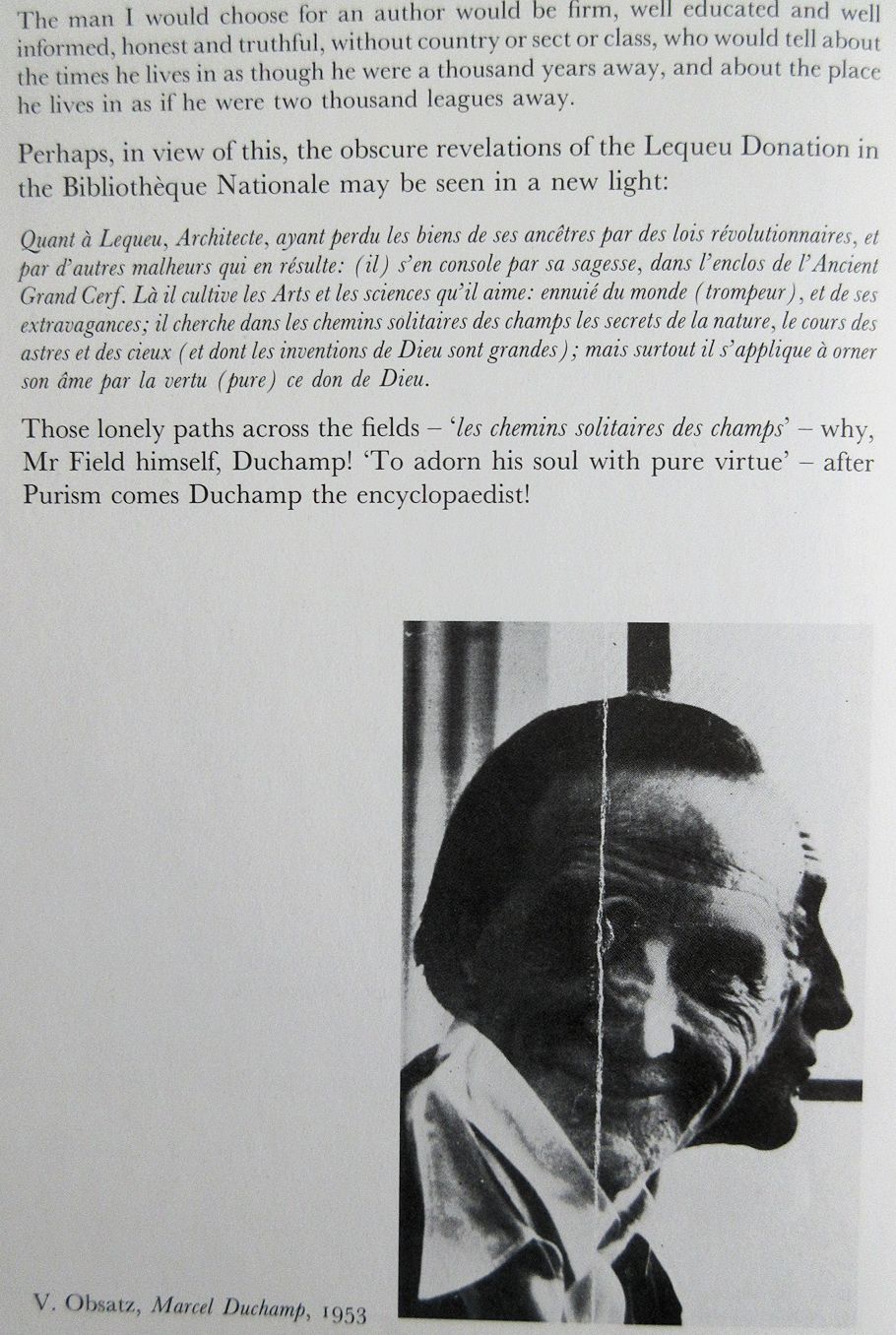
Philippe Duboy Lequeu: An Architectural Enigma 1986 p. 62
2025.09.19
451 Rhawn Gallery
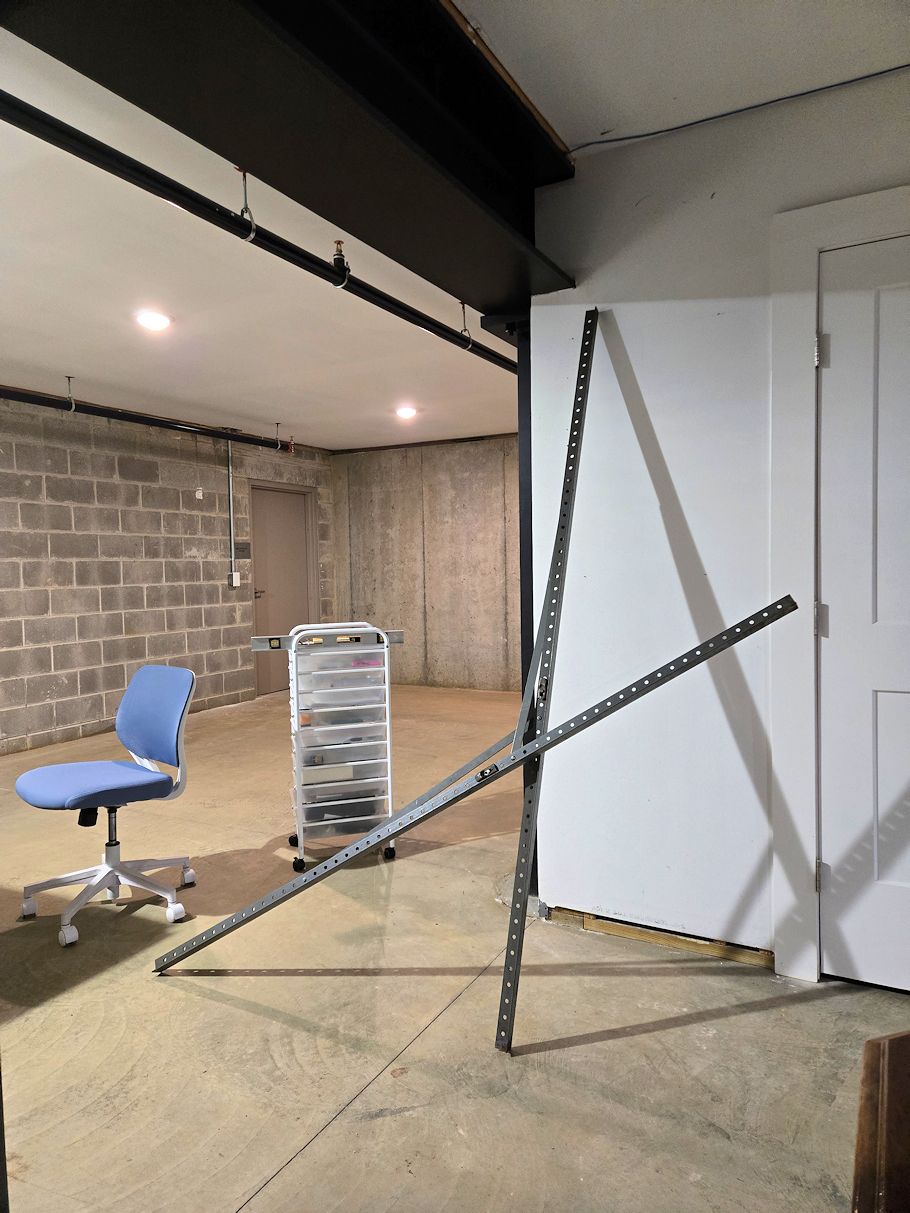

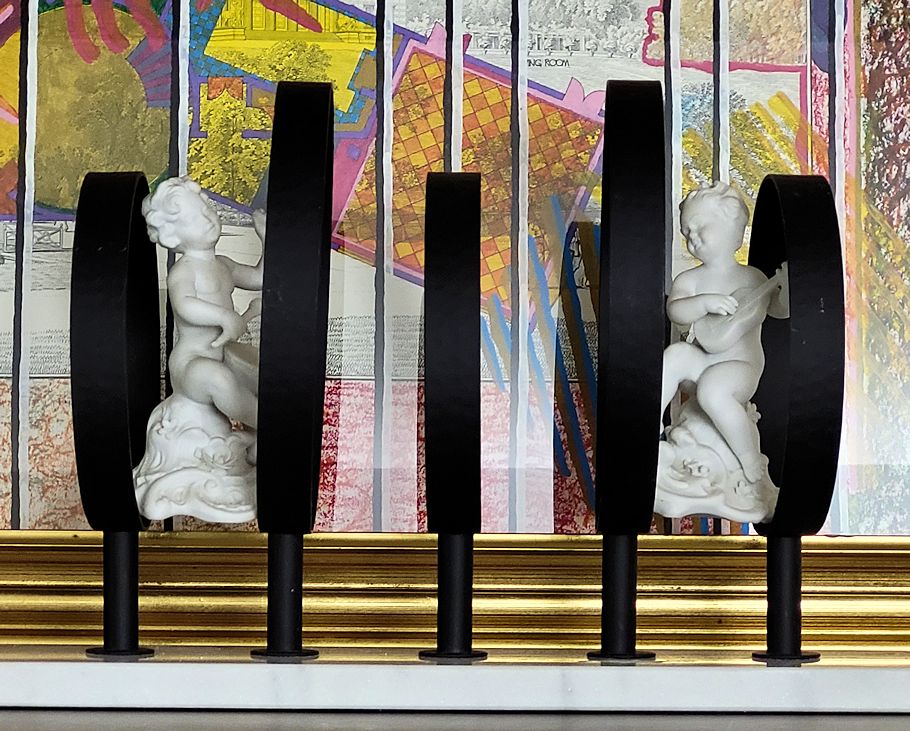
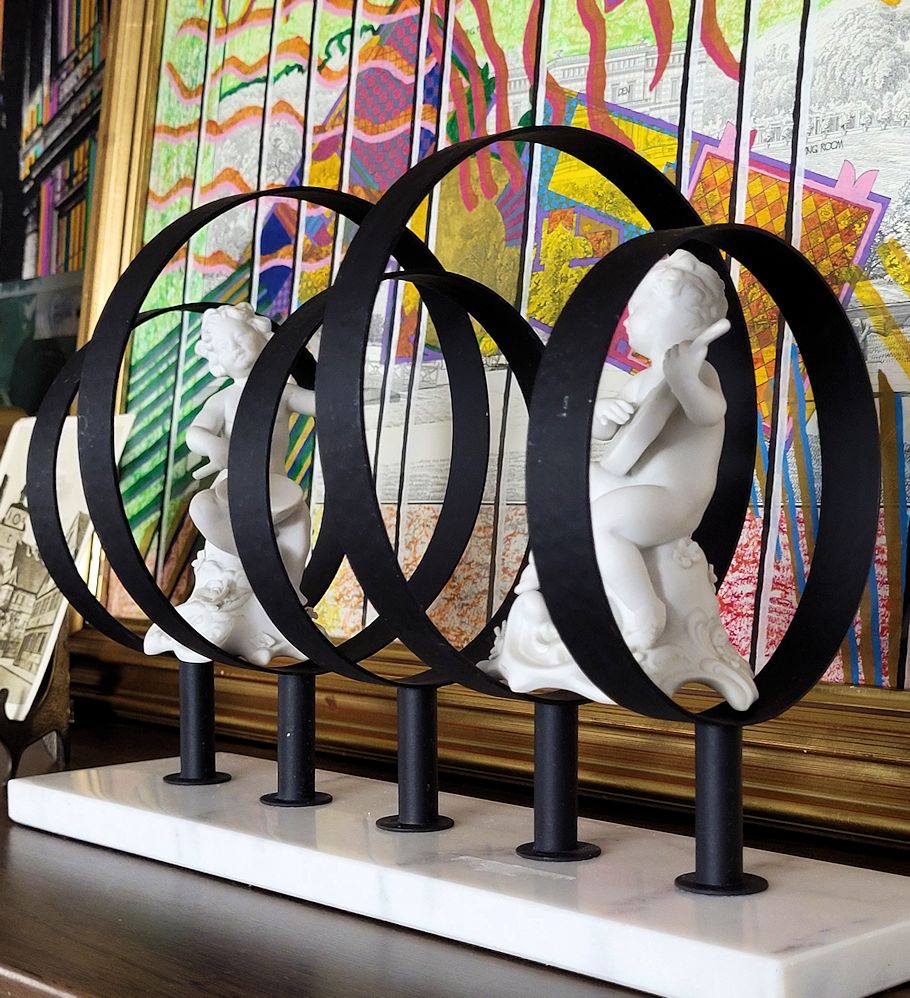
Stephen Lauf All Reality is a Wavelength 2025.09.19
2021.09.19
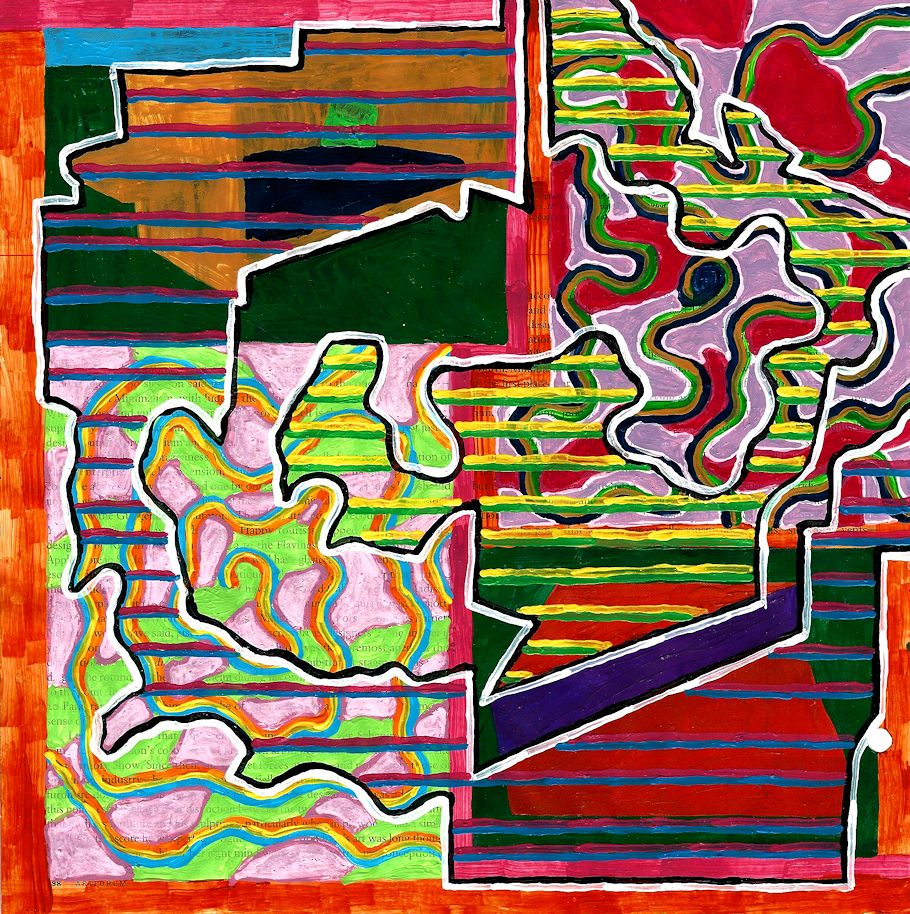
page from an as yet unfinished, untitled book
2013.09.19
19 September
Borrowed some books (from the Free Library) about "novel writing." Read "The opposing missions of the various characters create the plot" this morning. Then thought, "Apposing missions of the various architectures creates the plot."
Herzog at Columbia said, "Stirling lost his way" and "Rossi lost his way." I ask, "Labyrinth, wo bist du?"
2012.09.19
2D and 3D CAD data
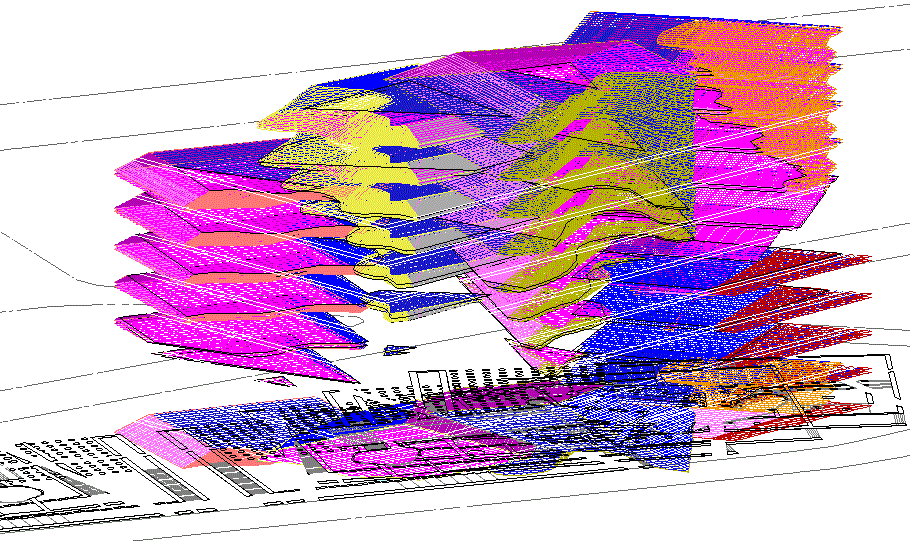
12091901.db Working Title Museum 002 floor plan generator
1968.09.19
1968. Thursday, Neuilly-sur-Seine
Receives a telephone call from Arturo Schwarz concerning an exhibition project "El Espiritu Dada 1915-1925" in Caracas.
Ephemerides
1964.09.19
1964. Sunday, Bergamo
Following the projection of some 60 films on and about art from 21 countries in the ancient Romanesque church of Sant' Agostino, now a cinema, the jury and critics are unanimous in awarding the Gran Premio Bergamo to Jean-Marie Drot's film Jeu d'Echecs avec Marcel Duchamp produced by the Radio-Télévision Française.
"For fifty minutes," reports M. Brumagne of the Tribune de Lausanne, "the camera makes coherent jumps in space, captures Duchamp from all angles, discovers his œuvre chronologically and succeeds in a striking summary by sizing up the artist, the humanist and man who said: There are no solutions because there are no problems."
At the presentation ceremony, Jean-Marie Drot persuades Duchamp to accompany him to the platform, where they are congratulated by Minister Scaglia and the mayor of Bergamo, Sig. Simoncini, which results in an amusing confusion of identity between the film director and the artist.
Ephemerides
1943.09.19
1943. Sunday, New York City
"What a surprise to hear from you," writes Marcel to Yvonne, his companion in Buenos Aires [19.9.1918], who has since married and lives in London [16.7.1927]. He has arranged to have lunch today with her son, Peter Lyon, who is in New York for two or three days from Boston.
"I have been here a year and a half," Marcel explains, "Just getting by here--little enthusiasm for painting at the moment as you can well imagine." As for the family, "everyone is well." The last time he saw the Villons and Magdeleine was when he left Paris [23.6.1941]; the Crottis moved to the south of France and, while waiting a year for his visa [21.3 .1942], Marcel was in Sanary, where his sister Yvonne lives.
Promising to send her copies of VVV [13.3.1943], Marcel asks Yvonne to give greetings to the Penroses, Mesens, Ernestine [?], and Gaby Picabia, who narrowly escaped the Gestapo and is now in London with her daughter Jeannine.
Ephemerides
1918.09.19
1918. Thursday, Buenos Aires
Faring better than the Lyncée, which was wrecked off the coast of Ejur en route to Buenos Aires [10.6.1912], the SS Crofton Hall reaches its destination safely with Yvonne Chastel and Marcel aboard after the long voyage from New York [14.8.1918]. Marcel knows no one in the Argentine capital, "except the parents of a Parisian friend, very nice people," who run a brothel.
Ephemerides
|