2026.07.28
read last night:
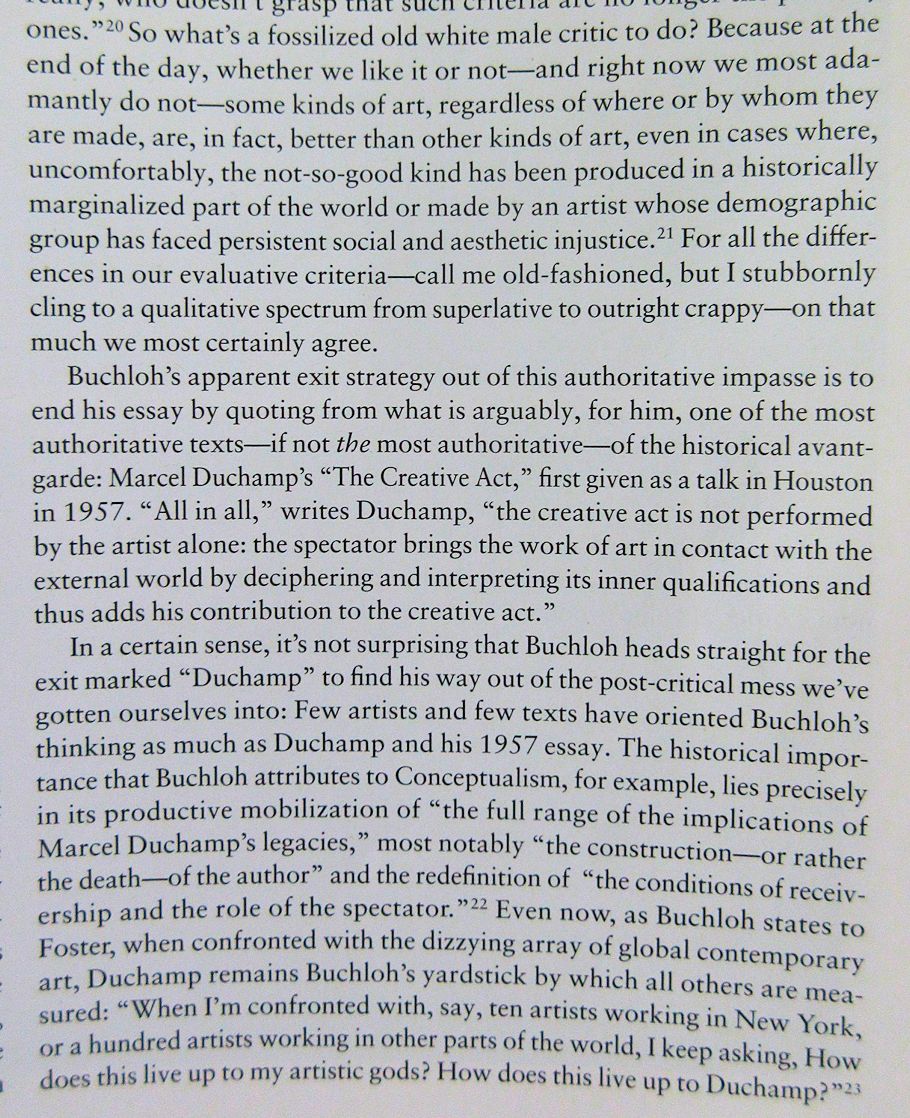
So what's a fossilized old white male critic to do? Because at the end of the day, whether we like it or not—and right now we most adamantly do not--some kinds of art, regardless of where or by whom they are made, are, in fact, better than other kinds of art, even in cases where, uncomfortably, the not-so-good kind has been produced in a historically marginalized part of the world or made by an artist whose demographic group has faced persistent social and aesthetic injustice. For all the differences in our evaluative criteria--call me old-fashioned, but I stubbornly cling to a qualitative spectrum from superlative to outright crappy--on that much we most certainly agree.
Buchloh's apparent exit strategy out of this authoritative impasse is to end his essay by quoting from what is arguably, for him, one of the most authoritative texts--if not the most authoritative--of the historical avant-garde: Marcel Duchamp’s "The Creative Act," first given as a talk in Houston in 1957. "All in all," writes Duchamp, "the creative act is not performed by the artist alone: the spectator brings the work of art in contact with the external world by deciphering and interpreting its inner qualifications and thus adds his contribution to the creative act."
In a certain sense, it's not surprising that Buchloh heads straight for the exit marked "Duchamp" to find his way out of the post-critical mess we've gotten ourselves into: Few artists and few texts have oriented Buchloh's thinking as much as Duchamp and his 1957 essay. The historical importance that Buchloh attributes to Conceptualism, for example, lies precisely in its productive mobilization of "the full range of the implications of Marcel Duchamp's legacies," most notably "the construction--or rather the death--of the author" and the redefinition of "the conditions of receivership and the role of the spectator." Even now, as Buchloh states to Foster, when confronted with the dizzying array of global contemporary art, Duchamp remains Buchloh's yardstick by which all others are measured: "When I'm confronted with, say, ten artists working in New York, or a hundred artists working in other parts of the world, I keep asking, How does this live up to my artistic gods? How does this live up to Duchamp?" One of Duchamp's most famous lessons, however, is that yardsticks, much like the distorted meter of his 3 Standard Stoppages, are always arbitrary. Wherein lies the rub.
Once we move, as we have, into a post-critical world where "the newly authorized spectatorial and readerly subject" takes the place of the critic, and we give up on the idea of good viewers and bad viewers in favor of different viewers and different viewing positions, then the only person who wins, for Buchloh, is not the artist, not the critic, not the art historian, not the curator, and not even, appearances to the contrary, the viewer: The only person who wins is the art dealer. In place of the critic, it's the market that rushes in to fill the critical vacuum.
But if the appeal to the Duchampian spectator is an effort to empower the viewer and disempower the market, the problem, once again, is that we find ourselves right back in the very situation that Buchloh seeks to avoid. If the viewer can interpret an artwork as they see fit, then, far from resisting the financialization of the art market, this interpretive free-for-all does the exact opposite: It transforms the artwork into a commodity and its viewer into a consumer. As Nicholas Brown argues, the fundamental difference between a commodity and an artwork lies in the fact that a commodity can be used in whatever way the consumer wants, whereas an artwork cannot. Which is to say, if I hack an IKEA stepladder by using it as a towel rack or a bookshelf, I am not misusing or misinterpreting that stepladder; I am simply asserting my right as a consumer to use it as I see fit. The customer, after all, is always right, and for this reason IKEA doesn't care one way or the other what I do with its stepladders so long as I buy them (indeed, IKEA has an entire list of helpful hacks on its website). But if I claim that Walter Sickert's paintings prove that he was Jack the Ripper, or that Albrecht Dürer's ca. 1498 print The Prominade conceals a code revealing the artist's secret Jewish identity, or that the various art installations in and around the Denver International Airport contain references to the threat of an alien invasion and the coming apocalypse, as many people have, then those artists would dispute my claims as not just dumb but incorrect. "How submerged does a reference have to be before it drowns?" wonders Julian Barnes. At what point, in other words, does an interpretation cease to mean what an interpreter insists it does? Customers may never be wrong, but viewers often are.
Which brings us back to the book's title. The waning of the critic's authority in favor of an endless, unbraided mass of individual consumers of art who interpret whatever they want, however they want, echoes another kind of exit: from the field of collective class politics into a neoliberal market of individual political positions, tastes, consumer habits, likes and dislikes. As the political theorist Daniel Zamora argues, in the "atomized civil society" that emerged in the aftermath of the Cold War, "exit became the general mode through which people related to politics. . . . The end of history was in that sense a generalized exit from the public sphere." And that, of course, is the very opposite of everything that Buchloh stands for. So if it hasn't been easy for him to give up on "certain concepts of truth that have defined much of [his] thinking," and if coming to terms with the shift in value from Ryman to Marshall and Casteel has been "a very difficult step to take," then, hard as this is to imagine, perhaps he and--heresy of heresies!--all of us should also consider Duchamp a necessary loss.
Gordon Hughes, "No Judgment" in Artforum International (November 2024), pp. 87-9.
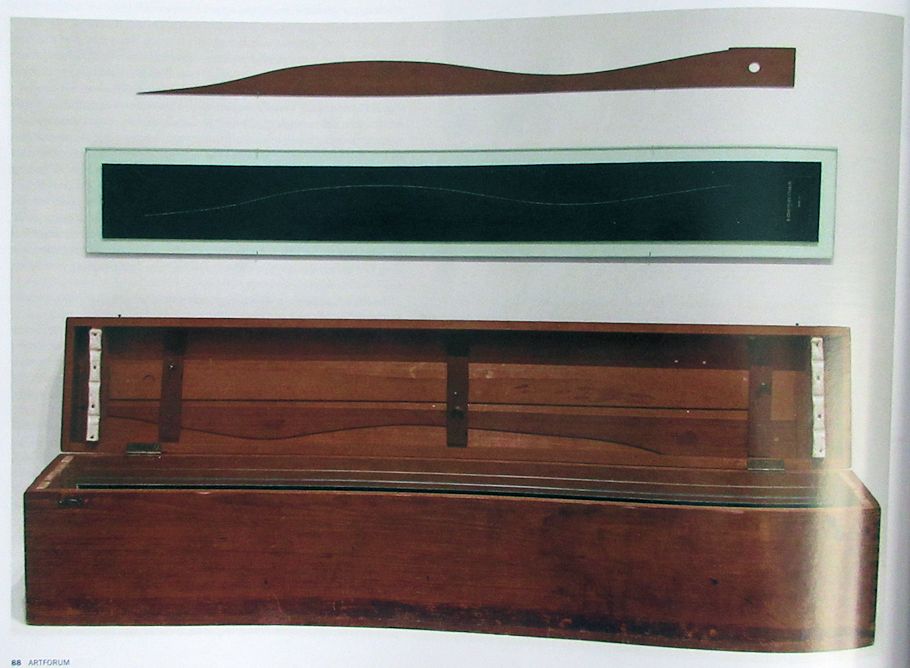
Here are the first, fifth and last paragraphs of Marcel Duchamp's "The Creative Act":
first: Let us consider two important factors, the two poles of the creation of art: the artist on one hand, and on the other the spectator who later becomes the posterity.
fifth: Millions of artists create; only a few thousands are discussed or accepted by the spectator and many less again are consecrated by posterity.
last: All in all, the creative act is not performed by the artist alone; the spectator brings the work in contact with the external world by deciphering and interpreting its inner qualifications and thus adds his contribution to the creative act. This becomes even more obvious when posterity gives its final verdict and sometimes rehabilitates forgotten artists.
It seems to me that Duchamp's 'spectators' are a relatively small set of people, principally those who write about art/artists, i.e., journalists, art critics and art historians. Furthermore, Duchamp never mentions those who are very likely the most important 'spectators' of all, namely the even smaller set of people (and/or institutions) that actually buy works of art.
2025.07.28
451 Rhawn Gallery
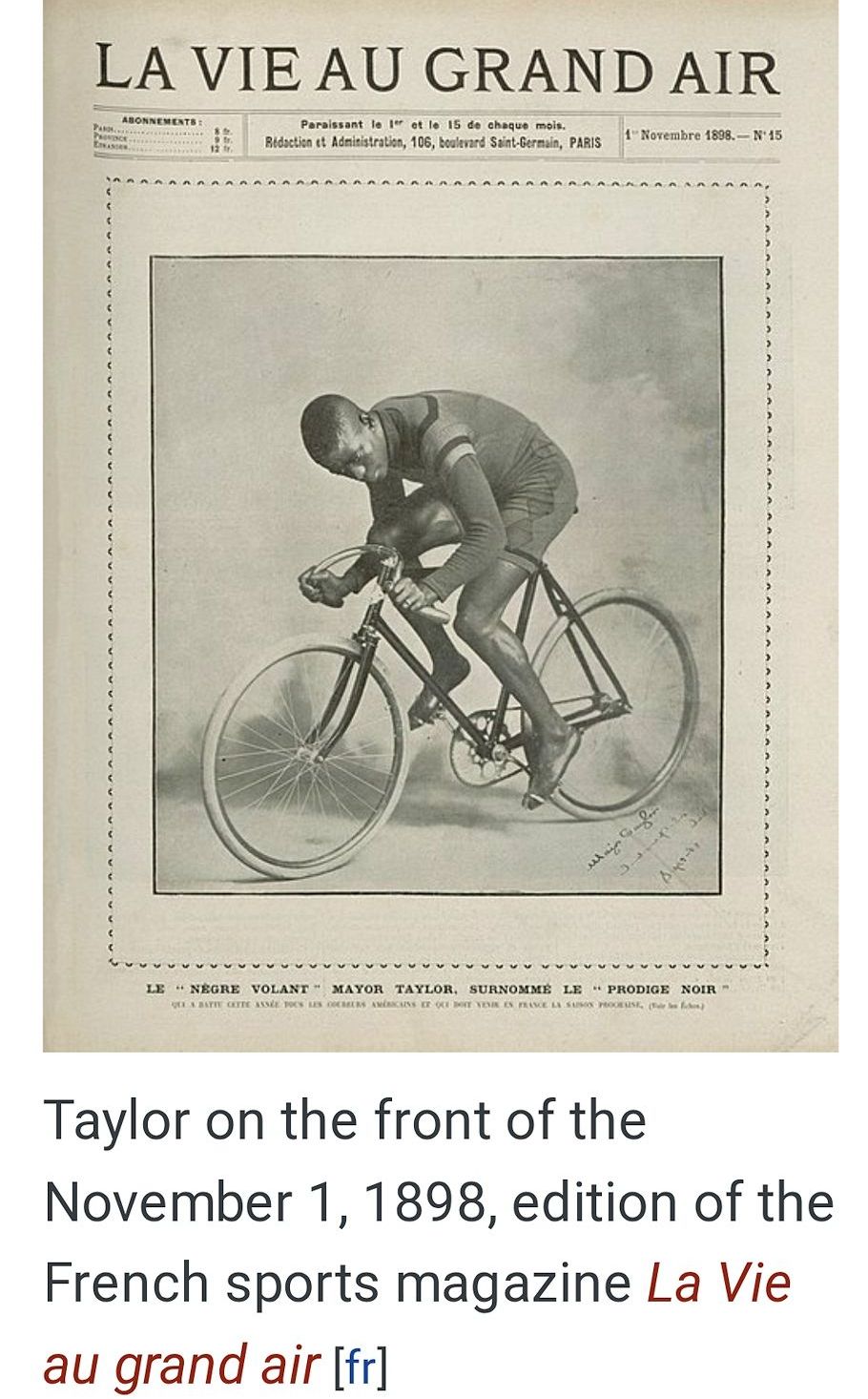
. . . making a wish and blowing out all 138 candles at once? Marcel was eleven years old in 1898. A second opinion @ann.temkin perchance?
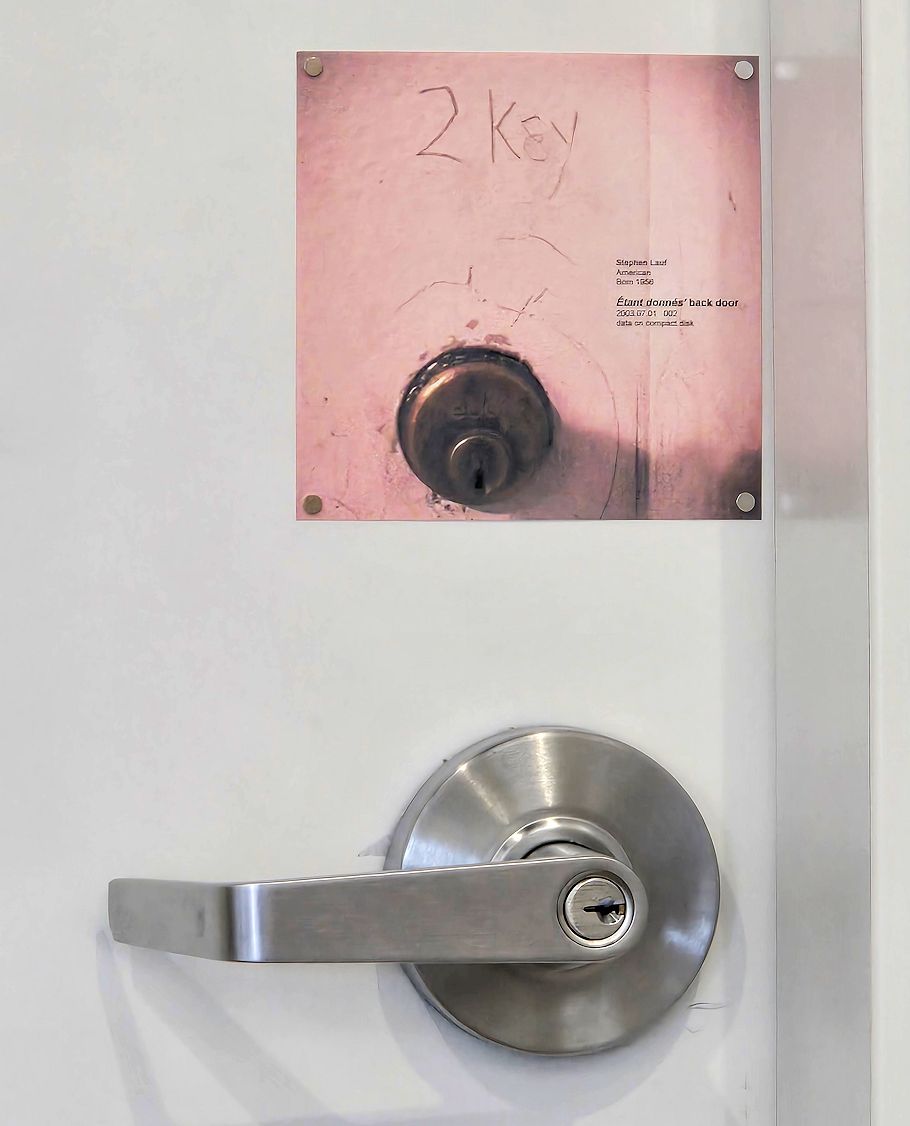
. . . when the voice in my head asked, "Is THAT supposed to be a reenactment?!" I simply replied, "Fortunately or not, that's as good as it gets, because the original doesn't exist anymore."
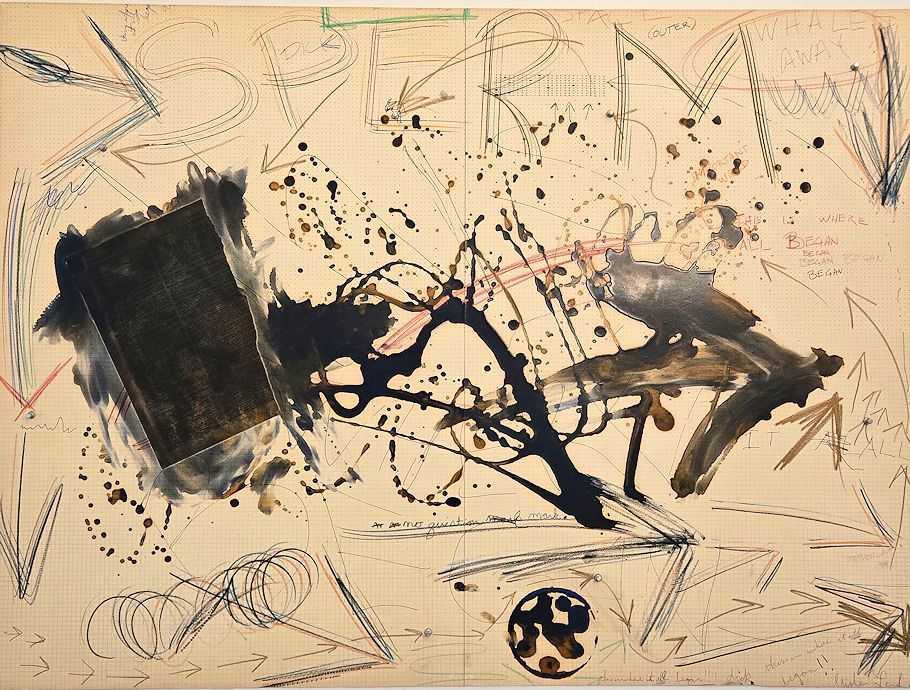
Stephen Lauf Whales Away 1984.02.28
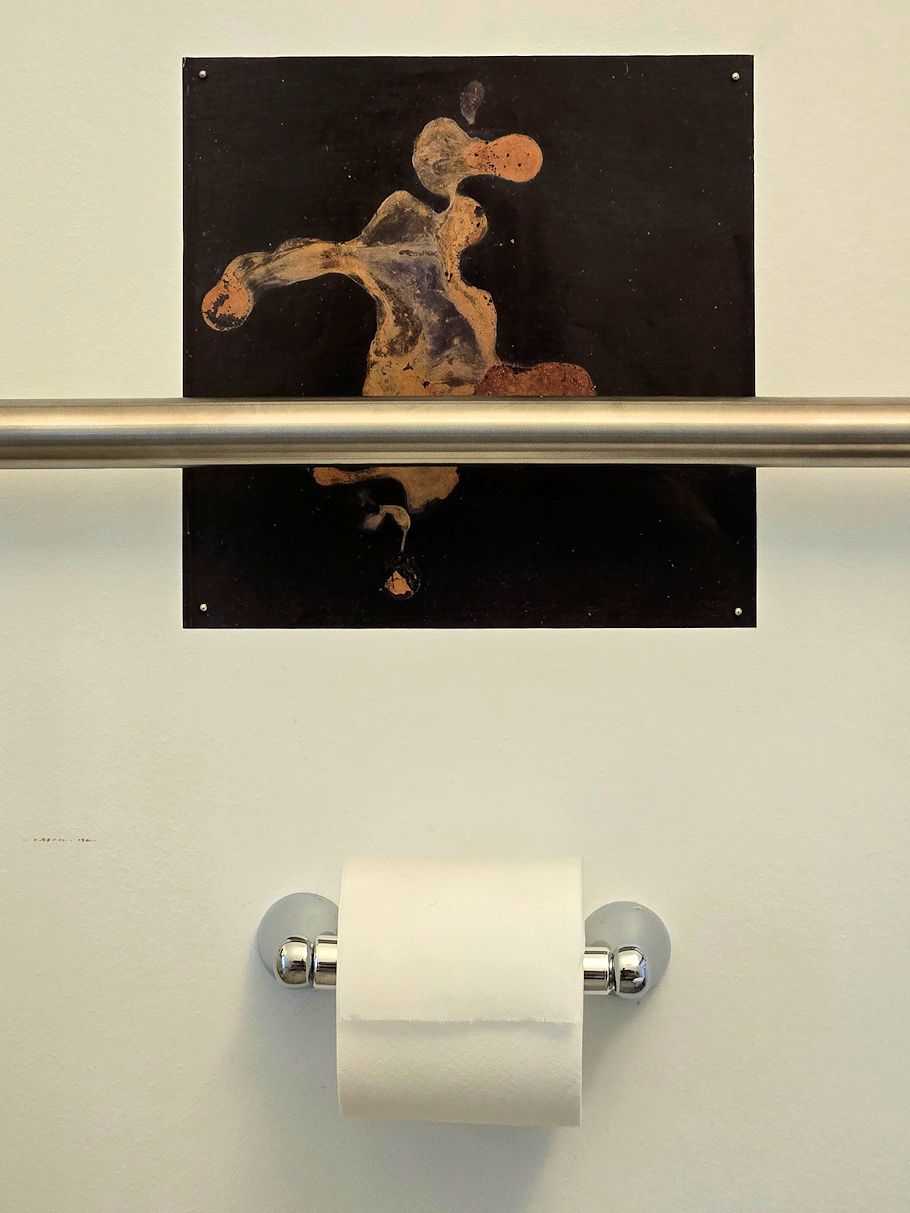
Stephen Lauf Given Situation With Unwitting 1984 Reenactment Above 2025.07.28
@451.rhawn.gallery . . . Monday evening parting shots, 28 July, answering the question, "What did you do on Marcel Duchamp's birthday(s).
2024.07.28
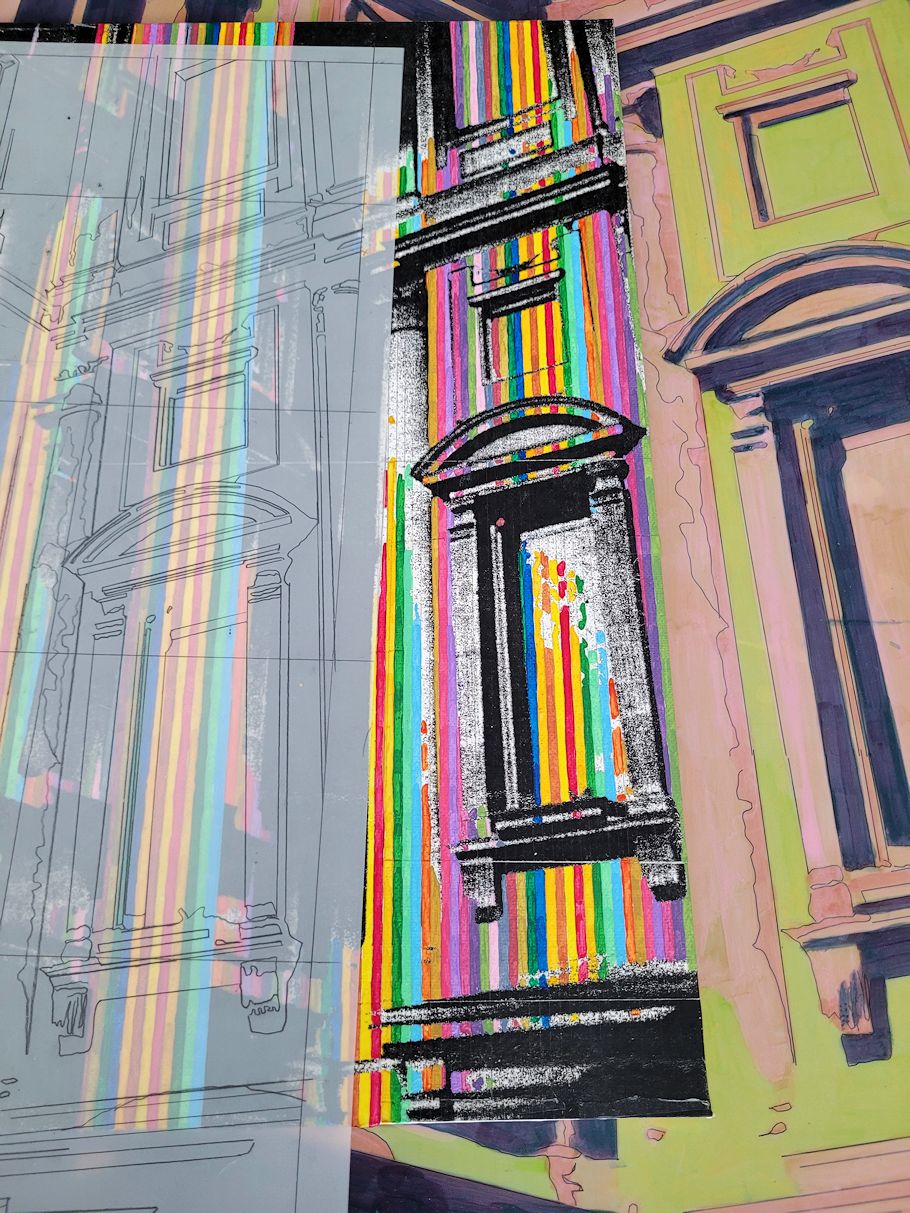
20240728_161338.jpg
2017.07.28
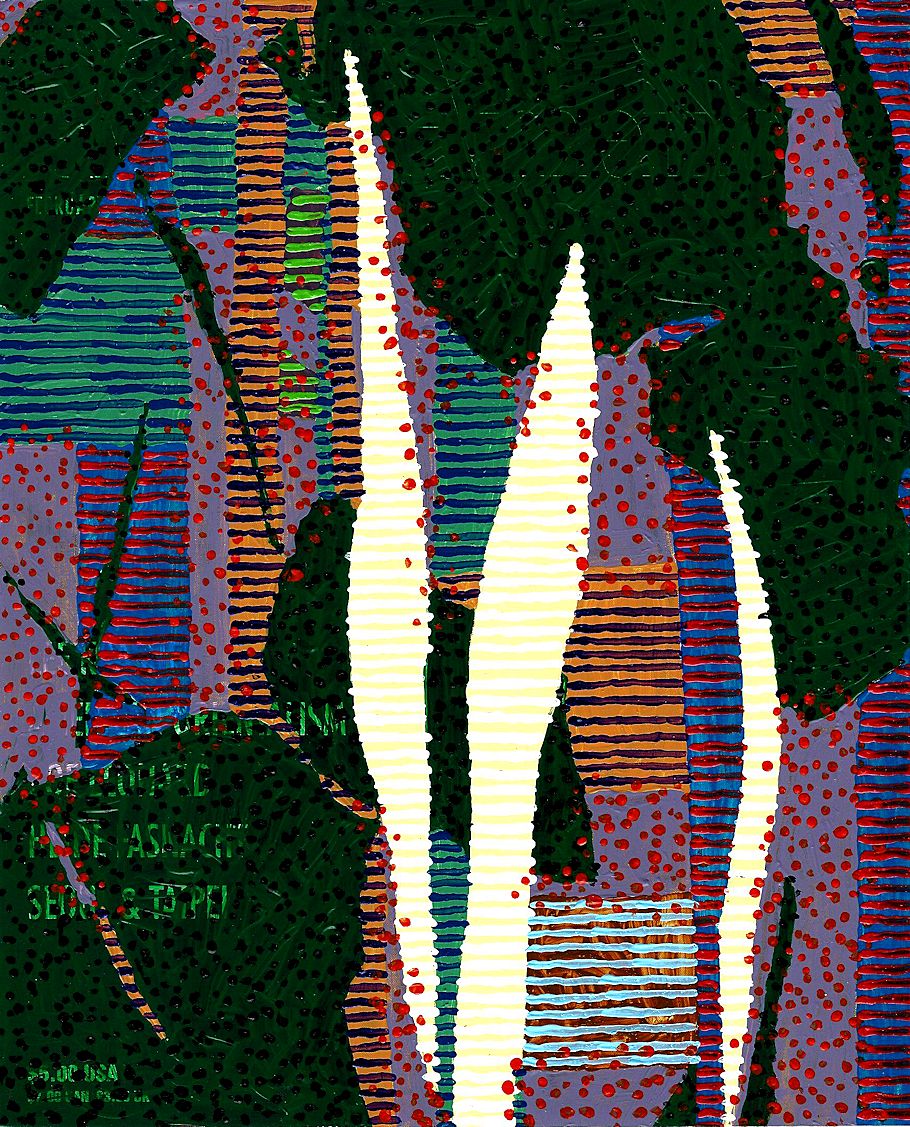
zero six eight
2015.07.28
Borges once claimed...
"Borges once claimed that the basic devices of all fantastic literature are only four in number: the work within the work, the contamination of reality by dream, the voyage in time, and the double."
James Irby in Jorge Luis Borges, Labyrinths: Selected Stories & Other Writings (1964).
2006.07.28
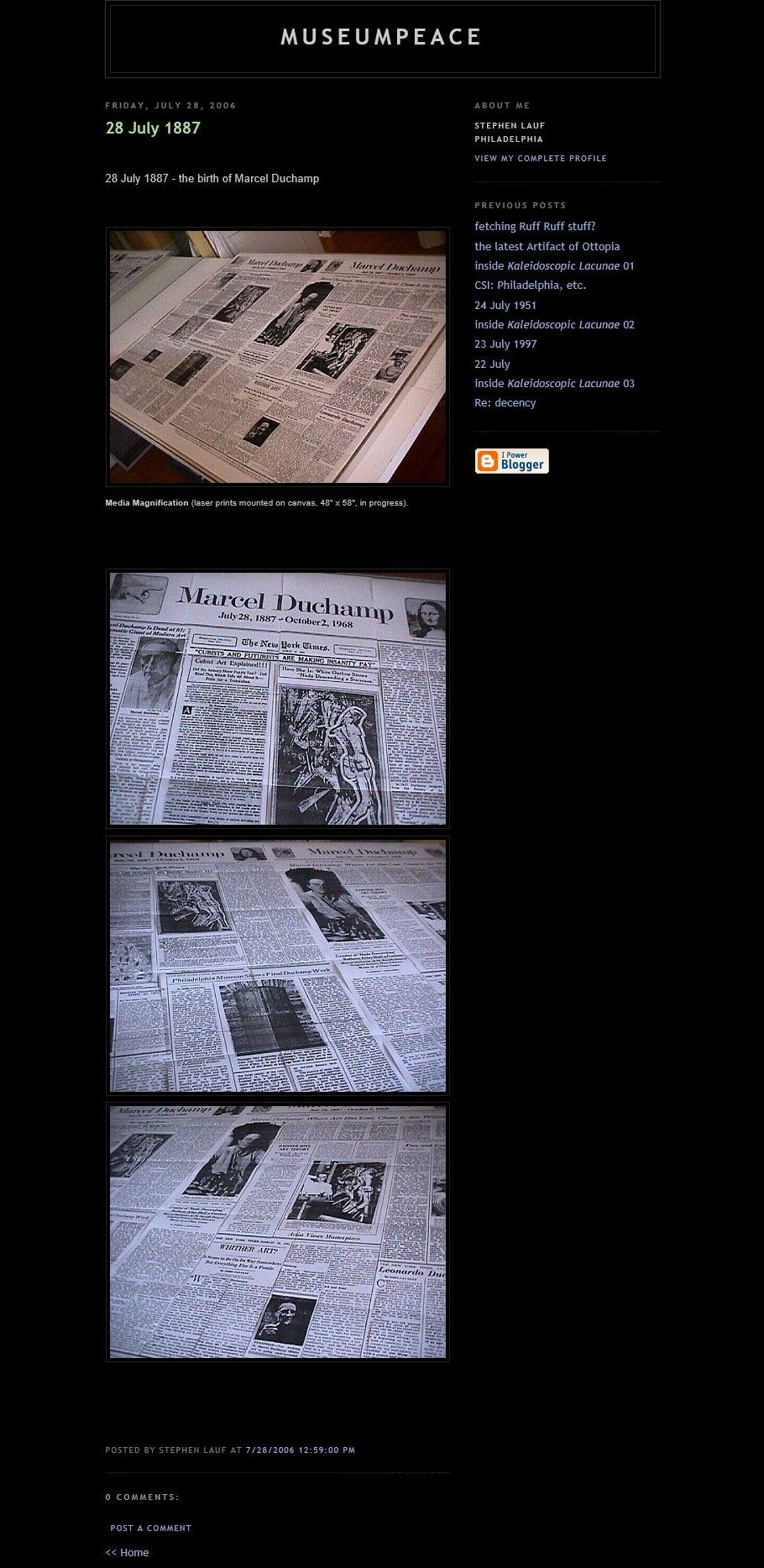
screen-save of a long abandoned blog page
2005.07.28
Re: movin' on up...some thoughts?
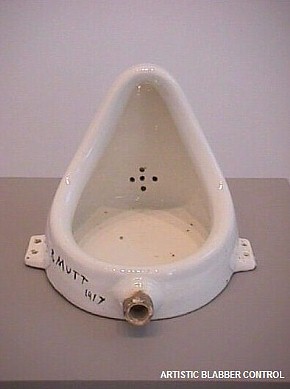
"You may confuse plagiarism with flattery, but I certainly don't."
Re: Is there any time when an artist should not show his work?
1984.07.28
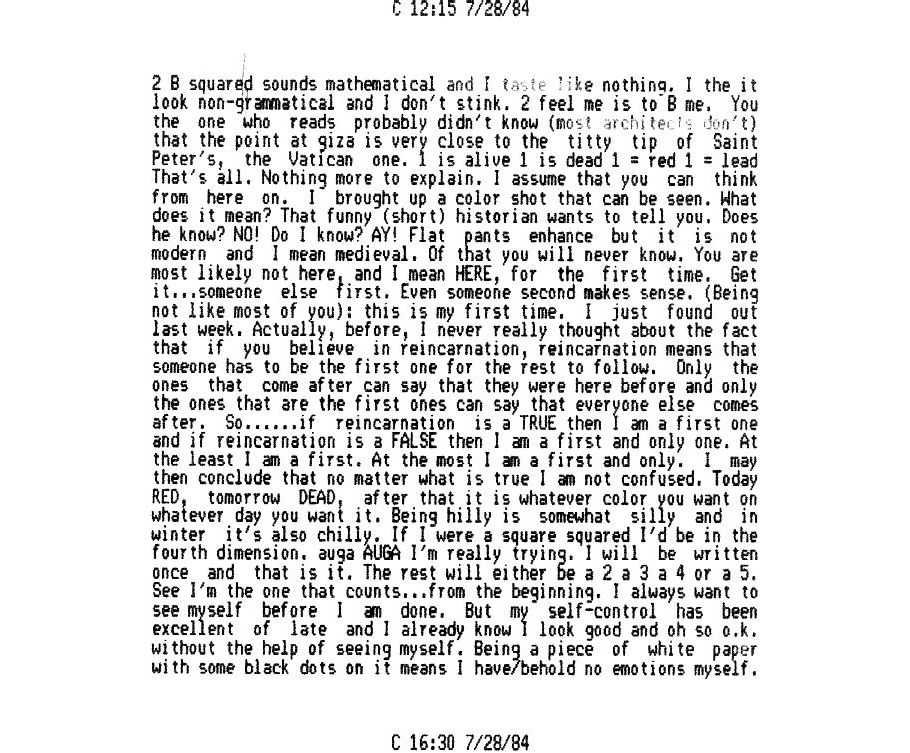
square poem 01
1968.07.28
1968. Sunday, Cadaqués
Man Ray photographs the birthday cake which is decorated with ten candles, each one representing ten years, thus assuring Marcel another
nineteen years--at least.
Ephemerides
1967.07.28
1967. Friday, Cadaqués
To celebrate, Marcel has a birthday cake which is ablaze with eighty candles.
Ephemerides
1964.07.28
1964. Tuesday, Cadaqués
In reply to a request from Douglas Gorsline [9.5.1964] that he sign a bottle rack for him, Duchamp explains that as he has recently authorized an edition of replicas [4.6.1964], to protect the edition he cannot sign any more. "But signature or no signature your find has the same 'metaphysical' value as any other readymade," Duchamp assures Gorsline, "[it] even has the advantage to have no commercial value..."
Ephemerides
1957.07.28
1957. Sunday, East Hampton
Marcel is invited to celebrate his 70th birthday with Teeny at Denise and David Hare's house on Georgica Pond. David has made a massive,
hermaphroditic crown of plaster into which green leaves and two cucumbers have been planted. One cucumber at the front has been split vertically and arranged to form the female genitalia, the other stands in masculine erection at the back. It is a veritable feast for the eye, with which he crowns Marcel.
Ephemerides
1942.07.28
1942. Tuesday, New York City
On a very hot, thundery day, Dee meets Miss Dreier at the Plaza, they have lunch together in the air-conditioned Persia Room and afterwards go to see Peggy Guggenheim's collection at Hale House. During a tremendous cloudburst, the telephone rings: it is Joseph Cornell, astonished to hear Duchamp's voice. Finding the telephone call "one of the most delightful and strangest experiences" he has ever had, Cornell invites Duchamp to visit him on Friday.
*
Marcel spends the evening at the Kieslers' with the two composers Virgil Thomson and John Cage.
Ephemerides
|