2026.01.26
Maurice Speiser House
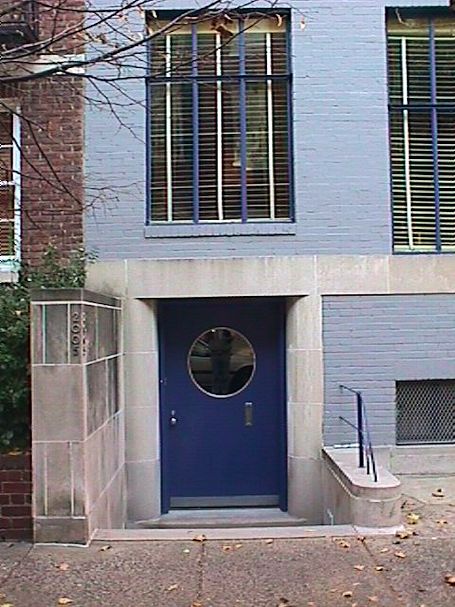 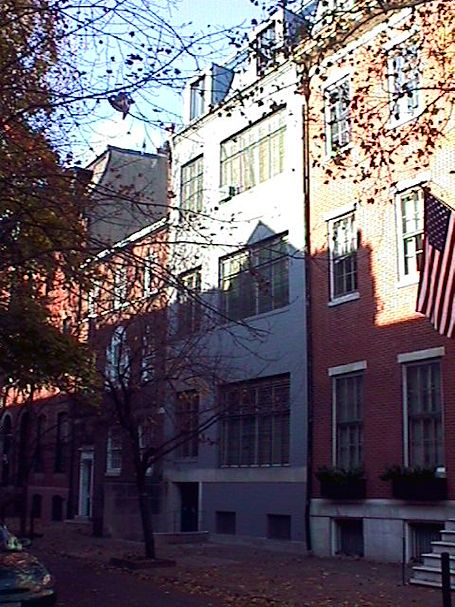
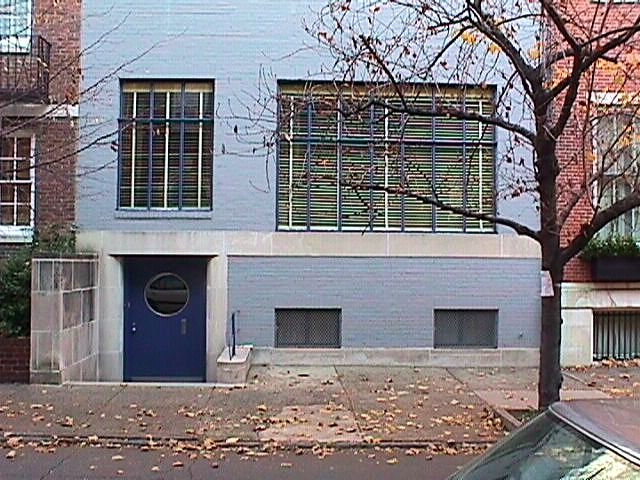
George Howe, Maurice Speiser House (Philadelphia: 2005 Delancey Place, remodeled 1933), images: 1998.11.21.
2025.01.26
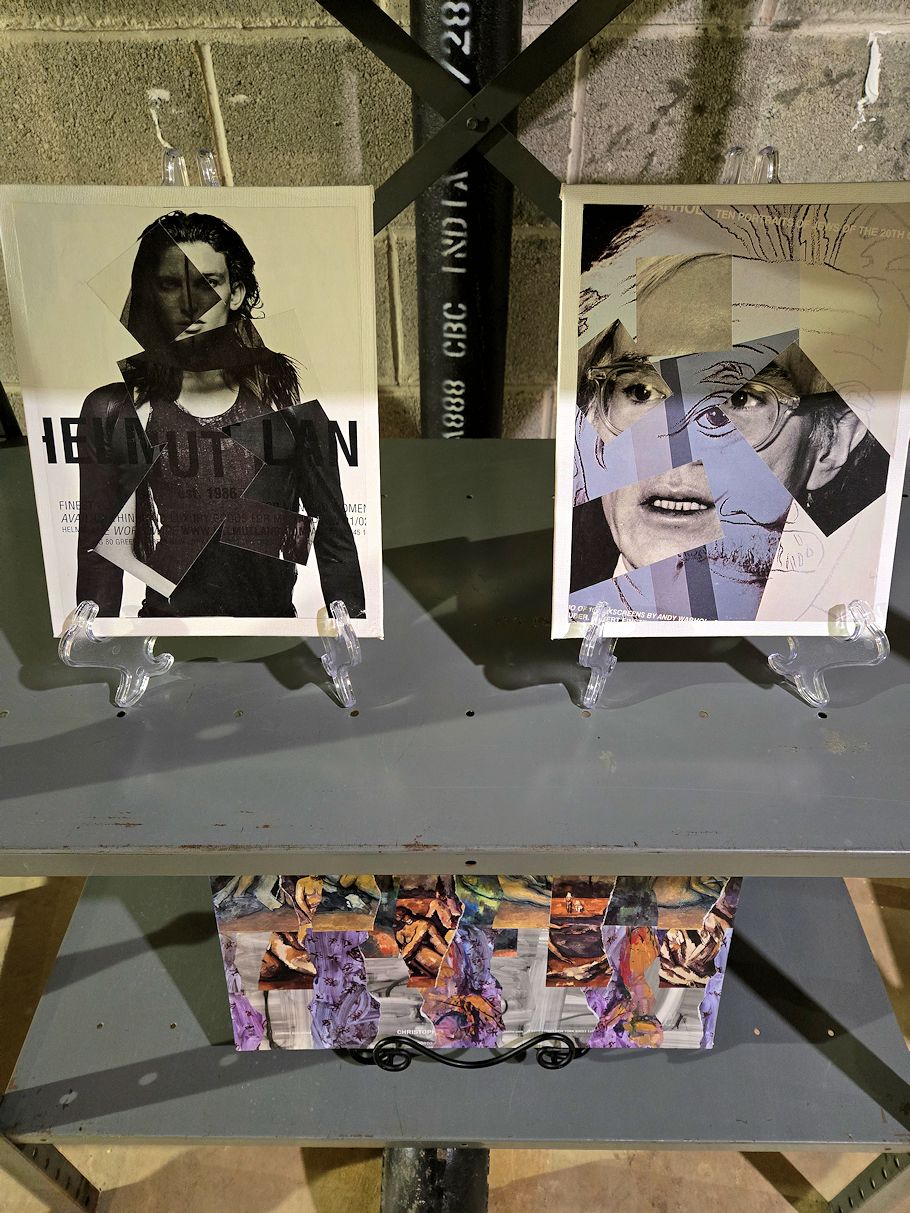
451 Rhawn Gallery
2024.01.26

a positive nimiety of lines
2017.01.26
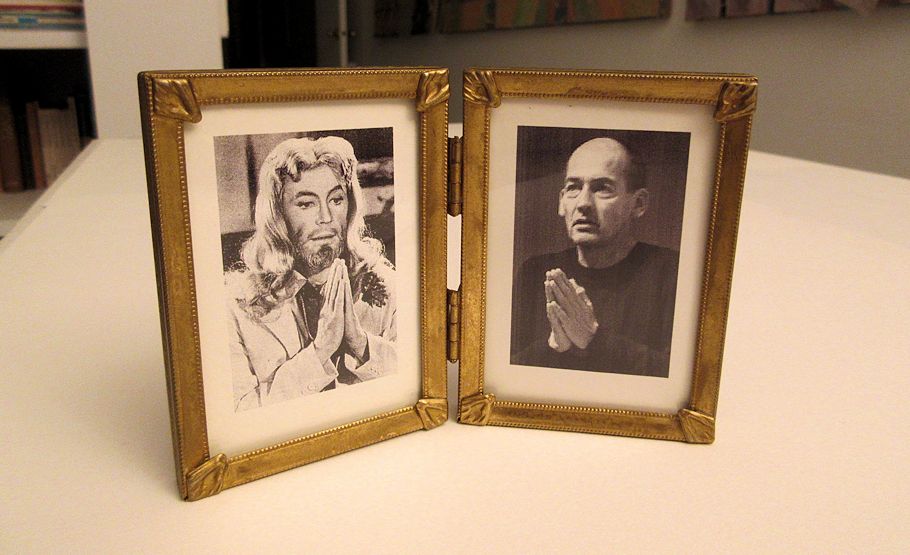
19:27
2015.01.26
Quo vadis, Charleston architecture?
It's not just modern style that's a problem. I wanted to redo my Charleston house in the Chinese style, and they said that's not allowed either!
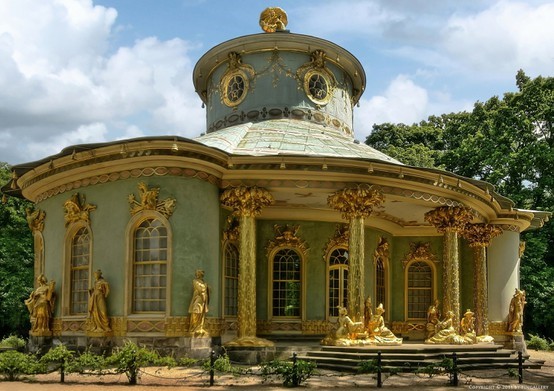
I was very upset, and told them I was taking all my money and moving to China!
2014.01.26
Sam Lubell examines the U.S.'s trouble keeping top design talent
When exactly hasn't it been "a suum cuique (to each his own) style of American Architecture"?
2006.01.26
To err is ummm eh Human?
"The photos are better than the real thing..i think.."
So, the virtual is better than the real?
Thesis Semester [blog] 25 years ago
I was very surprised to briefly see Verrocchio's The Baptism of Christ...
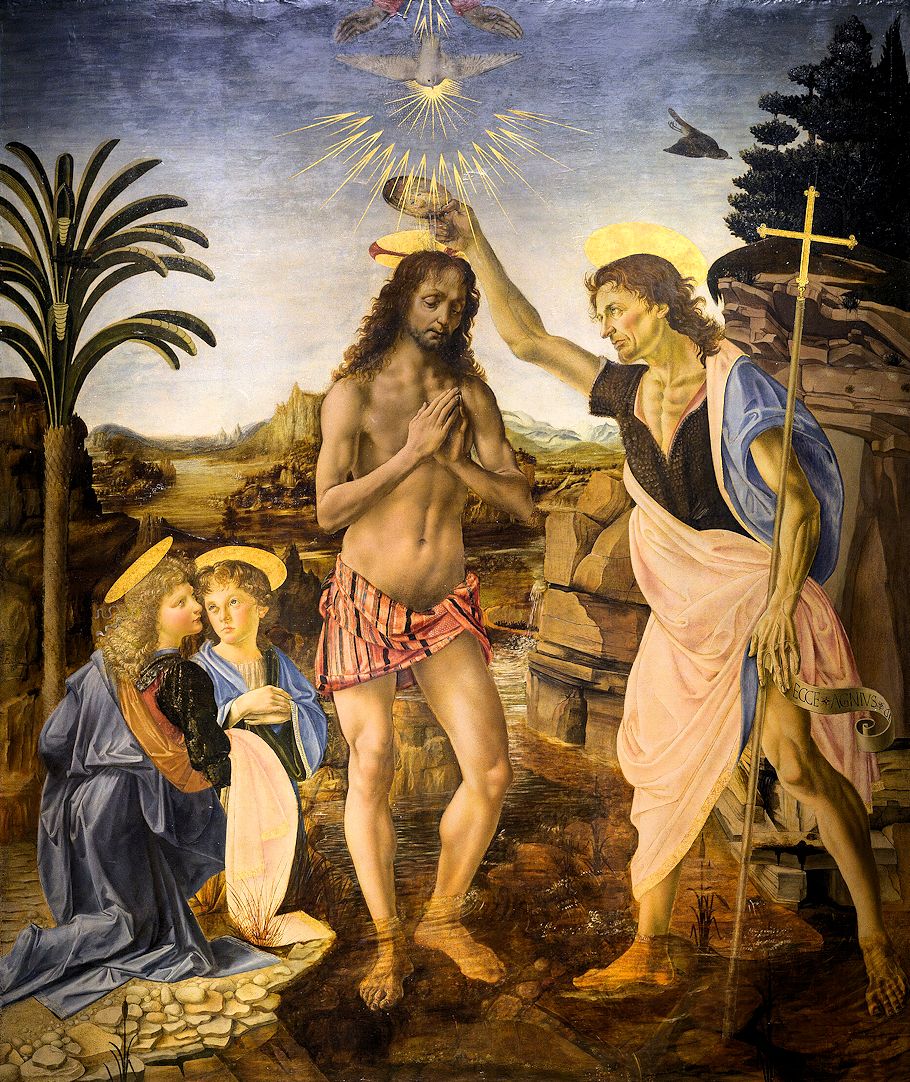
...as the first sequence of Charlie's dream in last night's episode of Lost.
Surprised because I spent some time yesterday thinking about della Francesca's The Baptism of Christ,
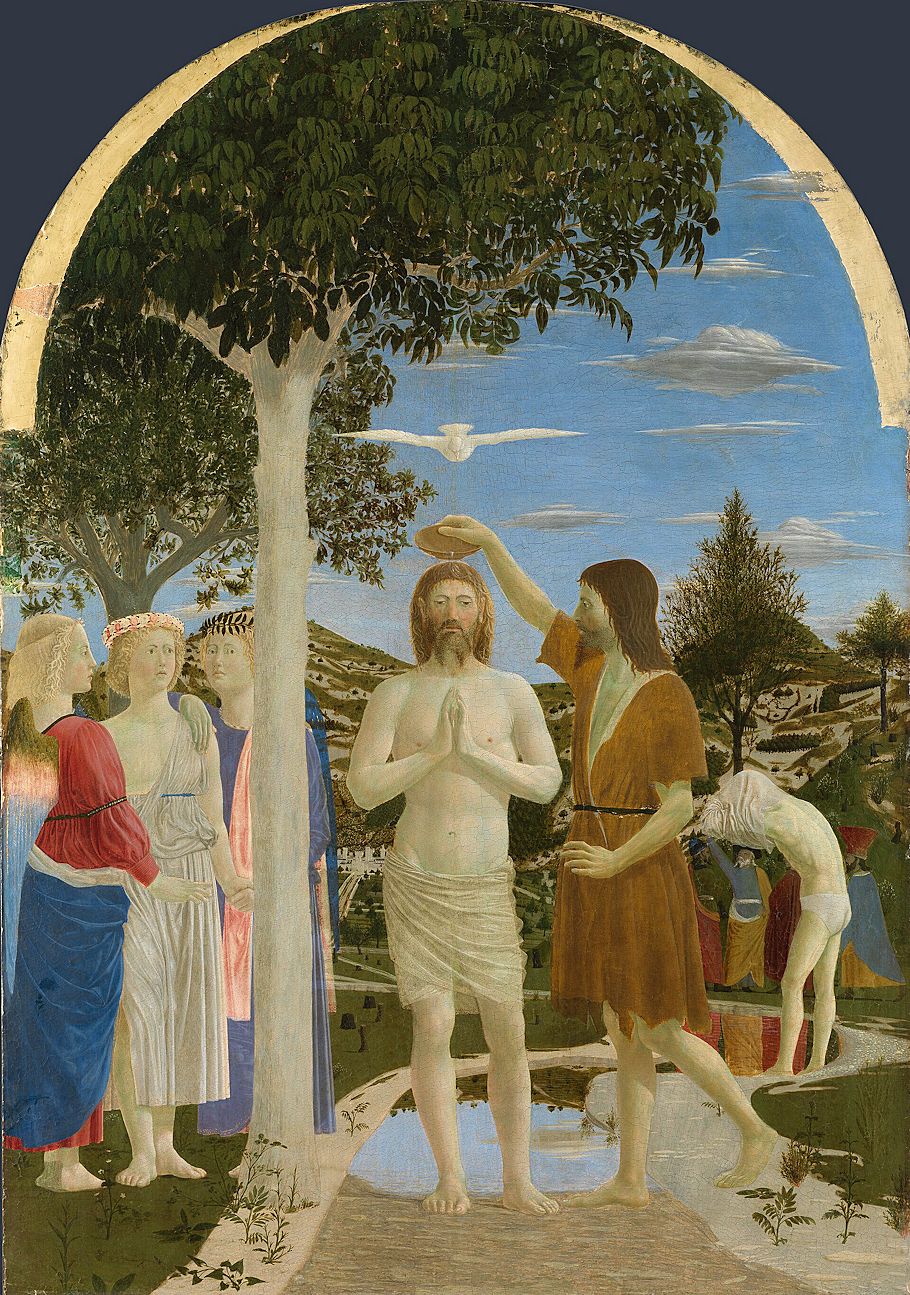
which is the painting Dave used as formal/symbolic inspiration for his Art Historian's Study Center thesis design.
I really wish I could remember all the things D said about the painting. All I do remember is that D, in his thesis, strove to represent the spatial duality of the painting in his building design.
D is afraid that K and G are not going to get what he want's to get out of his thesis.
2005.01.26
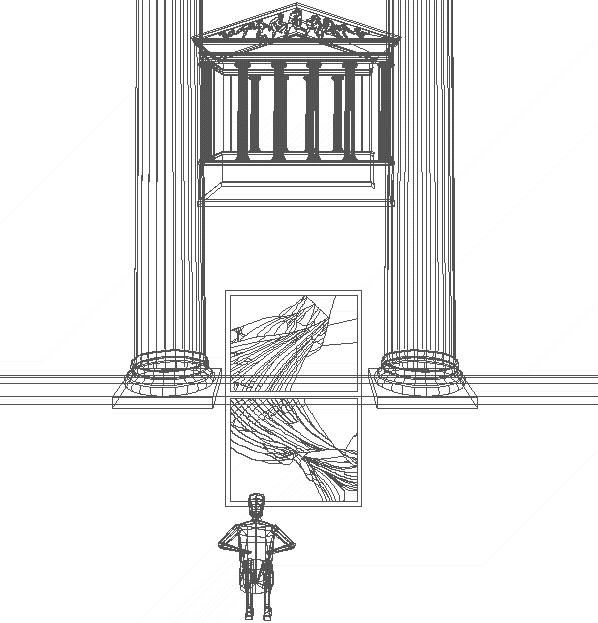
Re:pedimental
...and through the looking glass.
2003.01.26
Re: Despite 'Rays of Light', I'm Drawing a Line in the Sand
It's doubtful you're the first or the last artist to find frustration and lose when trying to translate something on a screen onto some(plane)thing out/off of the screen. Yes, the differences do indeed exist, but they can also be exploited. Complete 1 to 1 translation is likely an ideal that doesn't even exist anyway, so why bother trying.
It's sad you feel you lost a bunch of work, because you really didn't if you backed it up. It's all still there, 'sitting' as you put it. It's even been dated, for future reference.
The screen environment isn't shrinking.
Which is better:
tools determining how you think
or
thinking determining how you use tools
Will artists ever be judged or valued because of their personal "thousand other things been done?"
Re: Despite 'Rays of Light', I'm Drawing a Line in the Sand
evolution of dexterity
Are we living in an age when a person/body without hands or without hands that are working can go to art school and begin to draw by talking to a computer?
Where exactly are artists without their corporal and extra-corporal tools?
2002.01.26
Re: WTC Recycled Steel
Again, where is that study on 'architecture that moves' when you need?
Did anyone complain when pieces of the Berlin Wall were up for sale as souvenirs? Concrete is real cheap though, isn't it?
Schumpeter called capitalism "creative destruction," however "destructive creation" seems more apt (today at least).
The (chronosomatically forthcoming) liver is the most metabolic organ of our bodies.
2001.01.26
irony and feeling
To answer your question, I'm trying to come to grips with the notion of why European colonials didn't simply accept the architectures that were indigenous to the lands that they (the Europeans) colonized. I see this as a negative action because I think a case can be made that many of this planets indigenous architectures are now virtually extinct because of Western colonialism/imperialism. During the first half of the 20th century, while large parts of the world were still colonies of Europe, Western modern architecture or the International Style (again a term used more for convenience) continued the global domination of Western style and furthered the extinction of indigenous architectures.
As much as I like Classical Greek and Roman architecture and Modern architecture, I nonetheless see it as a tremendous loss to architecture in general that these styles are now so global at what seems to be the expense of so many other architectures. This is why I am less and less tolerant of architectural criticism/theory that goes to far as to say "this architecture here is good" but "that architecture over there is bad."
In a recent post, you mentioned that commercialism may be readily acceptable to the post W.W.II generations, but I have to wonder whether the end of colonialism and the US civil rights movement are a better benchmark for the acceptability of diversity in all its guises.
ps
When I first thought up the notion, "The whiter humanity thinks, the more it manifests extinctions," I was [also] thinking of architecture.
irony and feeling
And I think you assume too much that I'm being "post-modern". I was speaking about architecture [and] using other terms for convenience. Everything you said was about broader cultural issues, but you said nothing about the architectural issues I raised. You changed the subject.
I am not seeking apologies or ways to change the past. I just don't want to see present or future architecture's succumb to further "Western" theoretical dominance, especially against diversity.
You bring up assimilation, but you don't mention that the assimilation of colonialism was a forced assimilation. In architectural terms, the 'purism' of early modernism was/is a form of assimilation in the extreme, namely purge. Global assimilation is one of today's dominant cultural aspects, but extreme assimilation like that of the last century is not a lasting aspect of humanity.
Part of my thinking is also given as a kind of preparatory warning. With genetic engineering becoming more and more a common science, humanity will find itself in th[is] next century or so having to think real hard about diversity and individuality. Some forethought in this area is certainly not going to hurt. Imagine what might happen if the genetic engineers of tomorrow were trained to design like today's architects.
1927.01.26
1927. Wednesday, New York City
After hearing on his return from Chicago the American government is demanding that duty amounting to $200 [21.10.1926] on l'Oiseau dans l'espace by Brancusi, Duchamp has seen Edward Steichen, to whom the sculpture belongs. Having agreed that they should fight the decision, Duchamp meets Albert Gleizes' brother-in-law, Maurice Speiser, a lawyer from Philadelphia, who agrees to act for Brancusi.
Ephemerides
|