2026.01.22
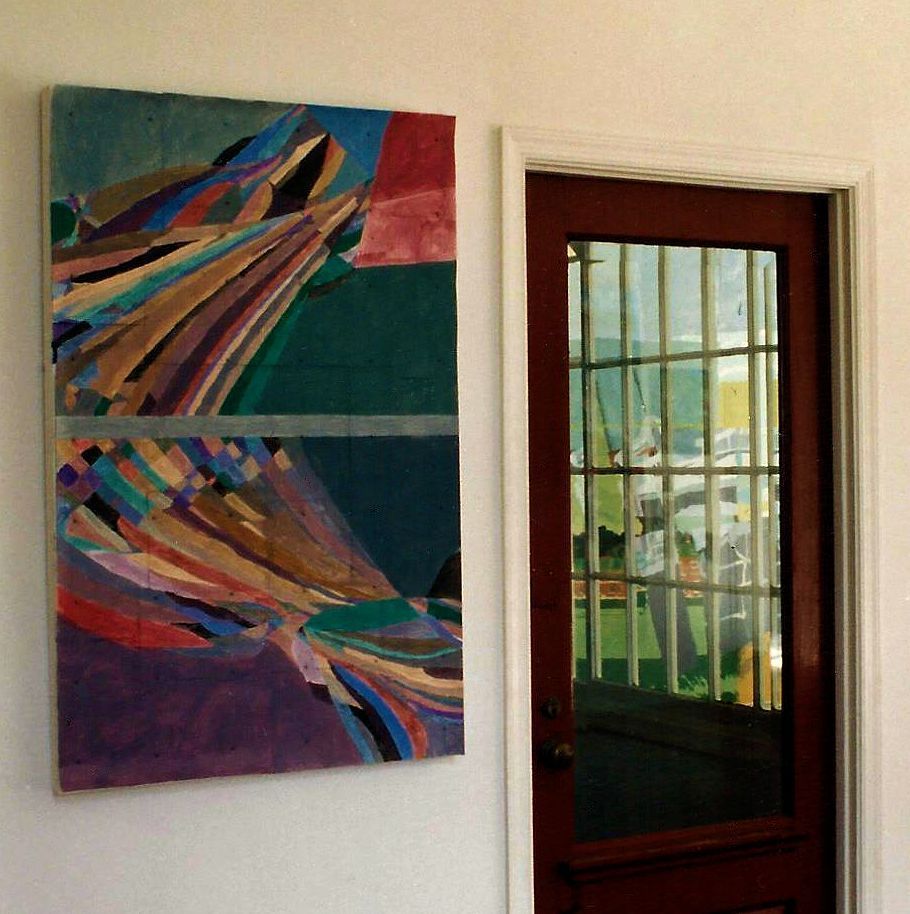
I now know what it is like to find evidence of something altogether forgotten, yet painted and exhibited in the spring of 1993. Being fairly certain the painting does not exist anymore, it was most likely deemed not good enough and ultimately trashed. An opportunity however, to kind of reenact the work, certainly does exist.
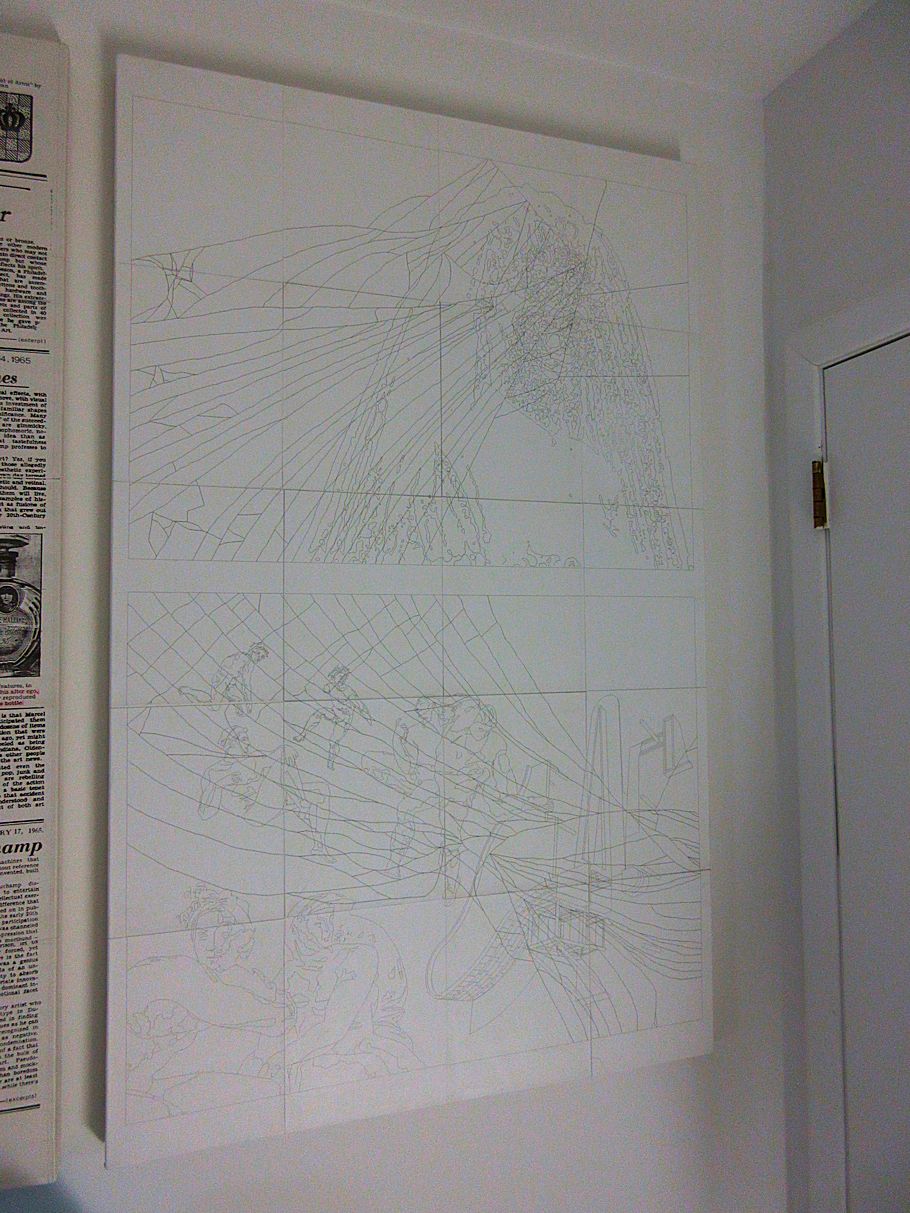
2025.01.22
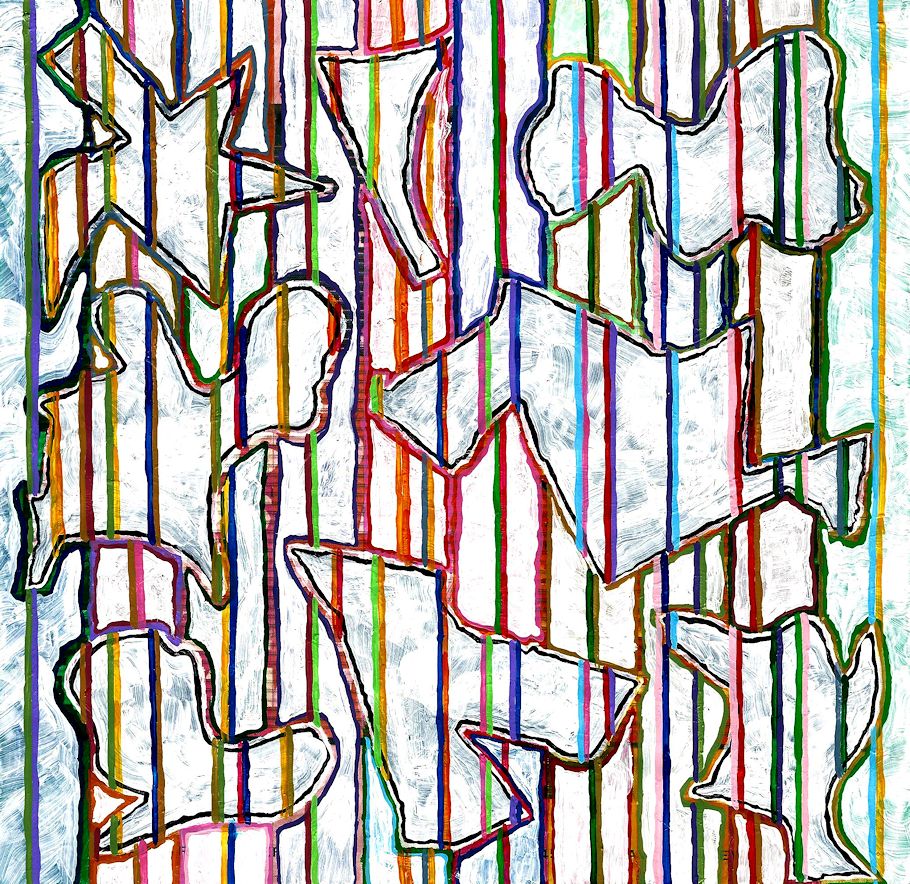
a work within This One's for George
2021.01.22

book spread painting 013

book spread painting 014
2017.01.22
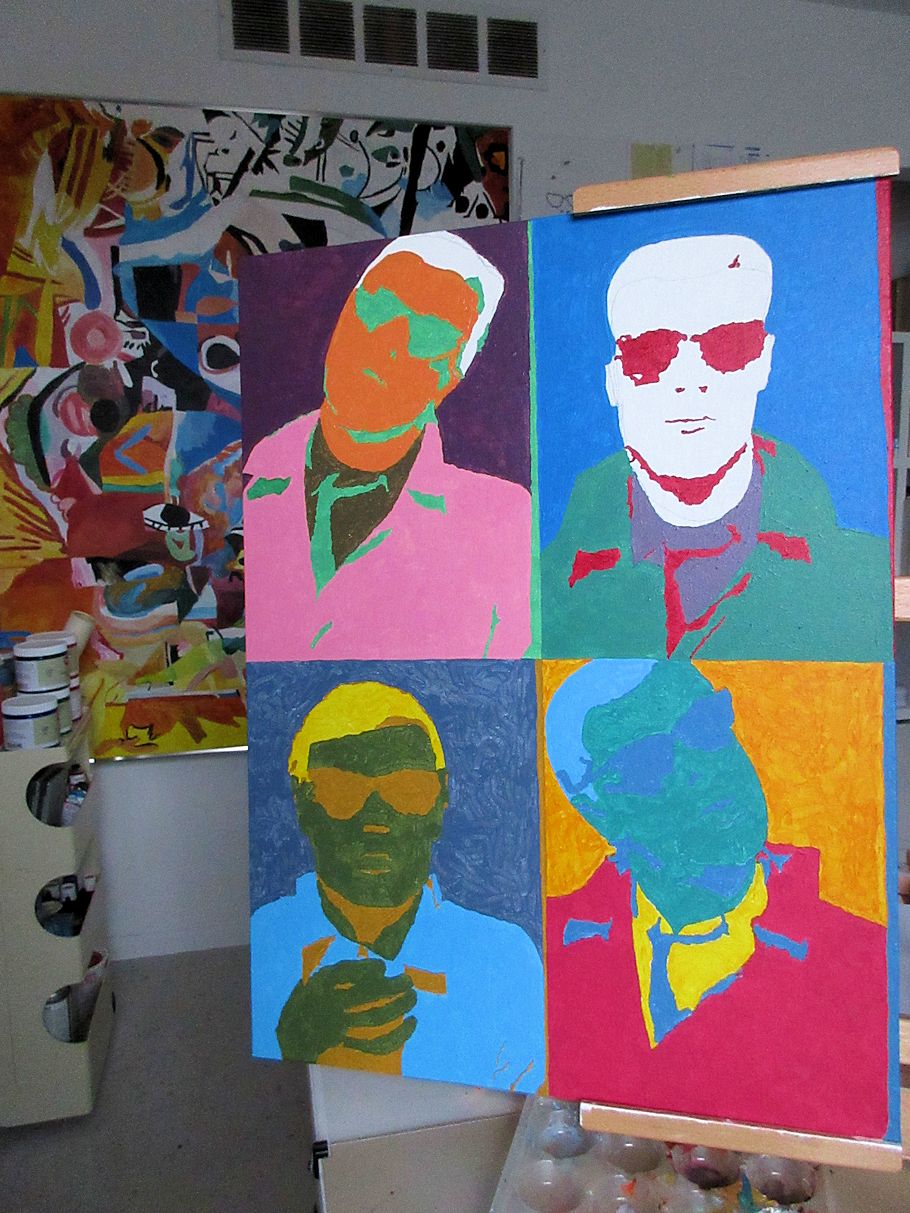
15:37
Critical Manipulation
2004.01.22
Re: Academic Art
Salle's work was exhibited at the Philadelphia Institute of Contemporary Art in 1985 (or early 1986) [actually October 9 - November 30, 1986]. The ICA was then in Meyerson Hall (the main building of University of Pennsylvania's Graduate School of Fine Art), and I worked within the CAD Computer Lab literally [on the floor] above the ICA gallery. I saw Salle's work nearly everyday for about three months, and it was very interesting to look at and closely examine. I had no idea then who he was or would turn out to be in (post-modern?) art history, but I liked the visual freedom and the daring and the size.
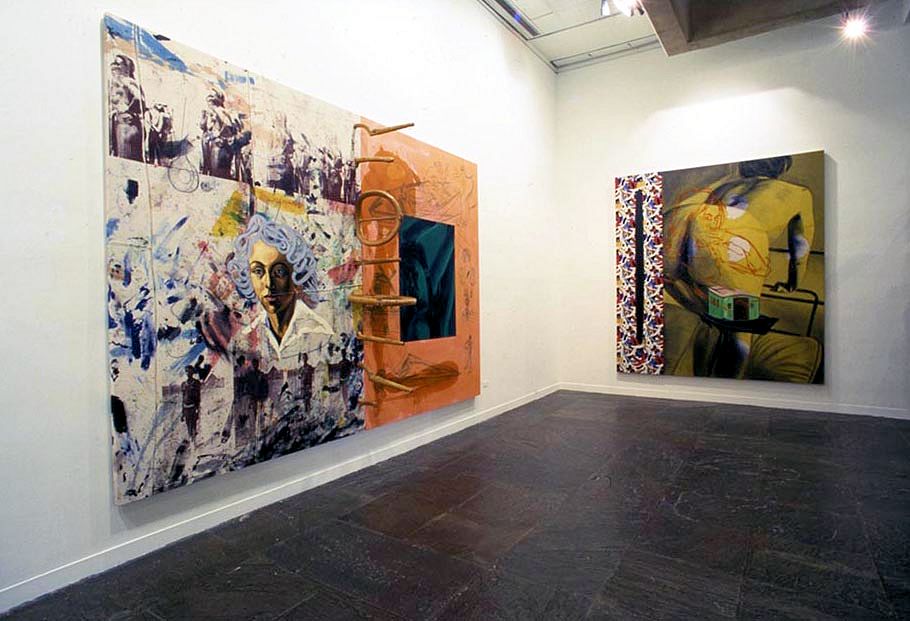
David Salle, 1986, installation view, Institute of Contemporary Art, University of Pennsylvania.
In the early 1990s, I saw Salle's sculpture exhibit at Gagosian Soho[?]. If I had the money I would have bought one, especially since almost(?) no one else did.
2003.01.22
Re: Favorite Artist?
Furthermore, while everyone thought Duchamp had given up art for chess playing, he was actually being an "underground artist" (Duchamp's own term). And even further, during the early 1950s, Duchamp was arranging the Arensberg collection at the Philadelphia Museum of Art, a collection that includes the largest collection of Duchamp works anywhere. Thus Duchamp literally arranged the bulk of his own work within a major museum, including the covert Étant donnés.
Duchamp is both literally and figuratively a very good aperture through which to view 20th century art.
Arranging one's own art work within a museum, what a virtually interesting idea. Perhaps even worth reenacting.
Re: Favorite Artist?
Be sure to read, if you haven't already done so, the text Duchamp prepared and read for the panel discussion "Where do we go from Here? at Philadelphia, 20 March 1961. This text is within the "Ephemerides..." of Hulten et al, Marcel Duchamp: Work and Life, 1993. It is at the end of this speech/text that Duchamp states, "The great artist of tomorrow will go underground."
Given that we now know that Duchamp was secretly working on Étant donnés at that time, it seems only natural to assume that Duchamp was indeed clandestinely referring to himself. Not only was Duchamp good at reenacting, he got pretty good at preenacting as well.
Duchamp, an underground artist predicting the future greatness of himself. How artistic can you get[?]!
1954.01.22
1954. Friday, New York City
As stated in his cable of the previous day, Duchamp telephones Philadelphia in the morning at 10 o'clock. However Fiske Kimball is in New York and can be contacted at the Chemical National Bank after twelve-thirty. A cable from Kimball confirms this and they manage to meet later in the day.
As a result of their discussions, Kimball agrees not to make any mention of a "Modern Museum"; not to relate the opening of the Arensberg Collection with anything else; to open the collection as early as possible and not wait until October; to aim for "dignified publicity"; to simplify the framing to save time; not to try to have the catalogue ready for the opening, and to spend all the time necessary to make it a 'monument'."
Fiske has asked Henry Clifford to edit the catalogue and suggests that he submit some pages to Walter Arensberg for his approval. Marcel proposes that James Thrall Soby write the introduction.
Ephemerides
|