2026.01.21
Box of the Mid-70s
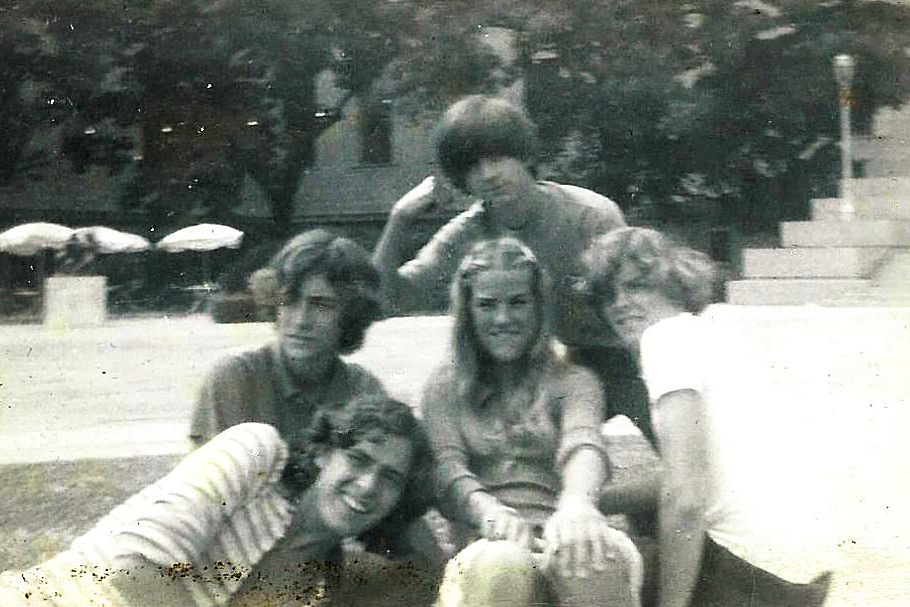
Although Terry took this picture mid-summer 1972, it is the only photographic record of my having been at the Philadelphia Museum of Art in the 1970s. Now entitled Helen Surrounded by Teenaged Bachelors, we have John at 12 o'clock, Jim at 3, me at 7:30 and Bob at 9.
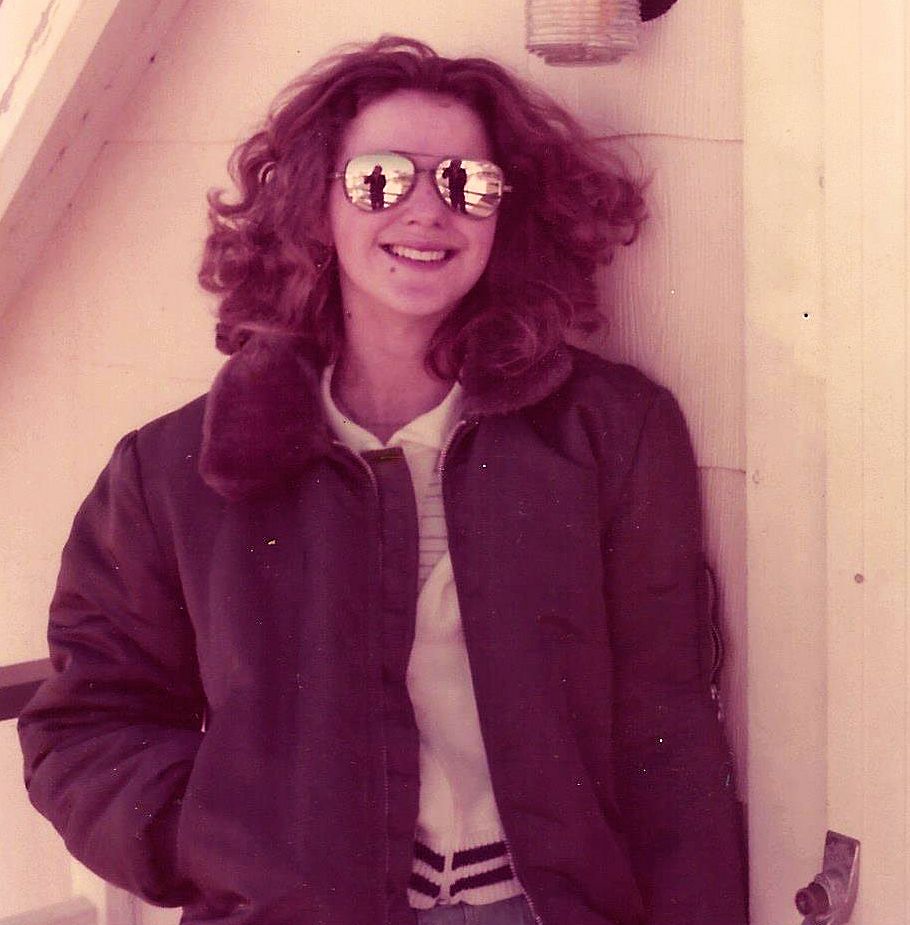
Terry Reflecting Me Taking Her Picture Wildwood, New Jersey 1977.03.20 my 21st birthday
2023.01.21
From The Discovery of Piranesi's Final Project
21 January 2023 Saturday
So much for catching up on sleep this weekend. George's hospital bed stopped functioning properly, and, in turn, I stopped functioning properly several times today as well, yet... spent the (upside) downtime reading more of Gass' The World Within the Word--finally making a dent after many, many attempts over the last thirty odd years. Later, late, thinking about the content of the first two and a half essays got me thinking about autobiography, and, soon enough, a title popped into my head.
21:19 SL
Thanks so much for talking today. I needed at least a little highlight. And speaking of highlights, I just came up with my next book, an autobiography: 10 Years Working in a Soviet Labor Camp (in Southern Ukraine) is in My DNA.
Talk about predestination!
Then I started giving more (lucid) thought to the three (almost four) acutely identical breakdowns experienced today. In simple terms, and this is what I've never realized before, I was viscerally absorbing a great deal of my brother's own real anguish, but an anguish he was not feeling himself because I was absorbing it all. I even think I just naturally help my brother all the time by absorbing his anguish, but today's intense feeling of the anguish was due to my being quickly rendered completely vulnerable, this morning, and nearly seeing defeat.
2021.01.21
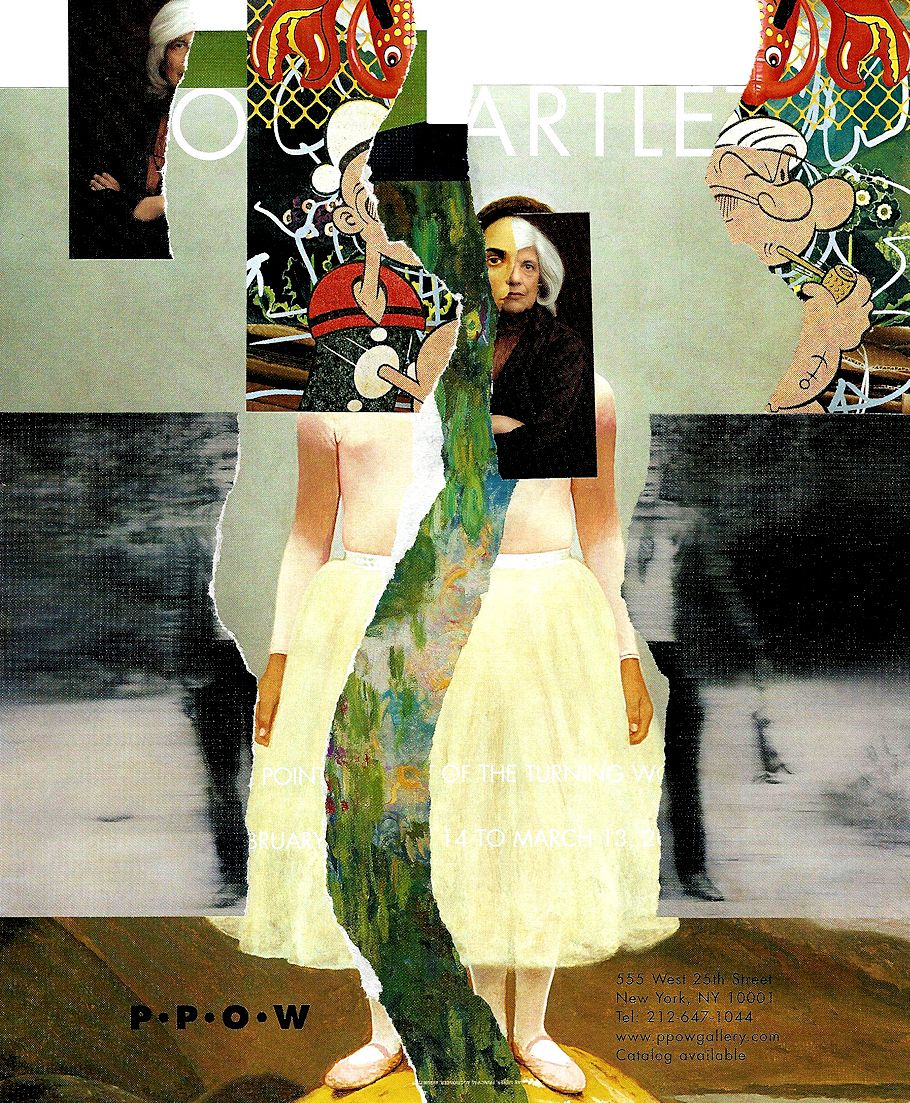
aia page collage 004
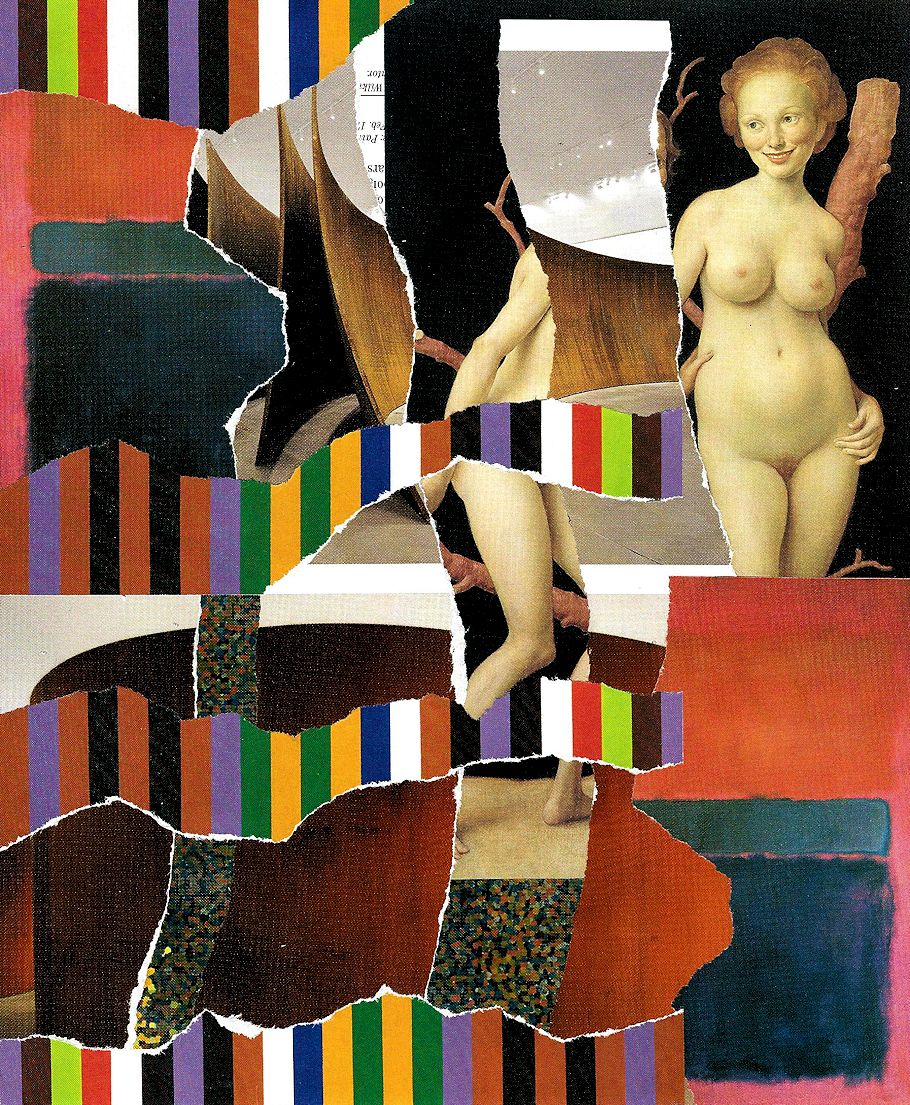
aia page collage 005
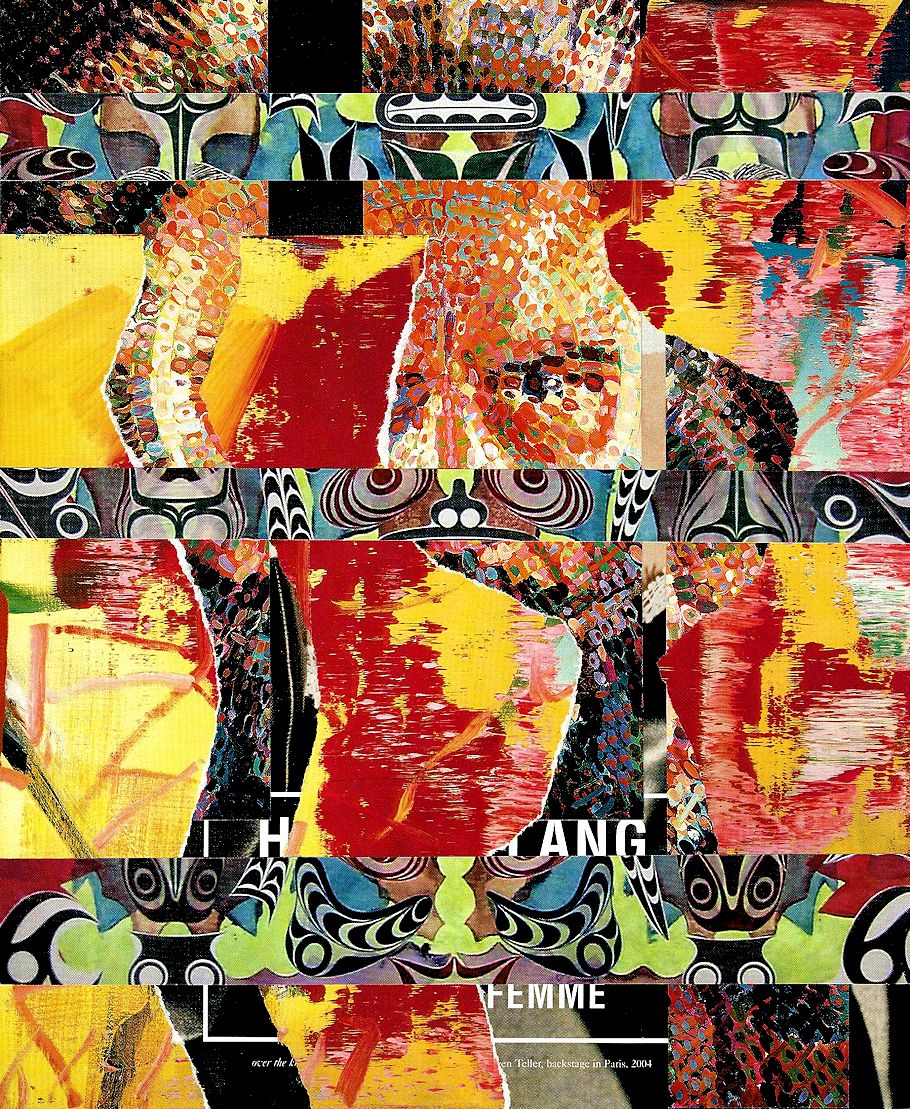
aia page collage 007
2019.01.21
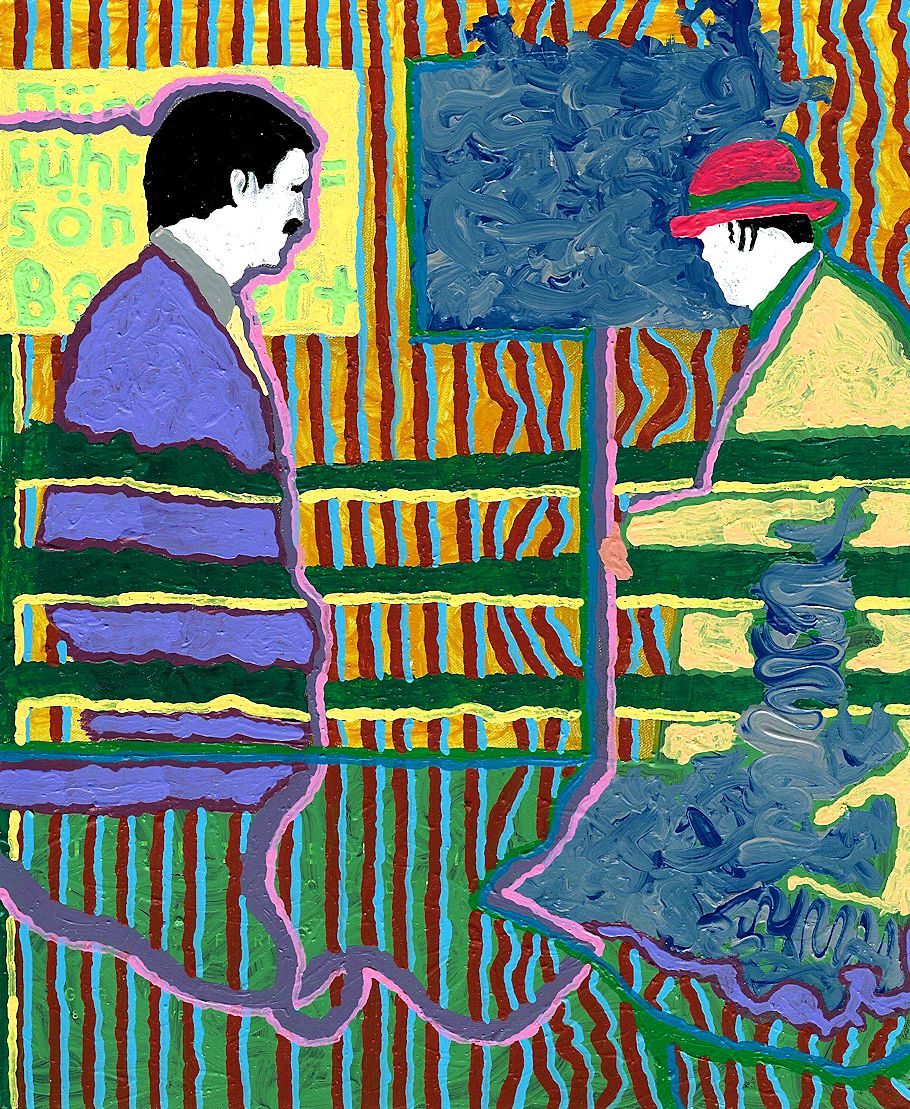
one zero three
2013.01.21
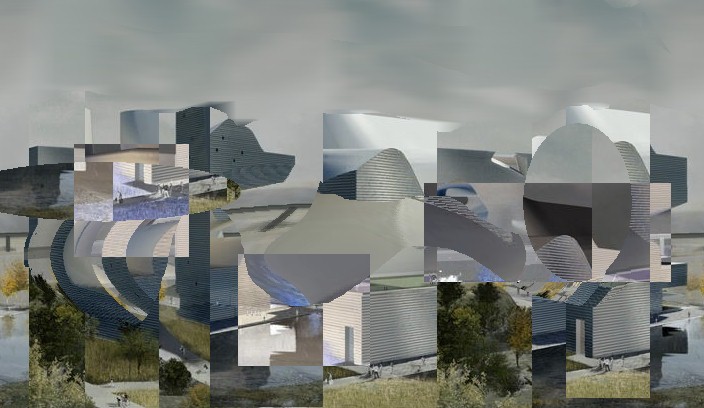 Yin/Yang Compare/Contrast Museum/Pre-Shrine
2005.01.21
Re: Kitsch
Spetters makes very artful use of the vehicle motif.
Nur Einstein einladen. Dann ist Einkaufen einmalig. Und das ist kein Einbildung, sondern ein Einlaß.
I assume school teaches about different mediums, but does it also teach about different vehicles?
Are all mediums already invented?
Are all vehicles already invented?
Denk mal.
Lustig ist das Zigeuner Leben
Brauch dem Kaiser kein Zins zu geben
Also sprach hyperdictionary.com/dictionary/gypsy+cab
der Zufall
2004.01.21
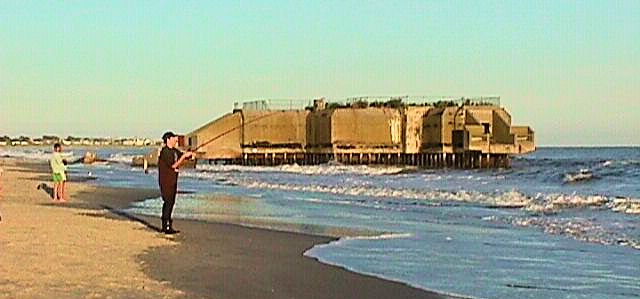
best thing about new jersey
The second most incredible building of the 20th century is just off New Jersey's southern tip.
best thing about new jersey
The W.W.II bunker that was originally 700 feet inland and now 30 feet up in the air on a forest of pilotes in the ocean--an uncanny manifestion of the Le Corbusian paradigm.
2003.01.21
Re: "REEKING GALERISM"
Perhaps the biggest irony is that Duchamp very overtly played the reenactor, yet virtually no one, and perhaps even Duchamp himself, realized just how much of Duchamp's art is all reenactment.
Hamilton is certainly the occasional reenactor of Duchamp, but does he even realize that is exactly what he is doing above all else?
Check out Readymade in Japan with Laser Print on Transparency, a completely admitted reenactment of something that is actually not Duchamp.
Note: the limit of reenactment is that it can never be exactly that which it reenacts.
Re: "REEKING GALERISM"
I think the real issue presently questioned / addressed is that PR, self-promotion, and entertainment are NOT necessarily three different things anymore. Moreover, the confluence of PR, self-promotion, and entertainment has become a (new) hybrid art form in its own right.
Maybe all it really needs is a name that everyone can agree on—probably a hybrid name with multiple entendre, sort of like museumpeace.
2000.01.21
everything: Image and actuality
I was inspired by Hugh's last post to 'perform' a simultaneous riff.
I haven't been to Bilbao, but I've been to Sydney (didn't hear any Opera though). I'm not much of a critic when it comes to visiting buildings, because I inevitably like most of them once I see them in person. So it comes down to anecdotes. You can have an inexpensive lunch on the terrace-plinth of the Opera House overlooking the harbor. There are signs on the tables under umbrellas; they read: "Do Not Leave Your Food Unattended". The reason for this warning, and I've seen it happen, is that the moment you leave food on the table unattended, a small flock of sea-gulls will "attack" your lunch. Yikes! indeed.
The Opera House is really a nice sight from the harbor. While in Sydney, I stayed at Manly Beach (not making that name up), which connects to Sydney via ferry or hydrofoil. The Opera House is quite the landmark, and it looks really good at night as well.
I went to Australia purposefully not taking a camera. In the early 1980s I read Thomas Mann's Joseph and His Brothers, and very near the end of the book Mann writes a few lines about how there was no camera to capture incredible events throughout most of history, events like the reunion of Joseph and his brothers in Egypt. Mann simple said, "they had to use their own lenses." There are times when I now purposefully "use my own lenses," and my trip to Australia was one of those times.
I got to go to Canberra as well (this was early January 1987). I just happened to be there the day after the enormous flagpole was erected over the new Capitol. Well, as then installed, the flagpole looked straight from the front, but it definitely was leaning back by about 4 degrees when viewed from the side. To record that brief early history of the Canberra flagpole was the only time I wished I had a camera while in Australia.
Flying home, the pilot informed the passengers that Canberra was visible out the right side of the plane. I thought this would be real neat to see because of the huge circular geometrics of Canberra's urban plan. Well, I looked and I looked. I knew it had to be recognizable. Finally, there is was, the whole of Griffin's plan about the size of the hole in a piece of loose leaf paper. What a lesson in scale.
In the early 1980s, Aldo van Eyck was a guest chair at the University of Pennsylvania's Graduate School of Fine Arts. Van Eyck gave several lectures during the course of the semester. The first lectures was standing room only, but the rest became less and less attended--van Eyck talked for at least 3 hours each time, and there was lots of repetition. Anyway, this was just at the beginning of post-modernism's popularity within architecture, and van Eyck didn't like post-modernism at all. Basically, he wanted to continually prove that anyone interested in post-modernism didn't 'really' know architecture. He showed this slide of a detail of a fountain. You could tell it was historical, as opposed to modern, because of some flourish in the detailing. Van Eyck challenged the audience to guess where this detail came from; his point was that one really had to look at architecture to truly understand it. I should have answered out loud, but I only told the person next to me: "that's at the Taj Mahal." No one else answered, and finally van Eyck said, "it's at the Taj Mahal." My friend immediately looked at me and asked, "How did you know that?!?" I answered, "When I was something like 12 years old, I had a big jigsaw puzzle of the Taj Mahal in its classic view. I kind of know every inch of that place."
I have constructed a computer model of the Villa Savoye (or Saviueezse or something like that) which I 'visit' occasionally, but I've never been there for real. The wife of an architect friend of mine tells a genuinely funny story about being there, however. When she and her husband were there, a group of other architects were there as well. Of course, all the architects had camera in hand, but it wasn't all that easy to take pictures. As Colleen stood in the background, she observed how each of the architects was gingerly walking around and taking snaps of the house while being careful not to get any of the other architects in their pictures or having themselves infringe upon another's pictures. Colleen said it was one of the funniest things she ever saw. I said, "You should have taken a picture of that."
Personally, I don't think architectural photographers are as important as architects, mostly because architectural photography only presents a very narrow slice of the building's life, and especially a slice when all the 'makeup' is on and anything unsightly is literally out of sight. Are they mostly false pictures? Not necessarily, but the potential for falsehood is definitely there, and it's often a potential fulfilled in one way or another.
Perhaps I'm old fashioned, but the architectural images I enjoy (and learn from) the most are the fine line drawings and engravings, be they plans, elevations, sections, perspectives, that are largely a product of the nineteenth century. That's why most of the architecture books I buy now are purchased through eBay.
1999.01.21
Ottopia
Another major aspect of the exhibit will be Ottopia--a schizophrenic ichnographia.
1954.01.21
1954. Thursday, New York City
A large envelope arrives from Walter Arensberg enclosing copies of his recent letters to Fiske Kimball and a draft of the last one which has not been sent. In a short note to Marcel, Walter says that he is too distracted to write himself and has asked his secretary, Elizabeth Wrigley, to explain the reasons for his dejection. After outlining the problems related to the proposed catalogue and the delayed opening of the Arensberg galleries, in the final paragraph of her letter, Mrs Wrigley states: "Mr Arensberg would like you to go to Philadelphia as soon as possible and to be quite firm about the situation."
Duchamp sends a cable to Kimball: "Intend to take 11 am train tomorrow Friday," and adds, "will cable you up before leaving New York."
Ephemerides
|