2026.04.19
read the following almost a month ago
The first lineaments of an institutional theory of art appeared in 1969 in an article by the philosopher George Dickie titled 'Defining Art', which he later expanded into a book, Art and the Aesthetic: An Institutional Analysis, published in 1974. Claiming to refute both theories of taste and theories of the aesthetic attitude, Dickie gives the following definitions of a work of art:
A work of art in the classificatory sense is: (1) an artifact (2) a set of the aspects of which has had conferred upon it the status of candidate for appreciation by some person or persons acting on behalf of a certain social institution (the artworld).
This definition is circular and boils down to this: art is whatever the artworld calls art. All power to the institution! More precisely: whoever wields power because he or she enjoys a prominent position in the artworld possesses the art-naming power by the same token. Imagine Broodthaers reading Dickie's tautology (he didn't). Don't you think he would reason as follows? 'Artists are powerless in imposing that what they make be called art. My dealer and the few collectors who have faith in me have a lot more power than I. The relevant question is, who has the ultimate power, who has the authority that outpowers the temporary might of dealers and collectors, the power that settles the art-naming issue for good? Museum directors! Once in the museum, aren't works of art there forever, eternal and priceless? If this is so, why not let the idea of inventing something insincere cross my mind again? Why not proclaim myself a museum director?' Which is exactly what Broodthaers did on 27 September 1968, when he inaugurated the Musèe d'art moderne, Département des aigles, Section 19è siècle at his house address, 30 rue de la Pépinière in Brussels.
Of course, things didn't happen that way.
Thierry de Duve, Duchamp's Telegram: From Beaux-Arts to Art-in-General (2023), p. 315.
Tomorrow, Duchamp After Unbekannt will be one year old . . .
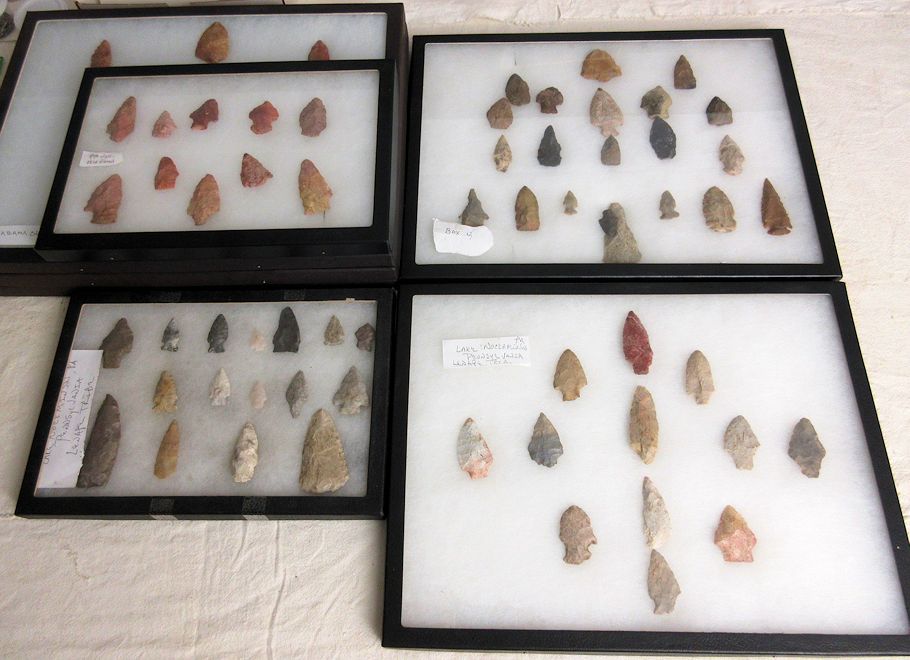
. . . which is many centuries (if not millennia) younger than the specimens within the arrowhead collection I purchased yesterday.
2025.04.19
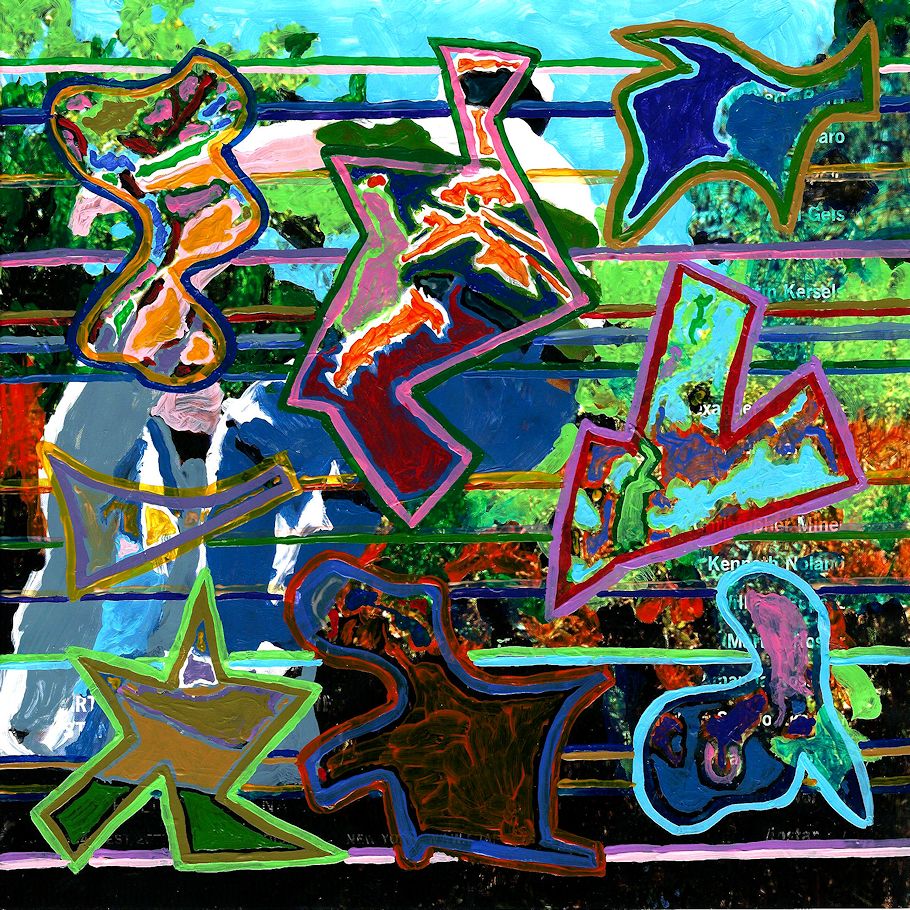
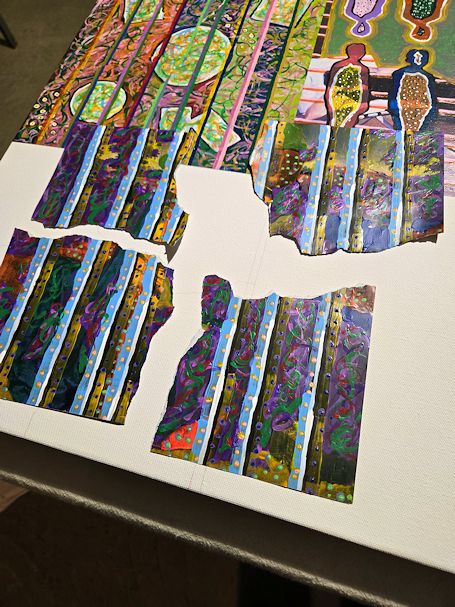
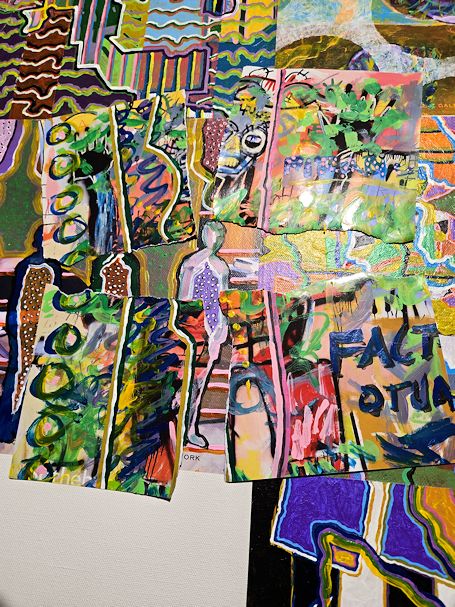
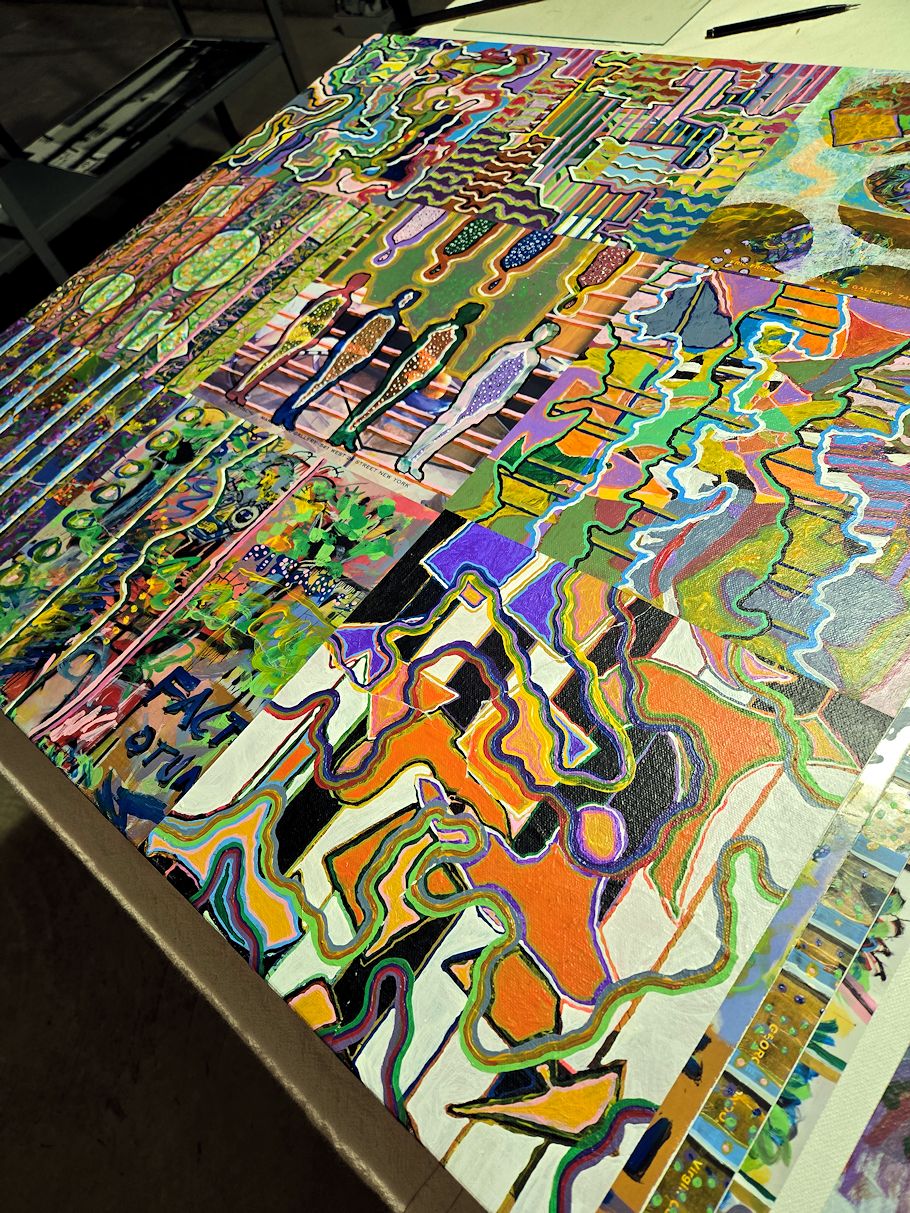
a work within This One's for George
451 Rhawn Gallery
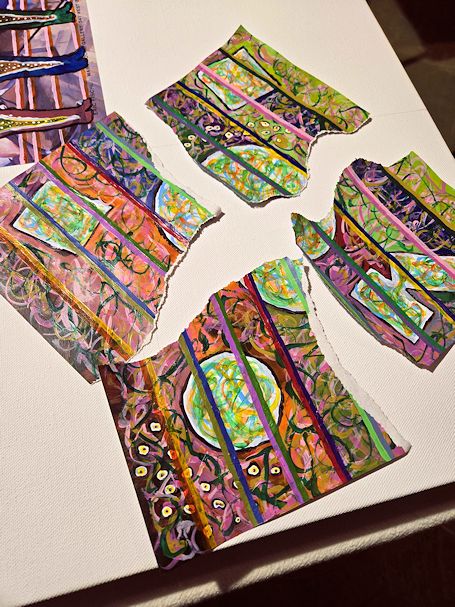 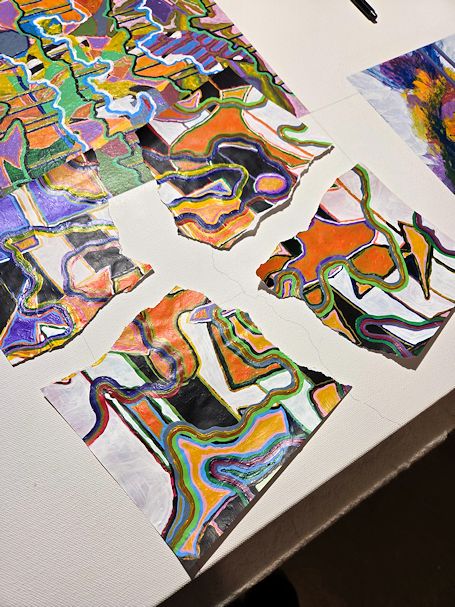
2024.04.19
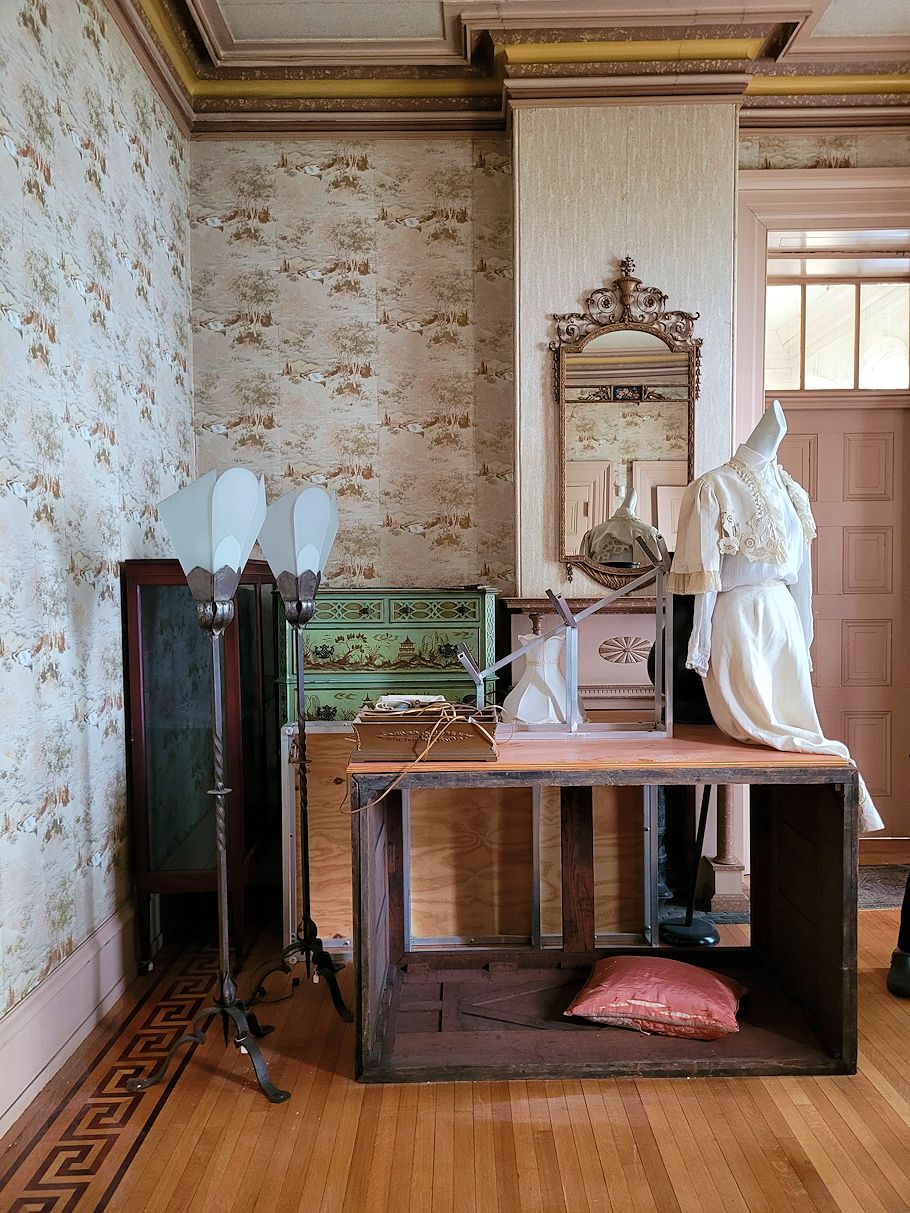
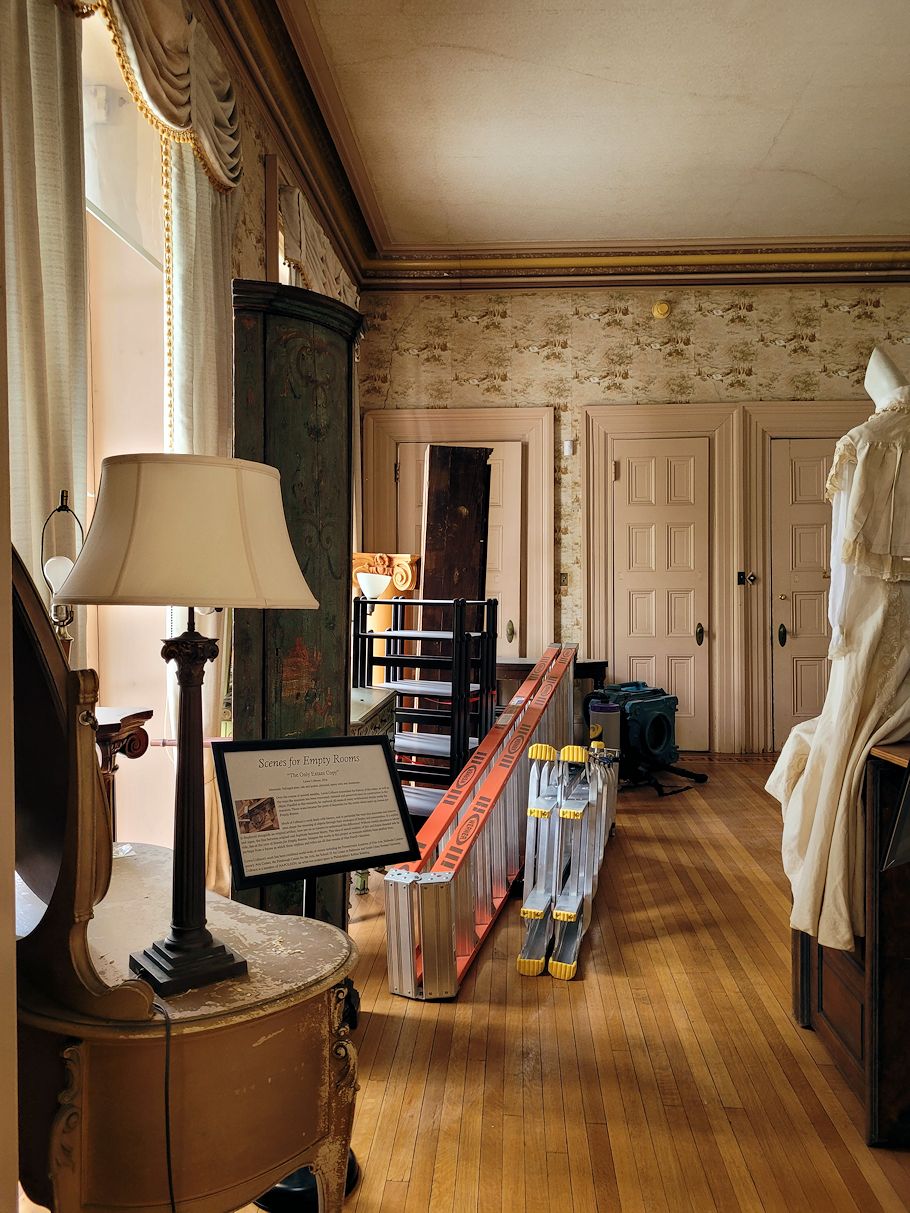
behind the scenes at Glenfoerd
2020.04.19
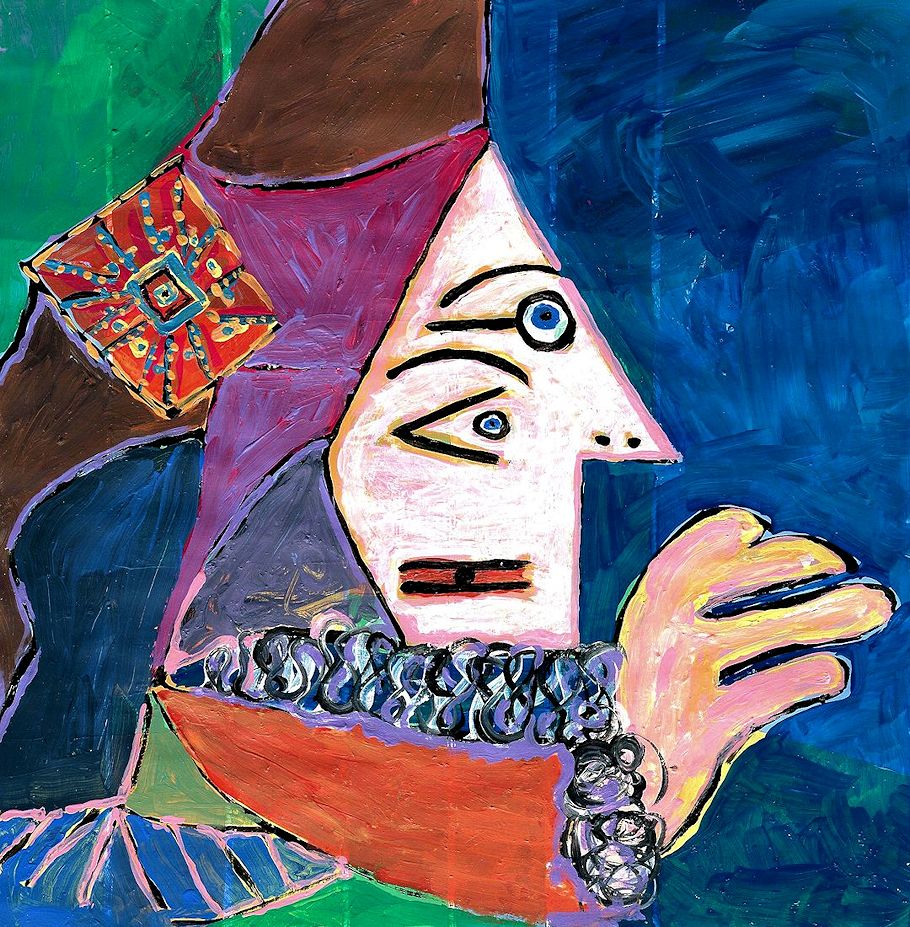
Mary Boone's 180 hours of community service hours 66 67 68
2017.04.19
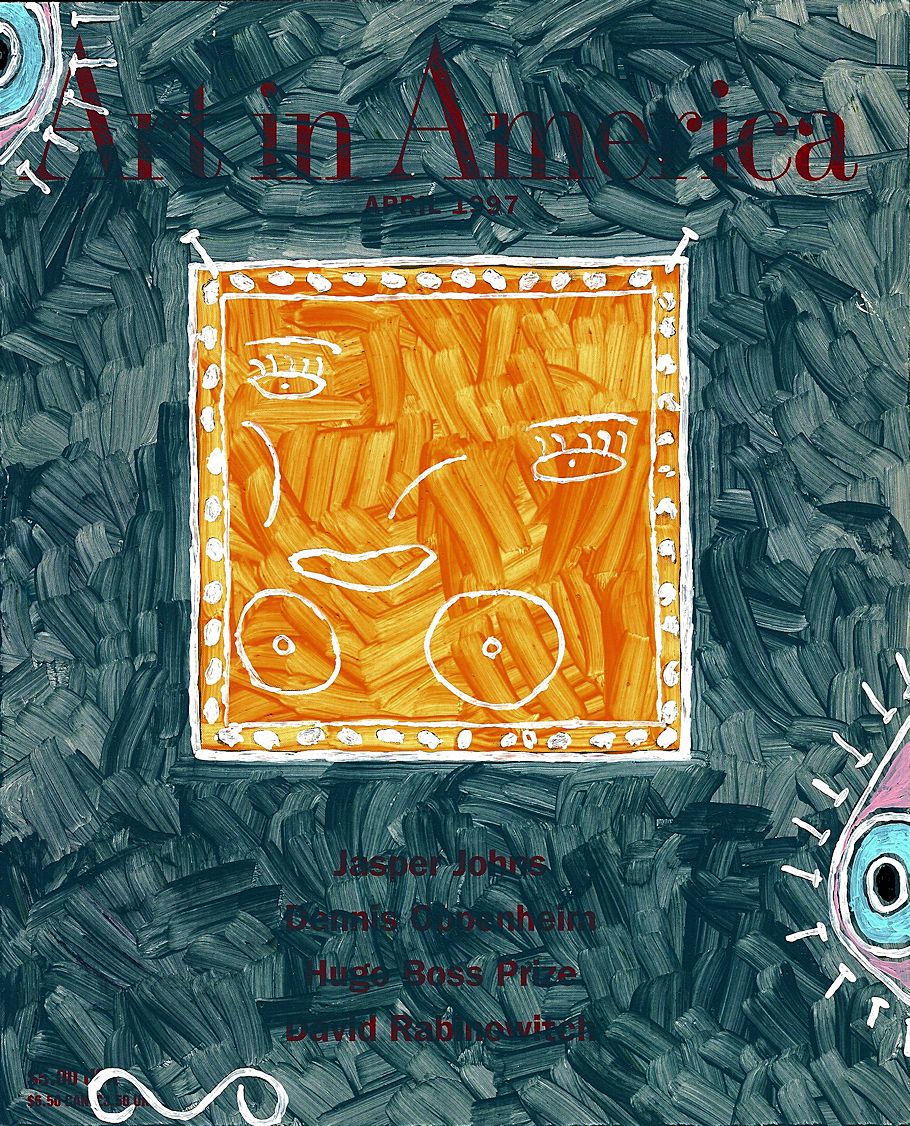
zero two six
2005.04.19
Re: Selective Memories
...and while we're speaking of aesthetic dislocation, Duchamp found a new picture to put on his d'art board--lower left corner of page 10 Artforum February 2004.
"I love hitting the Bullshit's Eye!"
Ah, thanks for the selective memories.
Privilegium Ottonianum
Before his death Alberic made the Romans swear to elect his son, Octavian, when Agapetus died. In 955 this promise was fulfilled and the young man became John XII. His conduct as pope was scandalous and his politics unsuccessful. In Feb. 962 he crowned the German king Otto I Holy Roman Emperor and obtained from him a confirmation and extension of the temporal powers of the papacy, the so-called Ottonian privilege (Privilegium Ottonianum). But a proviso to the Ottonian privilege gave the emperor power of ratification over papal elections.
The pope and the emperor soon quarreled. Otto had John deposed and replaced by Leo VIII (Dec. 963). When Otto's duties took him away from Rome, John again obtained control of the city and took vengeance on his foes. Leo fled (Feb. 964). John died (May) before Otto I returned to Rome, and the Romans immediately elected Benedict V. Otto had Benedict deposed and sent into exile while he restored Leo VIII (June).
[a couple paragraphs later...]
Otto III named as John XV's successor the first German pope, his 23-year-old cousin Bruno, who took the name Gregory V and immediately crowned the emperor (May 21, 996).
"Papacy" in Encyclopedia Britannica (1969).
Maybe it just comes down to enjoying the odds of all this.
2004.04.19
Re: Is all that attitude really necessary?
Ah yes, the Tragically Hip Mysteries.
Asking for a price-list usually breaks the wind. Or at least now you know where to get extras for Square Logs of the Arctic Circle.
Guess who was Baroness Herring von Frankensdorf before she married.
Re: If you build it, then it's likely to be torn down.
Last time I was in Eva Stotesbury's Ballroom, the place looked like this:
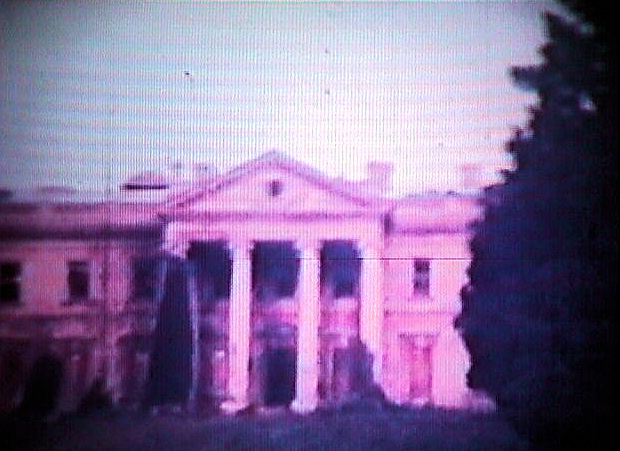
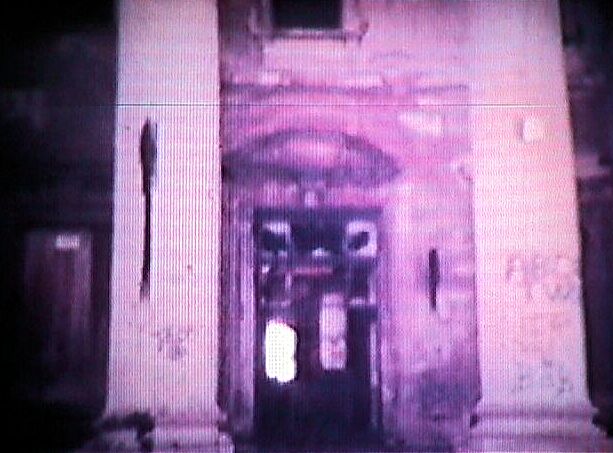
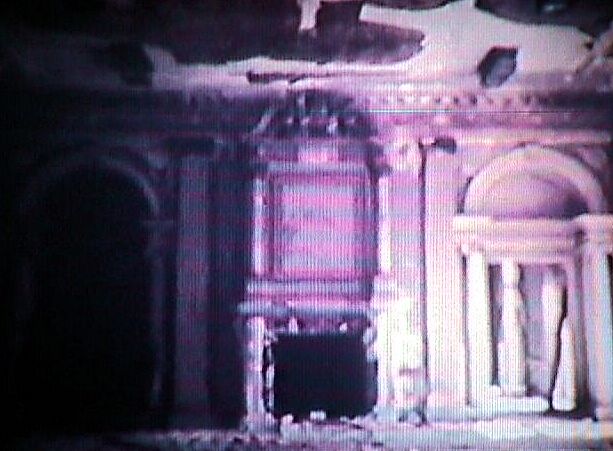
You know, all the art of the Metropolitan Museum was in this place during World War II. . . . museum in not peace
2000.04.19
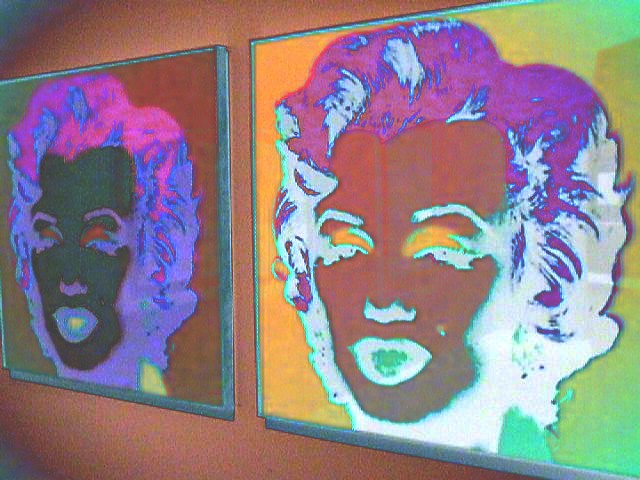
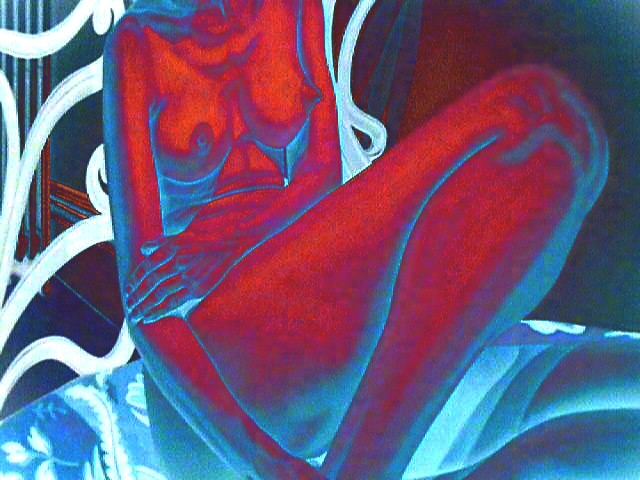
image play
1999.04.19
test (poem?) by whomevers
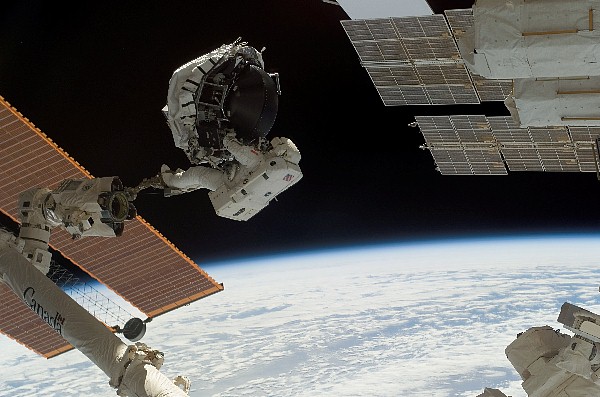
My point deals specifically with architecture's first principles, i.e., duality in extreme and its unrelenting distinction between inside and outside. I cite the Great Pyramid as a prime example of architecture as duality in extreme, and you (correctly) cite the International Space Station as also an example of extreme architecture. Just be sure that you likewise acknowledge that the International Space Station is also an example of architecture's unrelenting distinction between inside and outside (and in that sense, even a space suit is extreme architecture).
1951.04.19
1951. Thursday, New York City
Walter Arensberg has told Marcel that "the request for the loan of the Kupka puts us on a spot" [8.4.1951].
Since the donation of their collection to Philadelphia [27.12.1950] they have decided not to lend and they cannot make an exception for Louis Carré.
After his visit to Milford with Kimball [13.4.1951] Marcel tells Walter that he is resigned to the face that the Philadelphia Museum of Art does not want the whole of Miss Dreier's collection.
He suspects Kimball and the trustees like very little including the Large Glass [5.2.1923]. "I have a hunch," he confides to Walter, "that broken glass is hard to swallow for a 'museum'."
Ephemerides
1917.04.19
1917. Thursday, New York City
Alfred Stieglitz writes inviting Henry McBride to call at 291: "I have, at the request of Roché, Covert [5.12.1916], Miss Wood, Duchamp and Co., photographed the rejected Fountain [9.4.1917]... It will amuse you to see it. The Fountain is there too."
Ephemerides
|