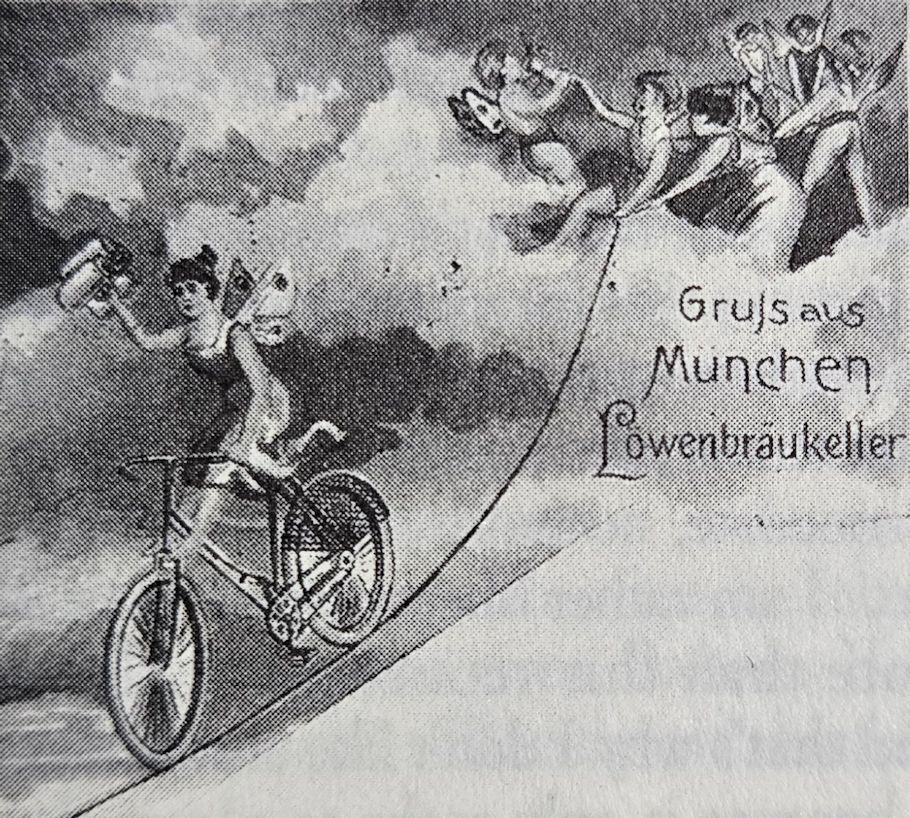
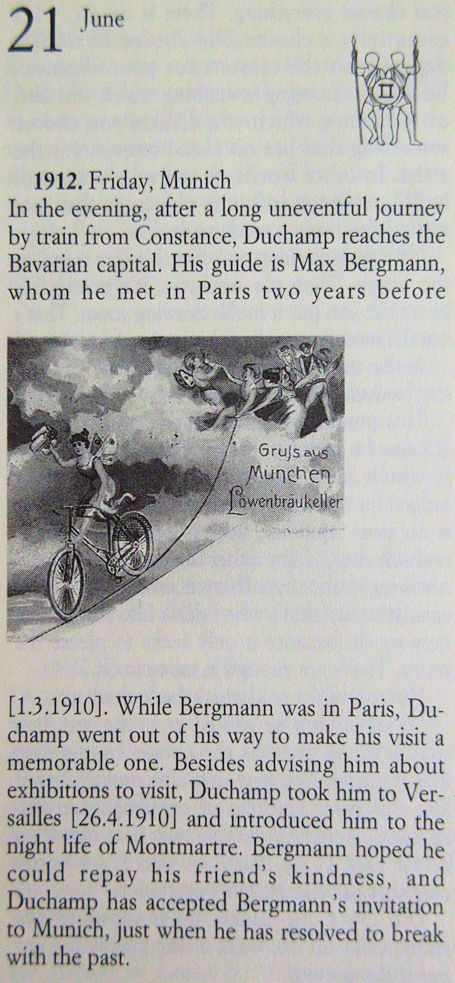
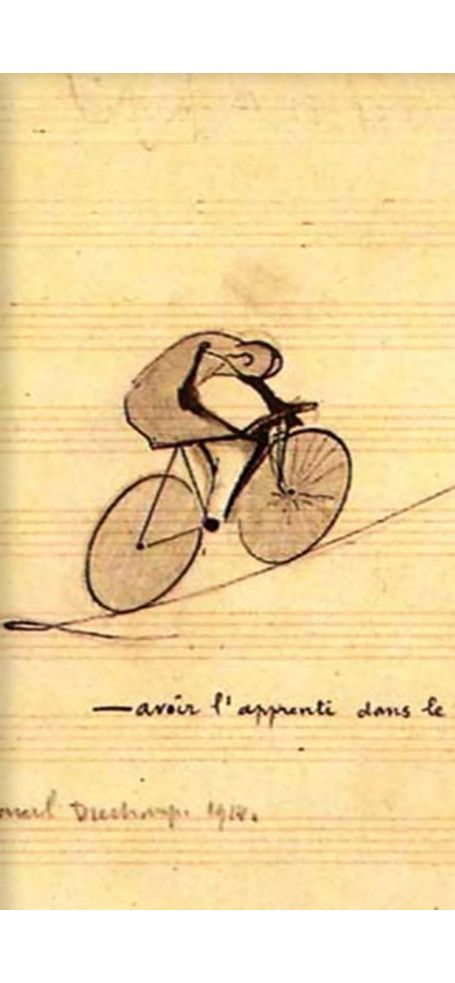
This prompted me to do a google image-search using the Löwenbräukeller postcard, which ultimately produced surprising results:
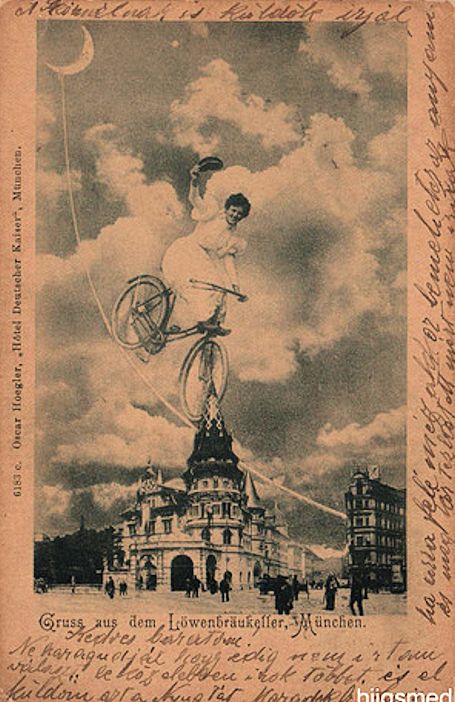 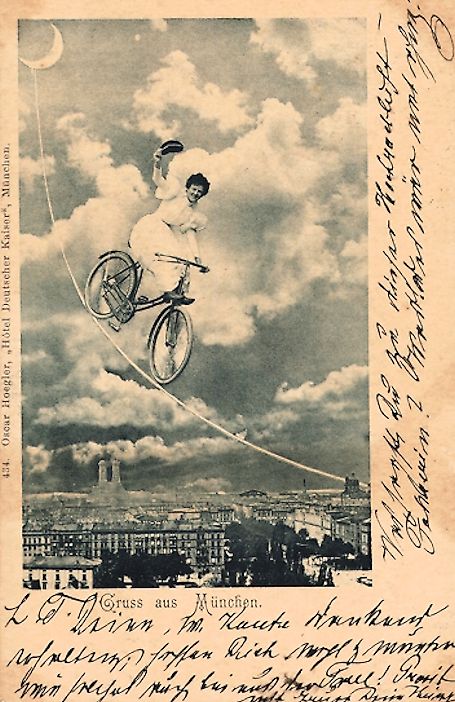
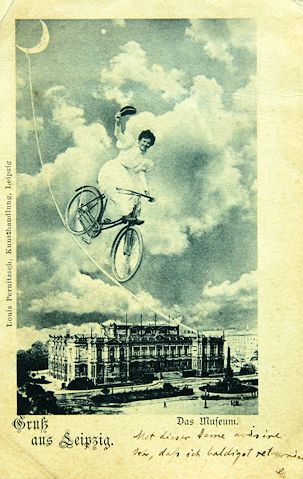 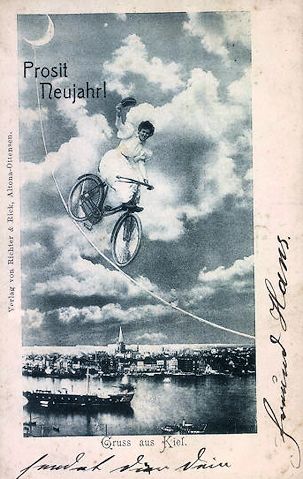 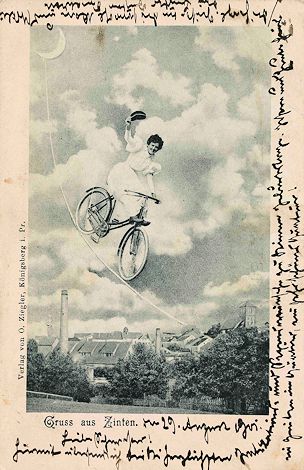
Apparently, the original version of the Löwenbräukeller postcard is an ubiquously German postcard first published 1899-1901. Interestingly . . .
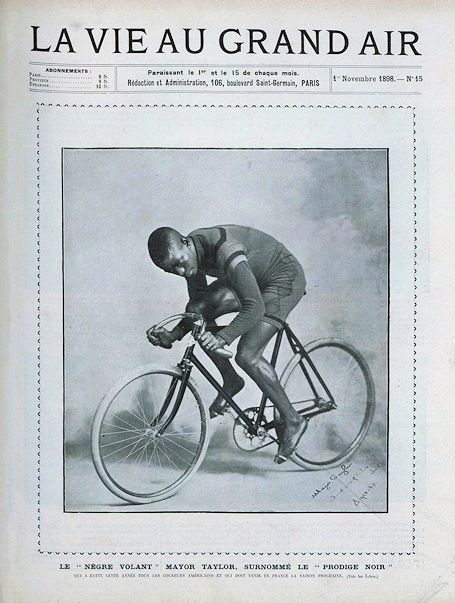 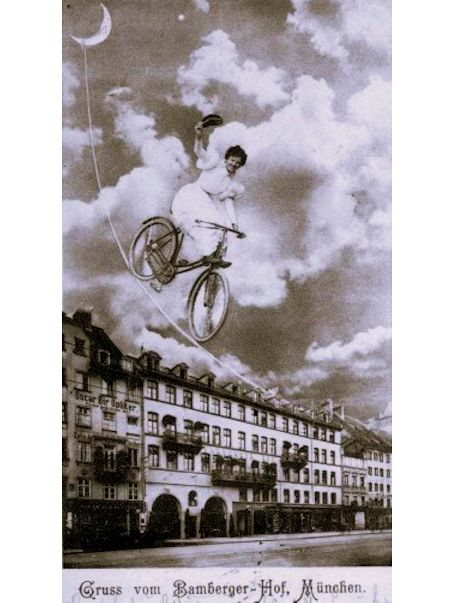
. . . Marshall Walter "Major" Taylor--"the fastest man in the world"--on the front of the November 1, 1898, edition of the French sports magazine La Vie au grand air. For probably the first time in modern sport history, a black athlete was marketed as a star and seen by thousands of people in a short space of time, in France, Germany, Italy, Austria, Denmark, and Holland. Who knows, perhaps delivery of Max Bergmann's invitation for Duchamp to visit him in Munich arrived via the latest typically German postcard.
2025.03.28
451 Rhawn Gallery
2001.03.28
theological pomo
Yesterday, I read a very interesting article of Duchamp's last work in Art In America (which I received yesterday). The piece is written like a detective story (albeit unwittingly), and is exactly the type of art history I like. I was throughout reminded of my 'investigations' and 'discoveries' regarding Piranesi's Ichnographia Campus Martius and also the architecture(?) of St. Helena. There is a Duchamp quote in the article that makes an uncanny connection to the Campo Marzio, even.
Steve
Duchamp striptease quondam Piranesi, even
In Francis M. Naumann's "Marcel and Maria", a fascinating article on Duchamp's Ètant Donnès in Art in America, April 2001, Duchamp is quoted as having said the following:
"I want to grasp things with the mind the way the penis is grasped by the vagina."
Naumann's article is all about finding clues about meaning purposely hidden by Duchamp within his oeuvre.
Piranesi's Ichnographia Campus Martius contains a nimiety of purposely hidden clues as well.
1960.03.28
1960. Monday, New York City
To assist Douglas MacAgy, now director of the Dallas Museum, who is organizing an exhibition of lesser known artists, Duchamp writes to Marceau of the Philadelphia Museum of Art. Has he any knowledge of the request made to Henry Clifford at the museum for loans from the Arensberg Collection, namely the painting by John Covert and four Morton Schambergs? Duchamp reminds Marceau: "[MacAgy] and his wife, you know undoubtedly, have always organized interesting exhibitions in San Francisco [8.4.1949], Houston [22.3.1957] etc."
Ephemerides
|