2026.03.21
@jerrysaltz yesterday plus ultra
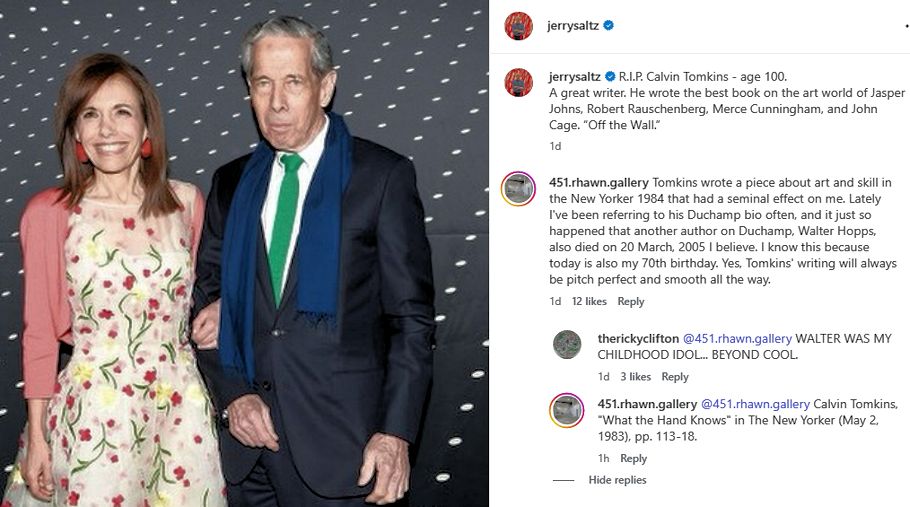
jerrysaltz R.I.P. Calvin Tomkins - age 100.
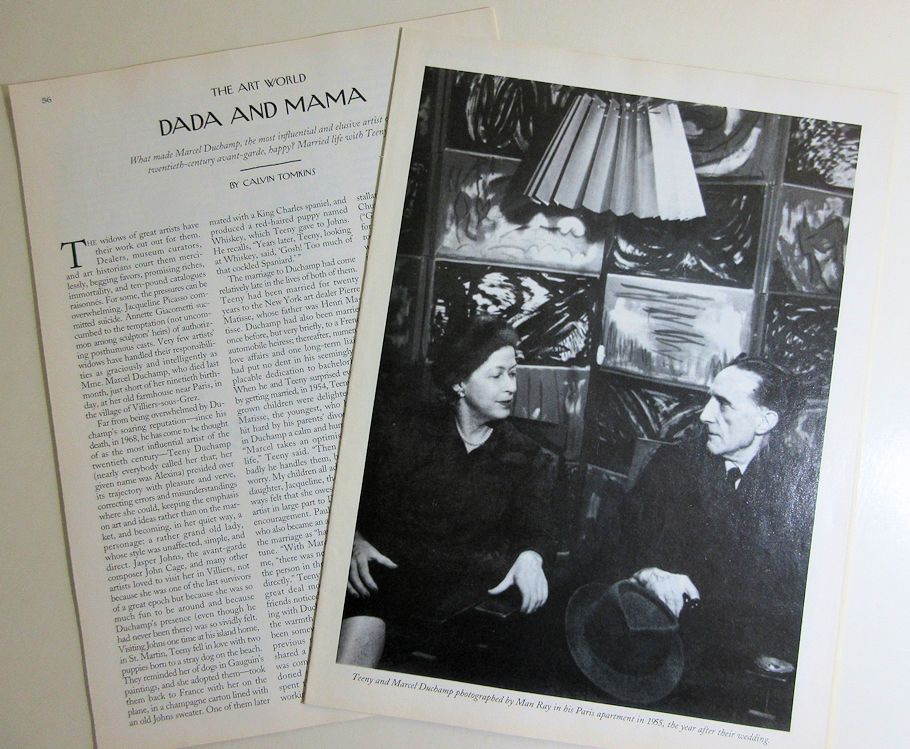
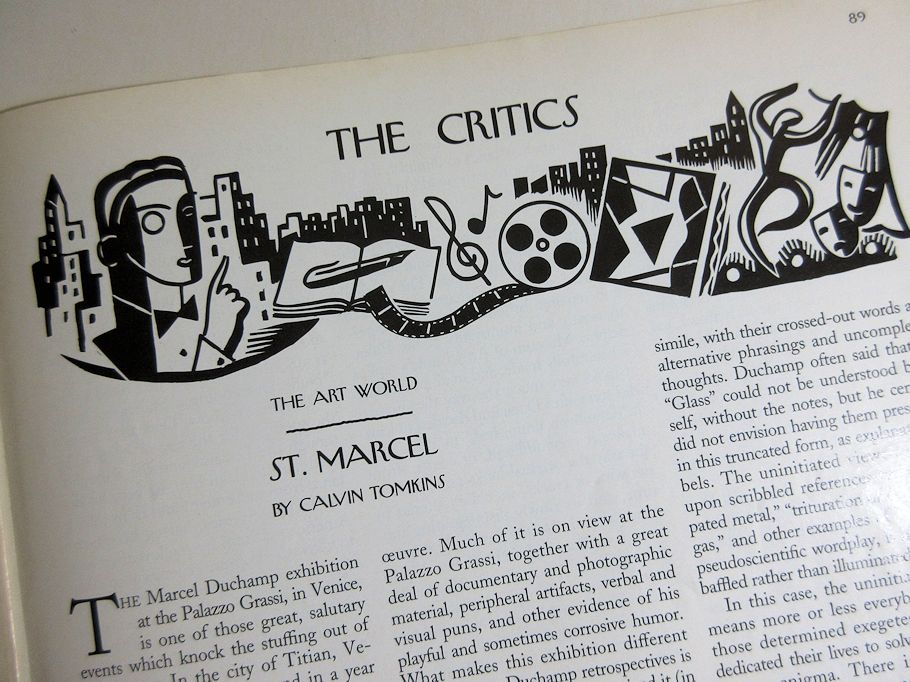
A great writer. He wrote the best book on the art world of Jasper Johns, Robert Rauschenberg, Merce Cunningham, and John Cage. "Off the Wall."
451.rhawn.gallery Tomkins wrote a piece about art and skill in the New Yorker 198[3] that had a seminal effect on me. Lately I've been referring to his Duchamp bio often, and it just so happened that another author on Duchamp, Walter Hopps, also died on 20 March, 2005 I believe. I know this because today is also my 70th birthday. Yes, Tomkins' writing will always be pitch perfect and smooth all the way.
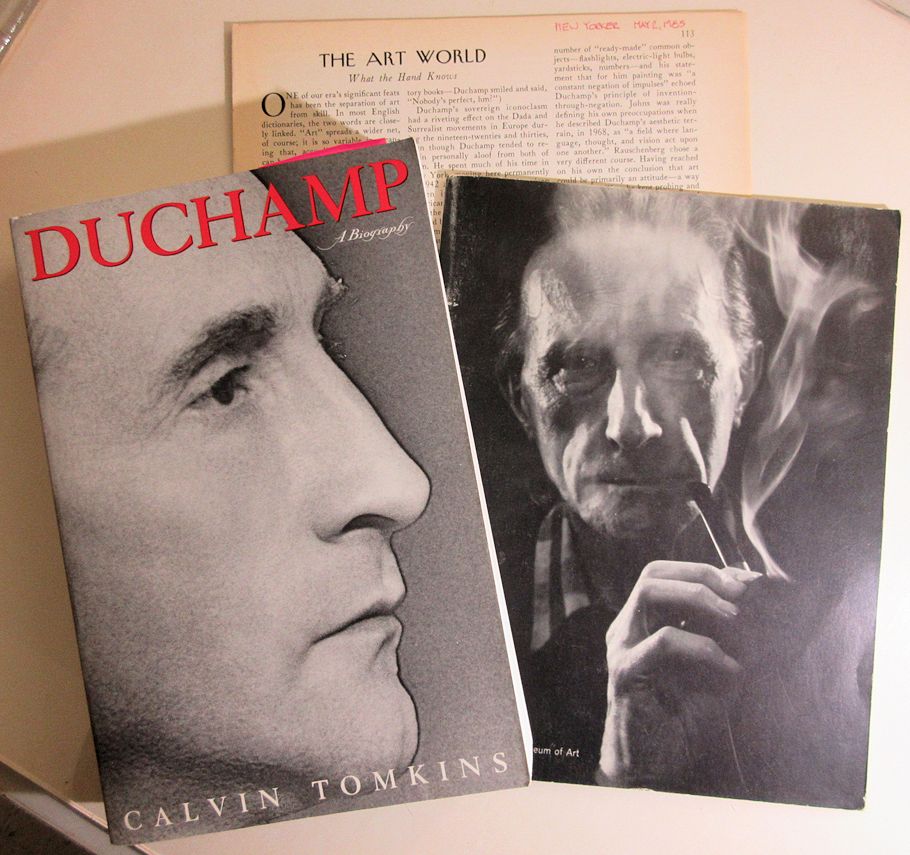
Calvin Tomkins, "What the Hand Knows" in The New Yorker (May 2, 1983), pp. 113-18.
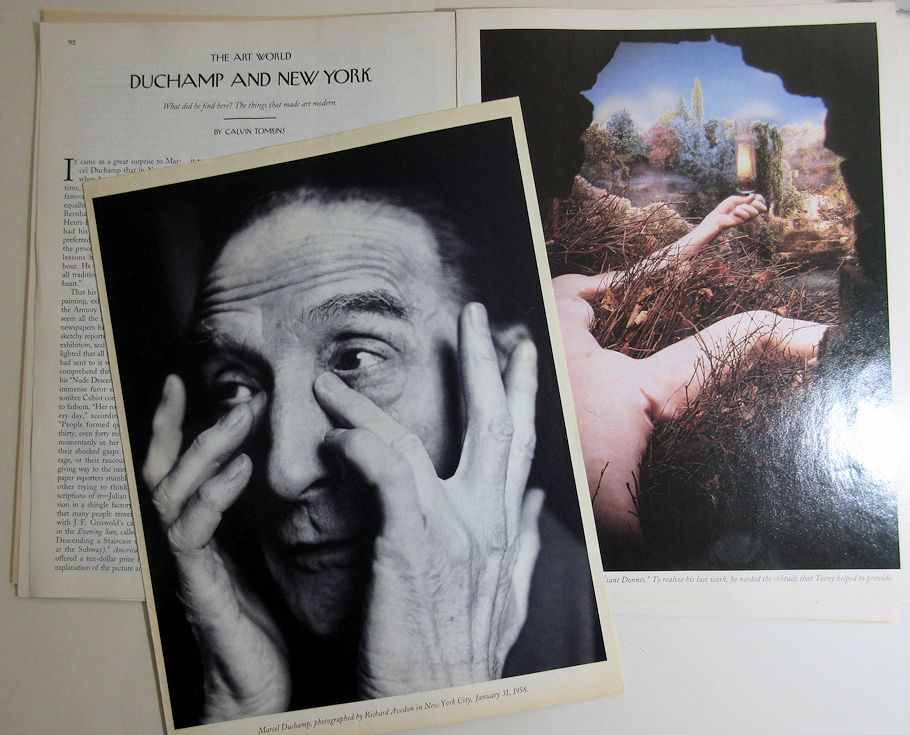
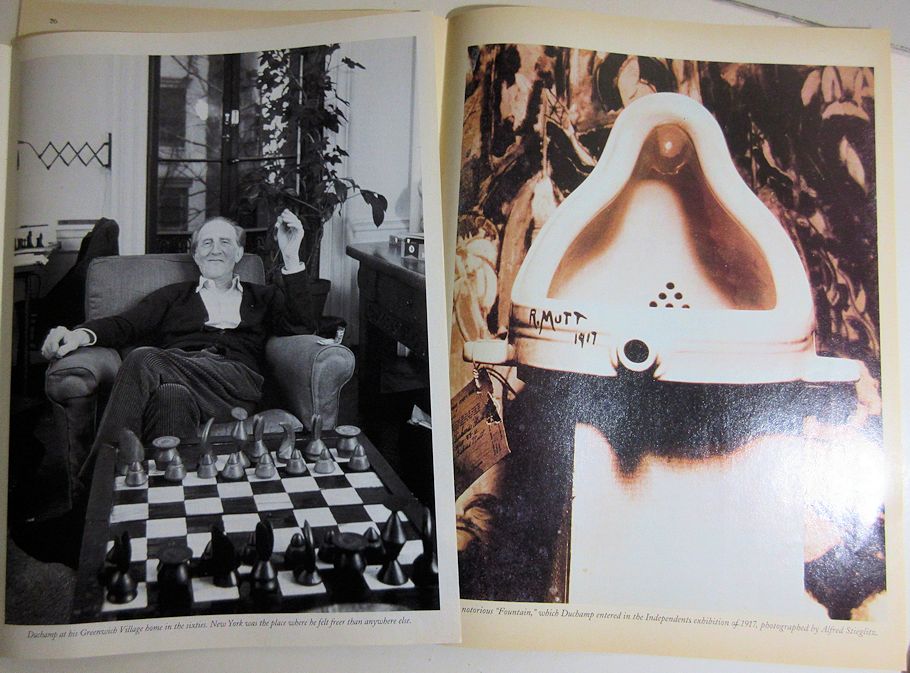
Calvin Tomkins, Duchamp: A Biography (1996). Anne d'Harnoncourt and Walter Hopps, Étant donnés: 1. La chute d'eau, 2. Le gaz d'éclairage: Reflections On a New Work by Marcel Duchamp (1969).
2025.03.21
451 Rhawn Gallery
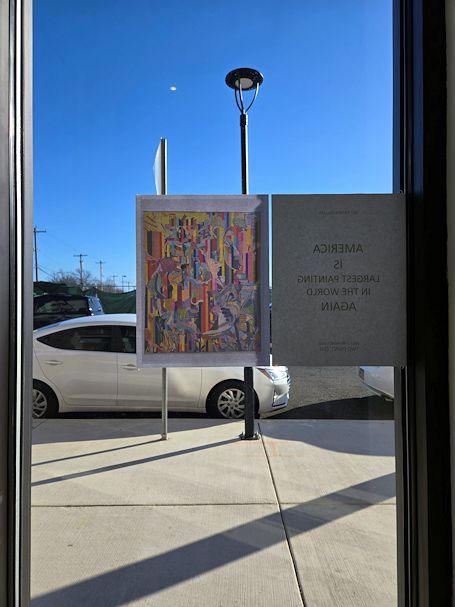 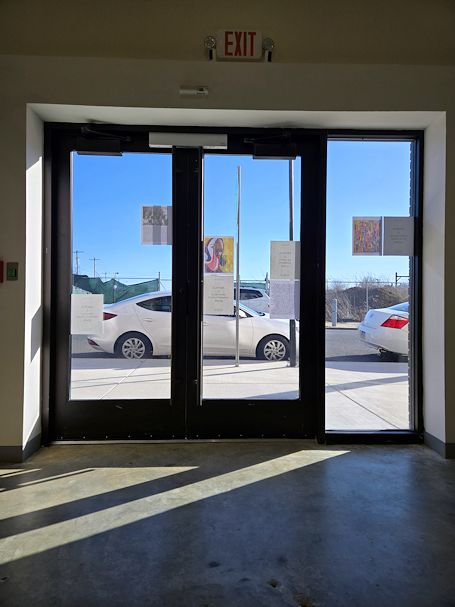
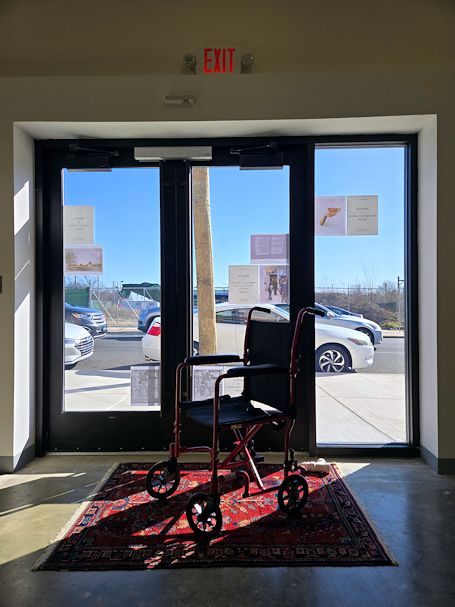 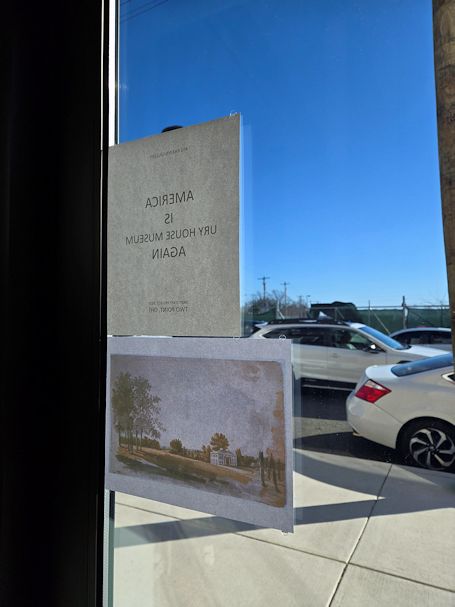
2023.03.21
 
selfie, and selfie corrected
2017.03.21
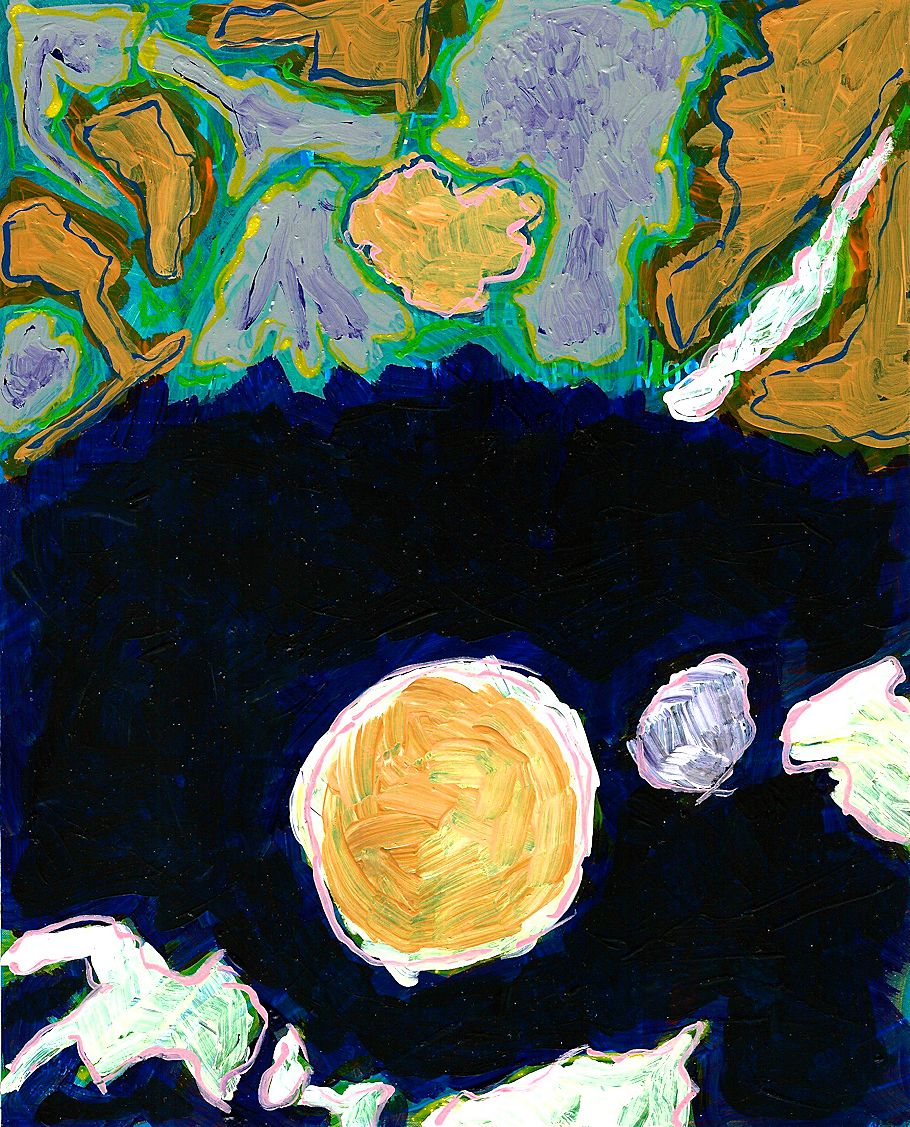
zero zero five
2015.03.21
Traditional or Modernism
This is the look I'm trying to achieve for my house:
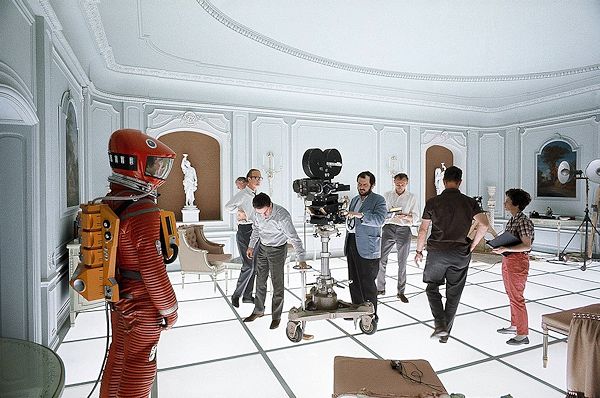
The walls and floor and ceiling and furniture are easy, it's just that getting all the living-color life-size sculpture pieces within the room just right is proving to be a lot more difficult than I thought.
Classic, right?
2013.03.21
Old school - when it was done manually - anyone care to share some old work?
Starting on a personal level, CAD more than doubled my graphic dexterity. I always liked drawing architecturally, and with CAD came to opportunity to generate drawings that would otherwise be very difficult to execute by hand. Granted, I've been fully versed with sophisticated, fully integrated 2D/3D CAD drawing since 1983, and it was indeed the capability of drawing in 3D that manifested the larger portion of the new graphic dexterity.
The notion of what a drawing itself is also changed in that a drawing is no longer a finite entity, but rather a malleable data set with multiple output options--pen plot, electrostatic plot, and today 3D printer! It is the malleability of the CAD drawing that makes a singular data set really a potentially infinite number of data sets.
Here's just one example:
Last week or so, Charlie Rose interviewed with the Metropolitan Museum of Art curator of the latest Matisse exhibition specifically about artistic process. Some of the Matisse paintings are accompanied by sets of photographs that Matisse commissioned to record all the stages/changes these individual paintings went through, and you can now readily see how the 'design' of the paintings evolved. Remember, however, that none of this process is visible when looking at the actual finished painting. What CAD has done is fully place architectural drawing into the process mode. If you back-up your drawing files regularly, you then have a fully operational record of the entire design process (with each back-up file being its own drawing). Again, this is just one example where one CAD 'drawing' is really potentially many, many CAD drawings.
2006.03.21
Philadelphia Museum of Art
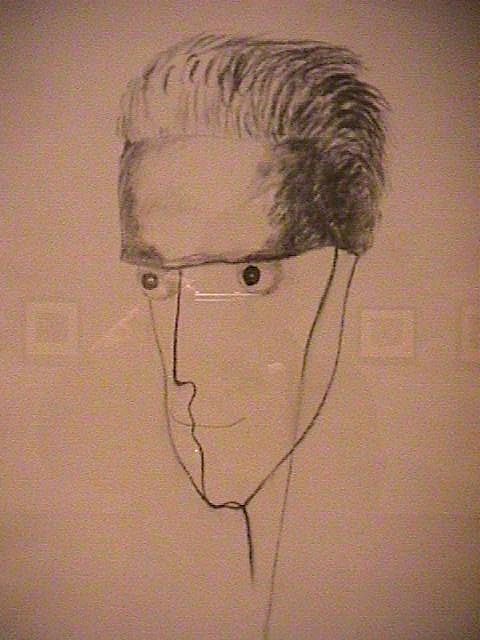
Jean Joseph Crotti Portrait of Marcel Duchamp early 1950s
2005.03.21
new Trumbauer fan (system) Unbekannt
Eutropia began speaking just a few minutes after Walter died, i.e., just a few minutes after the seat front row and center was filled. She went immediately to The Marriage of...
...champ had them all laughing, as usual. But all the same Walter was thrilled to go through the back door again. He even received his own set of 2 KEY.
"This whole initiating experience has been like a great positive confirmation of my work."
Refreshments included Paul's and Peter Paul's latest batch of Jenne Wine. Oh, and corned beef and sauerkraut with melted cheese sandwiches.
2004.03.21
Re: a gathering of planets
Dennis and Eva
Catherine de Ricci and Louis I. Kahn
Trumbauer and Mrs. Dodge
Otto and Maria
Piranesi and Melania the Younger
Ludwig and Agatha Christie (he was calling her "Clueless" behind her back)
Rubens and Bette Davis
Franziska and Philippe le Beau (apparently he has an eye for the great grandmothers of his most recent descendants)
Napoleon and James A. Williams
Eutropia and Napoleon II (they all sang 'Happy Birthday' for him, and every time Napoleon's son introduced himself as the King of Rome, Eutropia simply said, "You don't know a thing.")
Louis XVI and Marie Antoinette (when Ludwig saw Agatha mingling with Louis and Marie, he said, "Look! It's 'Clueless' with 'The DeCaps.'")
Theodosius and Aelia Flaccilla
Arcadius and Aelia Eudoxia
Honorius and Thermantia
Galla Placidia and Athaulf
Stilico and Serena
Princess Grace and Samuel Goldwyn
John Kelly and a bitch (apparently a seeing eye dog)
Rrose Sélavy and Pope Celestine V
Jennewein and Lili Marlene
Franklin and Maria Popinska, a quondam Russian scientist (Otto took one look at this couple and immediately said, "Oh, Now I get it. Maria Popinska and 'Let's go fly a kite.' Ben, you're still the funniest sense of humor I know.")
Helena and Eusebius (it was obvious they were up to something)
Ambrose surprised everyone by bringing Constantina and R. David Schmitt. (Ambrose enjoyed telling everyone how he and Dave each died on a Good Friday, and Constantina--actually everyone calls her Santa Costanza these days--enjoyed telling everyone about the architectural analysis of her mausoleum that Dave conducted back when he was a student at Temple University.)
2000.03.21
Re: Theory/negative+positive
Over the last several months, the notion of artist's/architect's intentions have consistently been given a very high 'value' with regard to how a critic can and should legitimately critique a work of art/architecture.
Yet, for the most part, whenever a lister posts something here at architecthetics, and then another lister responds to or interprets the prior post, rarely does the responder ask what the initial poster intended or whether their (the responder's) interpretation comes close to the initial intention.
For all the talk of valuing intentions, there nonetheless still seems to be a lot of assuming going on.
ps
I've written enough here at architecthetics for there to be a somewhat full picture of me in terms of what my interests are and what my "style" is, but do any of you really know what my intentions are?
1993.03.21
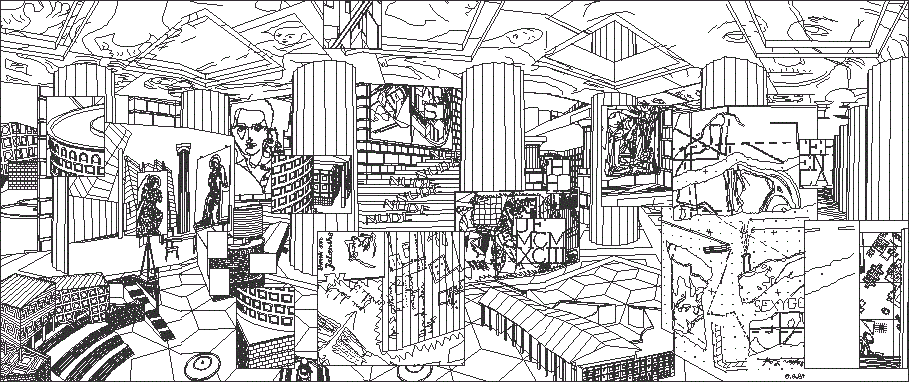
93032101.db Rerun and What Since
1965.03.21
1965. Sunday, New York City
While Duchamp was in Mexico, Evan Turner [Director of the Philadelphia Museum of Art, 1964-1978] has been trying to contact him regarding the "ultimate disposition" of Miss Sisler's collection [13.1.1965]. Excusing his delay in replying, Duchamp invites Turner, who is now in Europe, to telephone him on his return.
Ephemerides
1956.03.21
1956. Wednesday, New York City
After speaking to Henri Marceau on the telephone about making three colour transparencies for the "Three Brothers" catalogue [27.12.1955], Duchamp telephones the photographer Peter Juley and makes an appointment with him at the Philadelphia Museum of Art on 29 March. Duchamp then confirms in writing to Marceau.
Ephemerides
|