2026.03.10
Compositions Knowingly Intended To End Up In Art History Books 001
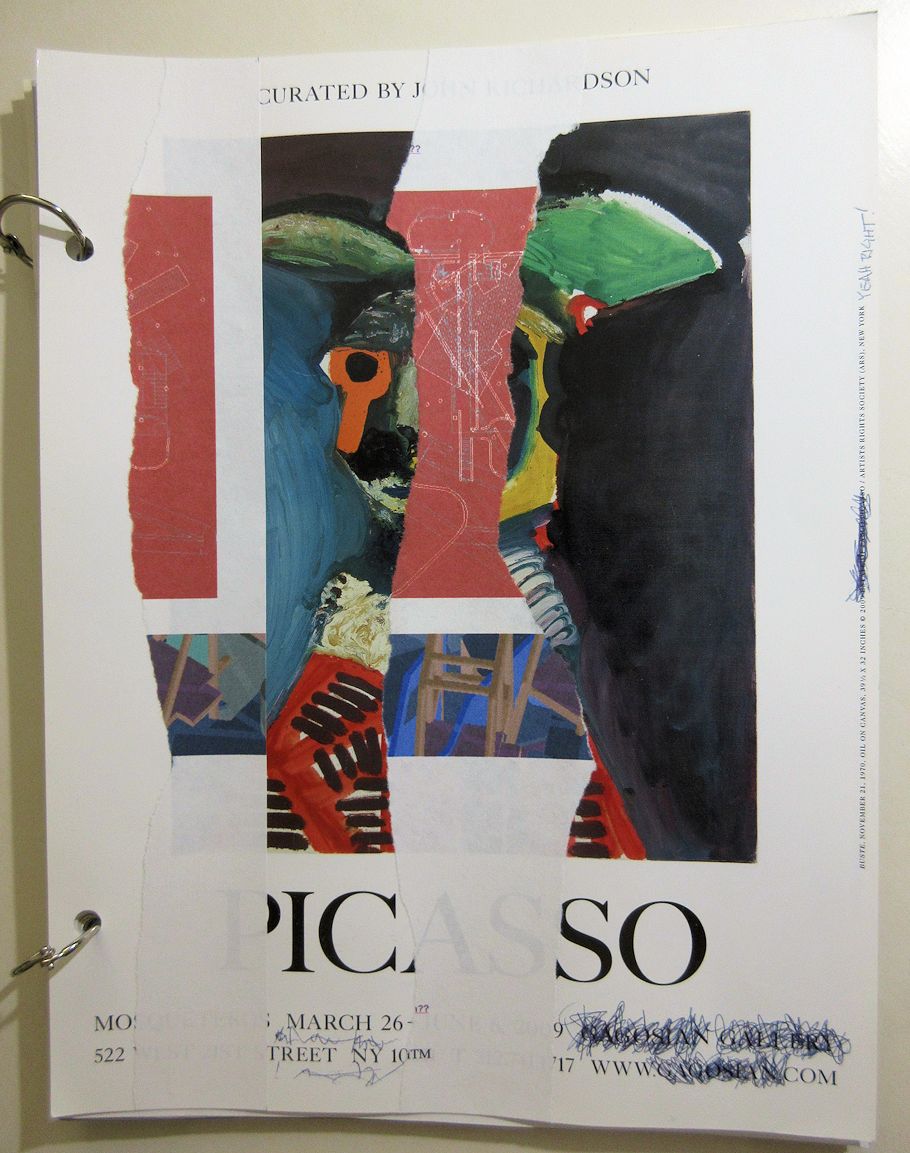
front cover
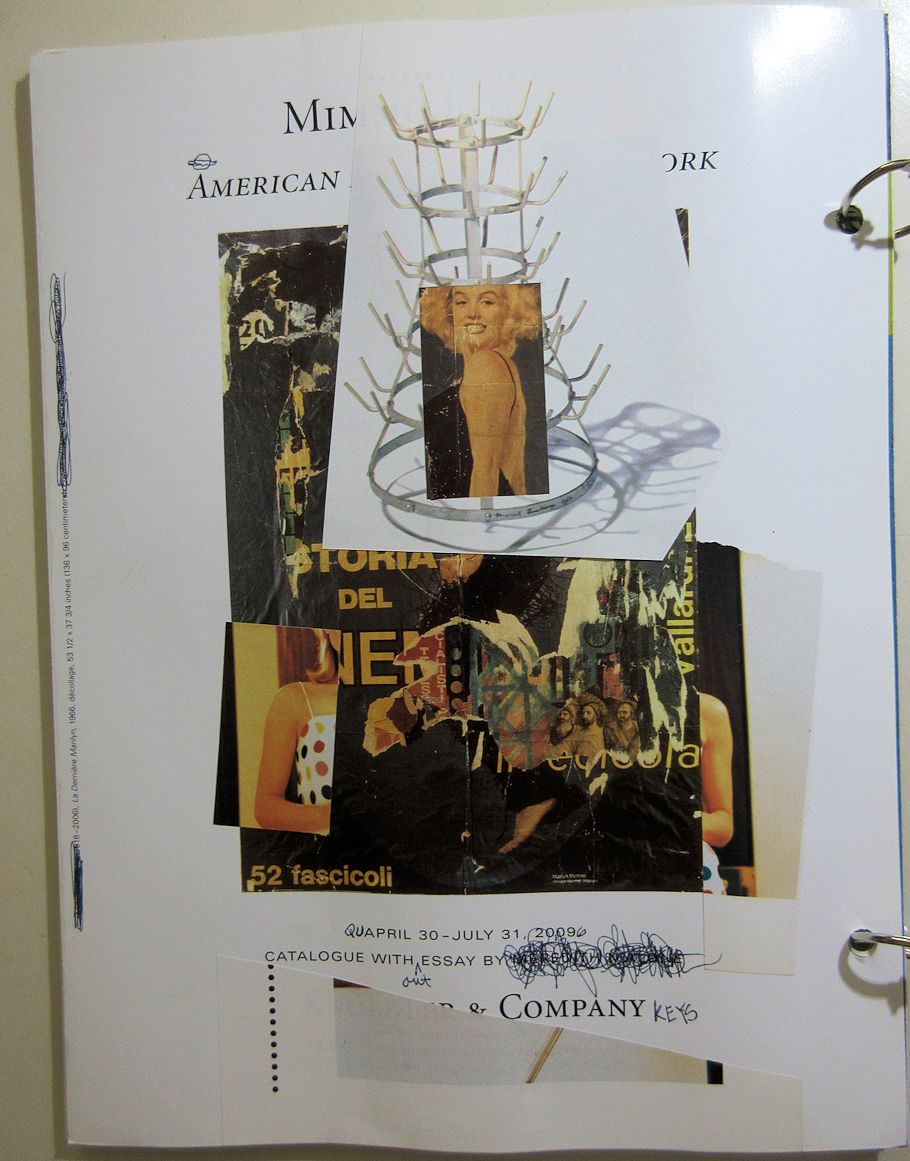
inside front cover
2025.03.10
coffee table as plein-air vitrine

451.rhawn.gallery . . . I've never met Ludwig Mies van der Rohe nor Philip Johnson, but I have met Phyllis Lambert. She had no idea, in Fall 1978, what I and four other Temple University Architecture students were doing sipping champagne in her Old City Montreal loft. We satisfactorily explained ourselves, but left as soon as we realized the whole talk was going to be in French.
2023.03.10
From The Discovery of Piranesi's Final Project
10 March 2023 Friday
Leave it to Miers to introduce a new wonderful woman to this story: Peggy Davis, "an excellent dairy woman." And, judging by the fact that after two years under Miers Fisher's employ she left with a heifer and a calf, Peggy Davis may well have been the most excellent dairy woman on this part of the planet at that time. What a discovery!
So, as far as Woman's History Month is concerned, March 10th is Peggy Davis Excellent Dairy Woman Day.
2008.03.10
The Discreet HARM of The Bourgeosie...
"It would be more appropriate for us architects to shock the senses first--worry about style later."
Ah yes,

the Horse Radish House.
2003.03.10
 First Fruit of Uranus in Pisces
2002.03.10
there's no controlling nobodies
I thought There's No Controlling Nobodies might make an appropriate title for a publication comprised of letters from...
1999.03.10
Re: epic architectural past
I think the "human story," like the movement of the present, is essentially linear. The first humans were extreme, and the best examples of extreme architecture are the Great Pyramids and Stonehenge. Circa 550BC, humanity began to operate with a highly fertile imagination, and this "age of highest fertility" lasted till circa 770AD, at which time humanity's imagination became [additionally] pregnant. At the first trimester of pregnancy, circa 1500, humanity began to assimilate itself and its place in the universe. By 1700, the metabolic imagination began to work in conjunction with the assimilating imagination.
We are today still primarily a humanity operating in both an assimilating and metabolic fashion, and thus our architecture too is primarily both assimilating ("international") and metabolic (creative/destructive).
Of course, the "human story" continues, and to discern how it will continue, you just have to analyze the sequential slices of the human body starting at the lowest tips of the rib cage and moving upwards.
classical/modernist
Hugh Pearman in two recent posts wrote:
"Architectural operating systems (as opposed to surface styling) are predominantly Gothic or Classical."
"what I called the 'architectural operating system' as a deliberate computer analogy--might clarify rather than confuse, for me if nobody else."
I suggest a wholly other batch of "architectural operating systems" that derive from the morphology and physiology of our own bodies, the machines that we are instead of the machines that computers are.
Some architectures are extreme.
Some architectures are fertile.
Some architectures are pregnant.
Some architectures are assimilating.
Some architectures are metabolic.
Some architectures are osmotic.
Some architectures are electro-magnetic.
Some architectures are total frequency.
Figuring out what buildings/architects fit in which category(s) may well be the ultimate architectural parlor game. (hint: Classical is high fertility and Gothic is early pregnancy)
Hugh also made reference to the notion of architects having "to have his or her 'personal myth' to believe in and guide them." For what it's worth, I have "discovered" my own myth, and its called The Timepiece of Humanity or the theory of chronosomatics.
1995.03.10
chronosomatics
The processes (operating systems) discussed will be assimilation, the beginning of metabolism (concurrent with assimilation), pluralism (more organs than at any other point in the body), and ultimately the completion or end of assimilation. This is the full picture of our present… …the correlation between operating systems and imagination systems…
The Future… …100% metabolism. …a large part of the coming millennium will be a time of just metabolism (albeit combined with a sense of intense pluralism). …humanity will have absorbed all the knowledge about ourselves that there is to absorb. Along with pure, 100% metabolism there will also be a continuation and intensification of plurality concurrent with this age of great destruction and great creativity.
chronosomatics
The workings of embryonic development are, in fact, added on top of the current systems of assimilation and metabolism.
1957.03.10
1957. Sunday, New York City
Thanking Henri Marceau warmly for sending the documents to him for Lebel [20.2.1957] Duchamps adds: "Obviously I am wondering in what state this Boîte de 1914 must be," and says he will ask to see it one day, "if it is not too difficult to find in the numerous papers of the Arensberg Collection."
Informs Roché of his plans to fly to Houston on 2 April followed by a trip to Mexico, and tells him about the interview with Sweeney recorded the previous day" Crotti may know the day it is to be broadcast [5.3.1957].
Ephemerides
1952.03.10
1952. Monday, New York City
In the morning Marcel receives a letter from Fiske Kimball saying the museum agrees to lend Nu descendant un Escalier, No.2 [18.3.1912] and Head of a Horse by Duchamp-Villon to Sweeney's exhibition, "L'Œuvre du XXe Siècle." Reminding them that nothing of his has been exhibited in Paris and London for over thirty years, Marcel writes again to the Arensbergs [21.2.1952]: "Would it be possible to include the Mariée [25.8.1912] oil which I like so much and which is already in Philadelphia." He suggests that as the Museum of Modern Art will be lending Le Cheval by Duchamp-Villon, "we could leave the Head of the Horse in its stable."
Marcel hopes too, to persuade the Arensbergs to reconsider their decision about the Matisse, Chagall and Metzinger. "This is not an imploring letter," he writes, "but it is an exact translation of my feelings toward an art manifestation worthy of help." If Philadelphia manifests the "rather cautious and indifferent feeling", Marcel hopes that the Arensbergs "will see it from a broader angle". Reminding them that they are still the legal owners of the collection, he argues, "We are still capable of human reactions--which is not the case of 'anonymous' museums."
Ephemerides
|