2025.11.03
Recap of the creative activity throughout October 2025
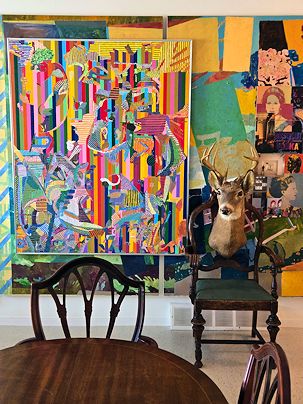 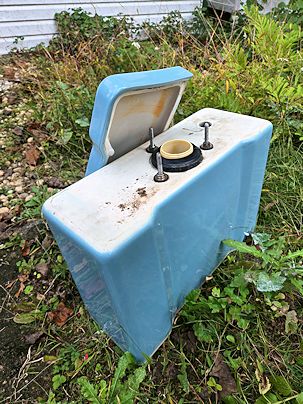 hare, thanks again. Your comments always inspire me to think further. First, this story is most aimed at the entrenched academics of art history, the self appointed gate keepers. And now, thinking further, I see Duchamp, after the great notoriety of NUDE DECENDING NO 2 in early 1913, getting a taste of Taylor's fame. The first readymade, BICYCLE WHEEL of later 1913, is Duchamp's trophy for himself, and in early 1914 Duchamp shows himself as an apprentice to Taylor's way.
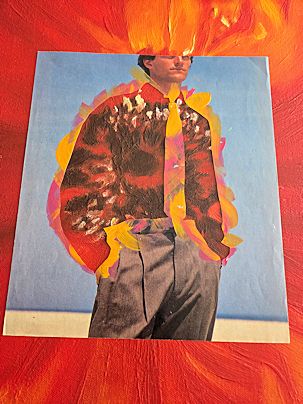 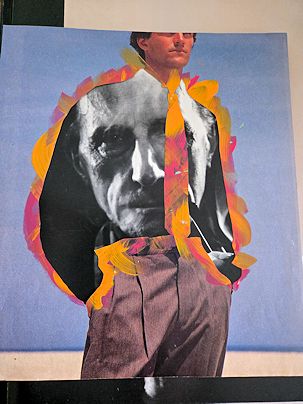 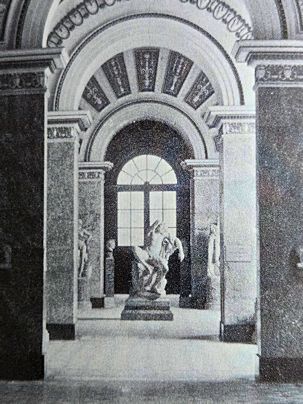
. . . since I'm now beginning to imagine Étant donnés at the Philadelphia Museum of Art as the counterpoint to the Barberini Faun at the Munich Glyptothek, I wonder if the hole in Étant donnés's brick wall references the post-WWII bombed out Glyptothek--remember, Duchamp started working on Étant donnés in 1946.
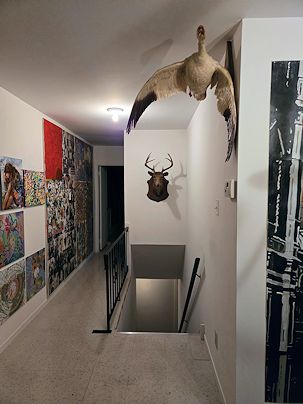 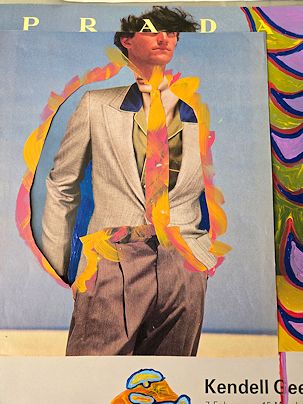 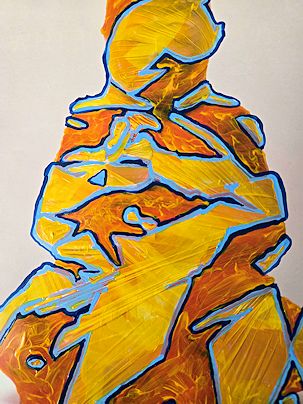 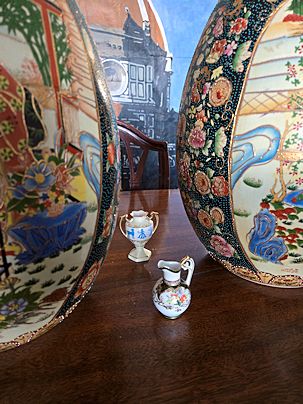 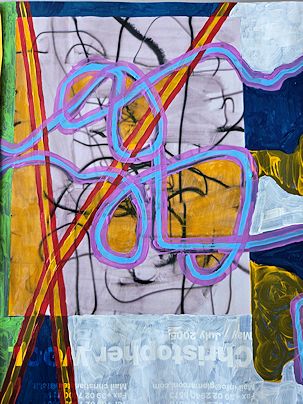 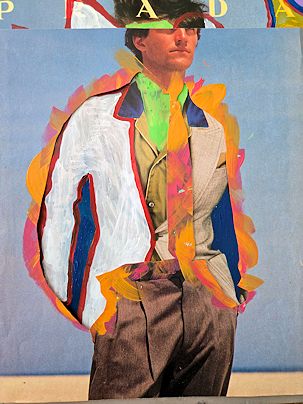 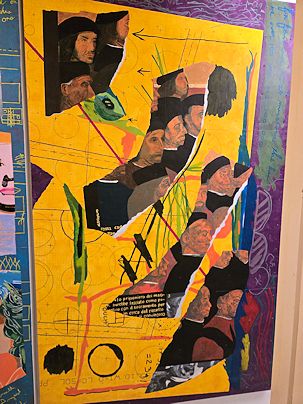 . . . earlier, this 1992- piece was rechristened NEUTERS DESCENDING A STAIRCASE.
2000.11.03
the architect's wife style .0
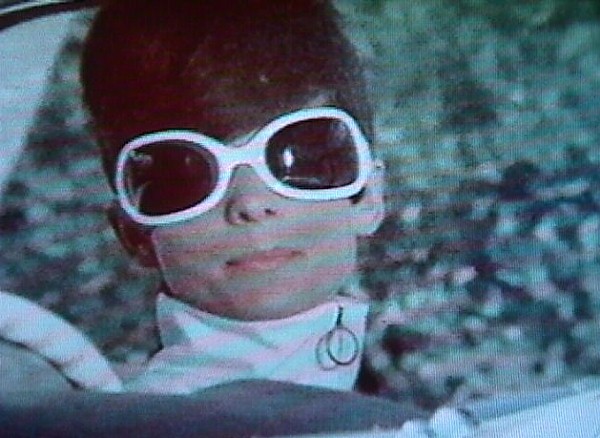
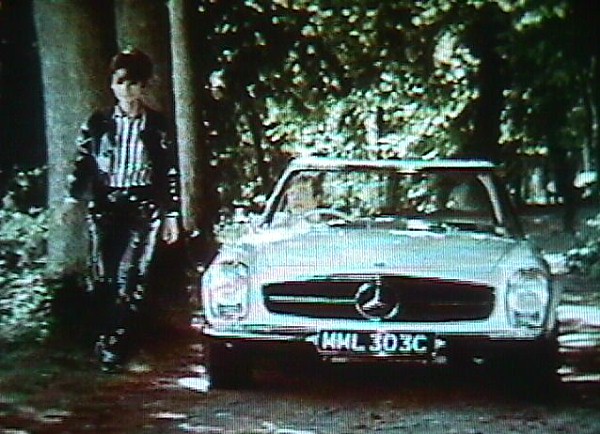
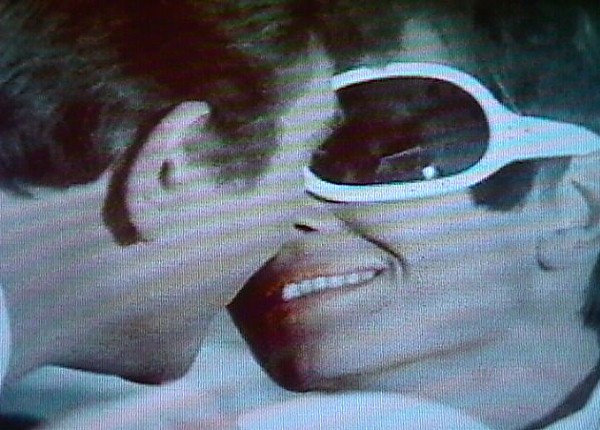
Going through my collection of digital clips from TWO FOR THE ROAD inspired me to (soon) install a mini exhibit at www.quondam.com entitled "the architect's wife style". As Joanna, Audrey Hepburn wears an assortment of very MOD fashion (designs). Normally, modernism and romanticism (in design) are anathama, but not in TWO FOR THE ROAD. If any movie can be labeled "romantic modern collage", it's TWO FOR THE ROAD (and you'll see what I mean if you watch the whole movie through to the end).
the architect's wife style .1
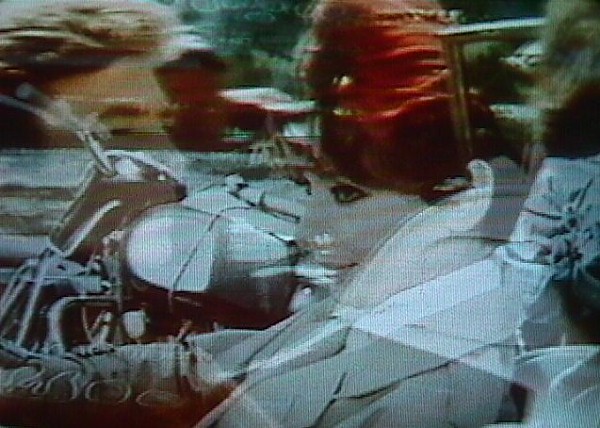
The collage begins innocently enough with young architect and future architect's wife casually clad in the proto-manifestations of GAP ensembles of every fourth season or so.
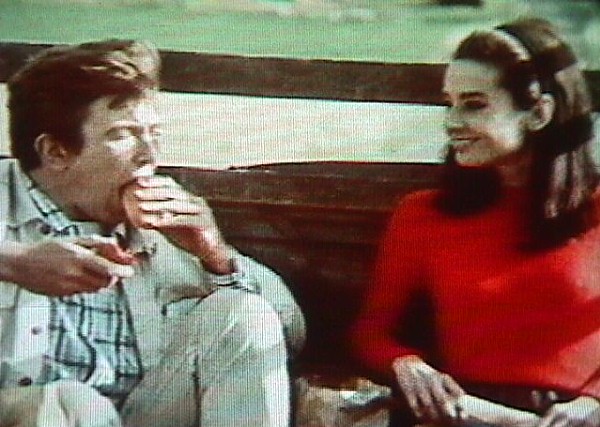
With all the success and luxury of being zoomed fast forward into the jet set, however, the trappings of fashion and style really only become accessories within a double theater of love and hate.
the architect's wife style .2
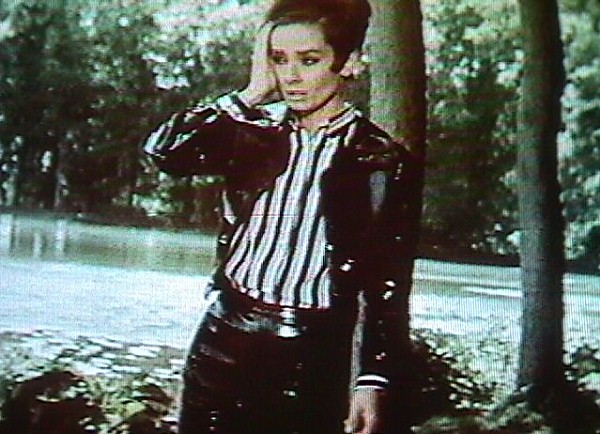
"Clearly, everything is NOT ok in this marriage. More and more, all Mark talks about is 'spatial this' and 'spatial that'. I sometimes wish I was in outer space."
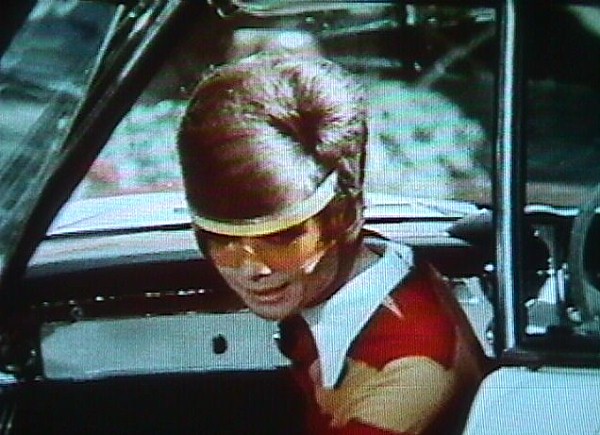
"That's it! I'll survive all this pretentious "spatiality" with my own expression of space alienation."
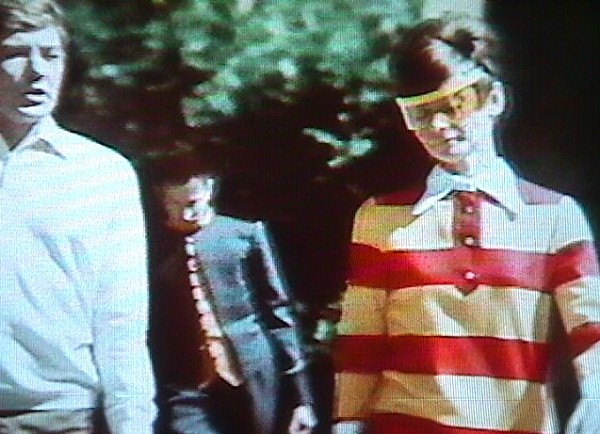
the architect's wife style .3
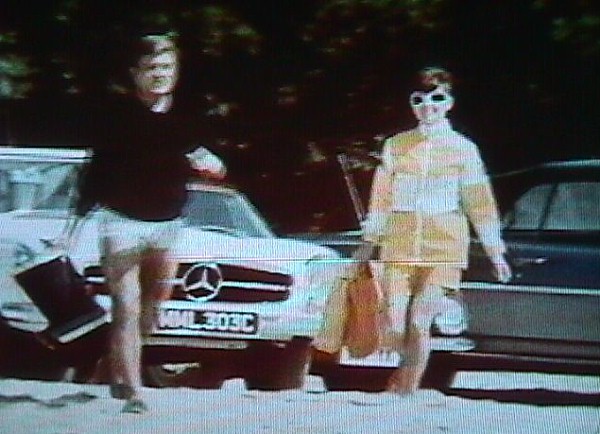
That alien look works well. It is certainly the ability to easily morph that is the most attractive.
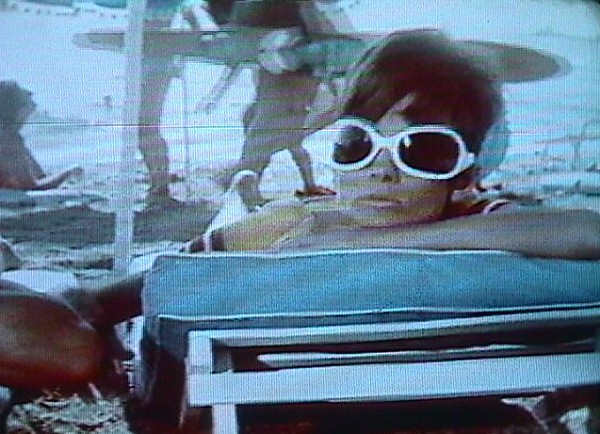
"I wonder what Mark meant when he said I was his topological inspiration."
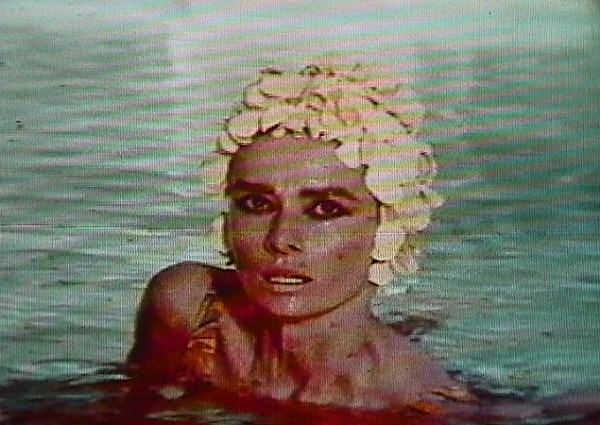
the architect's wife style .4
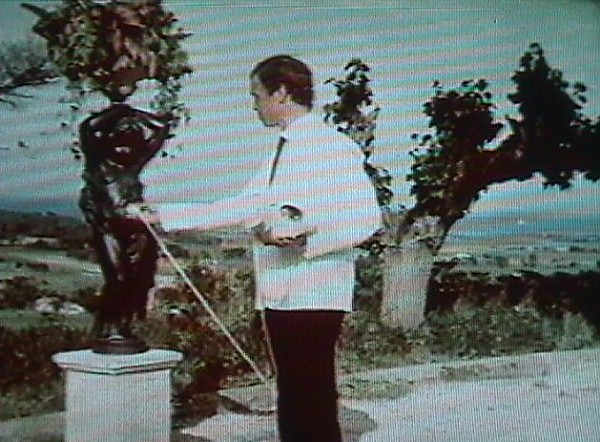
Classic camp interlude: the statue's umbilicus becomes the plug for a telephone cord. Symbolic connection is symbolic communication is symbolic connection.
the architect's wife style .5
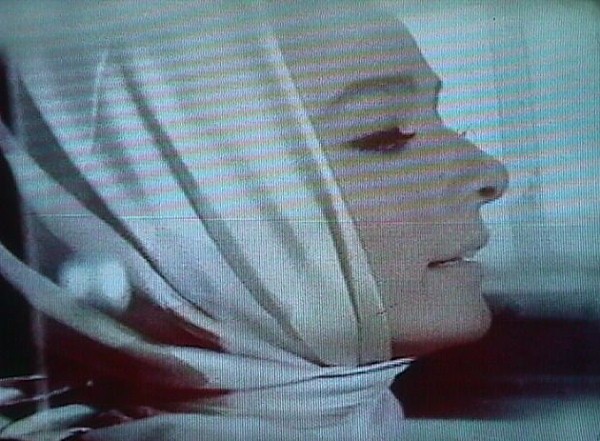
"But isn't simple elegance what's most becoming? Isn't that the best style? Yet here I am about to sleep with a man that's not my husband. I guess that's stylish too. Maybe it is true that reality now reenacts its own illusory mirror."
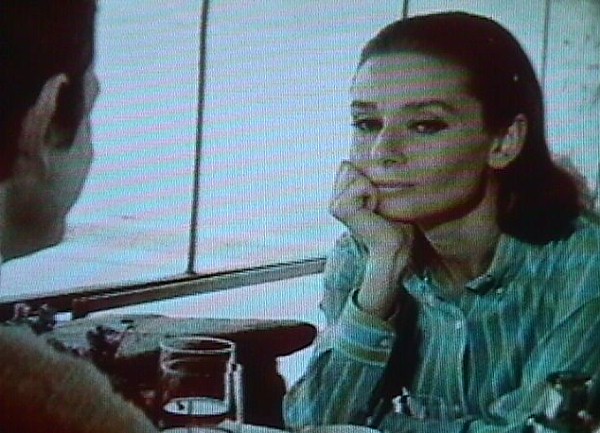
the architect's wife style .6
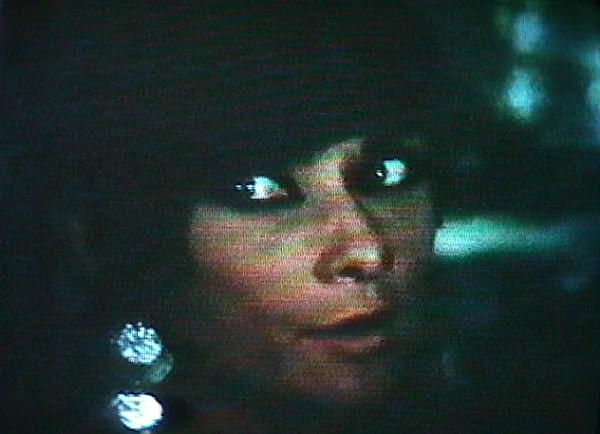
So let the show begin.
Lights! Camera! Action!
the architect's wife style .7
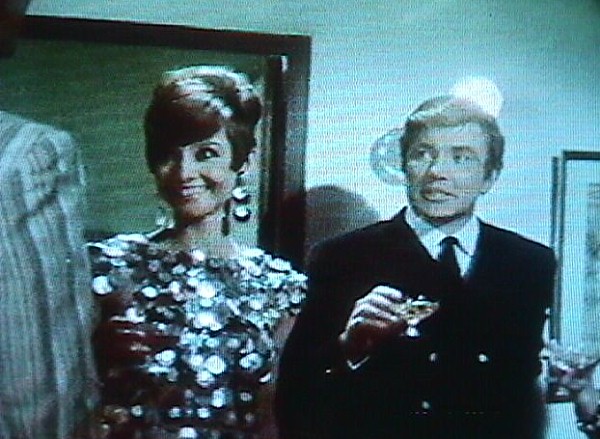
"I am iconic."
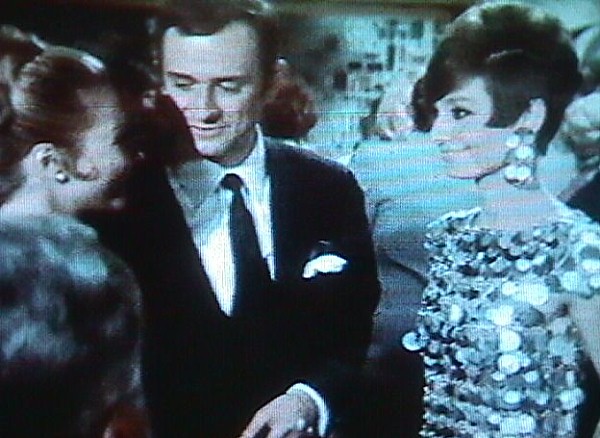
"I am electronic."
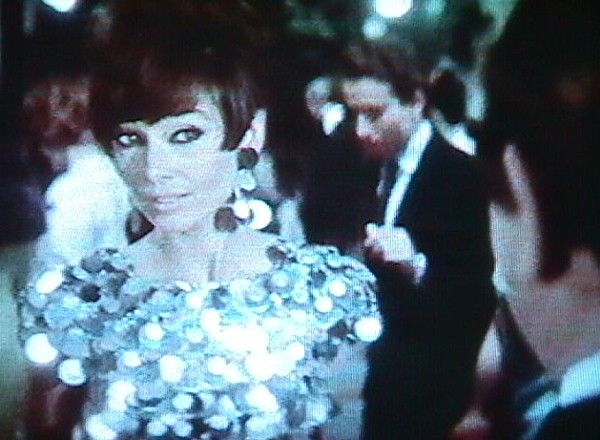
"I am beyond surface."
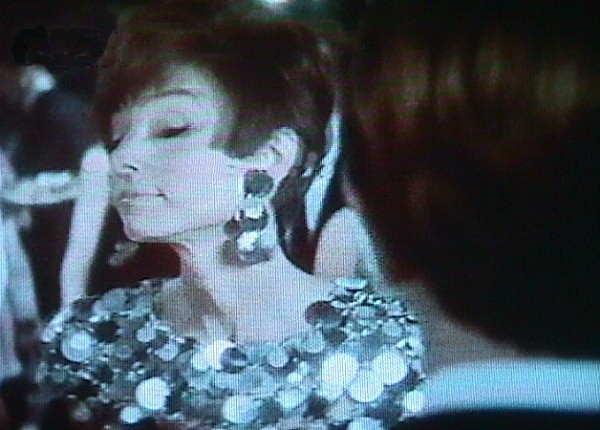
the architect's wife style .8
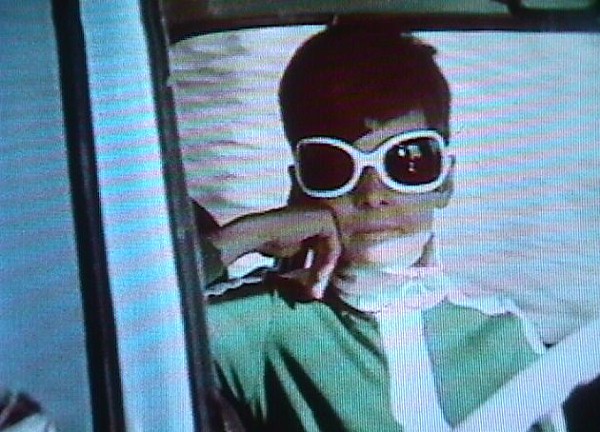
"So, does Mark ever really understand me? Does he get the message?"
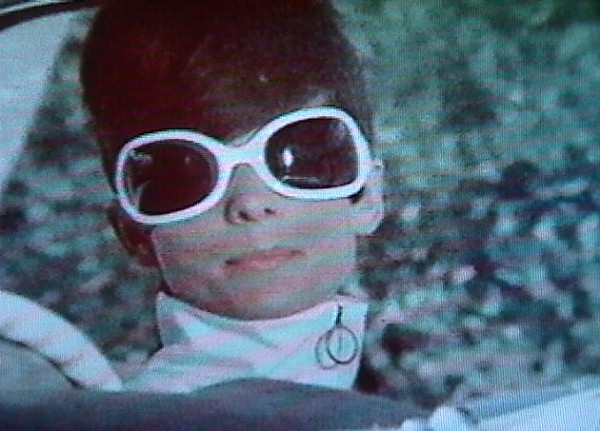
"I love you. Let's go shopping."
1984.11.03

POP!!
1964.11.03
1964. Tuesday, New York City
In the evening with Denise and David Hare, Marcel and Teeny watch the results of the presidential election coming in on television.
Ephemerides
1959.11.03
1959. Tuesday, New York City
"We are moving this evening," writes Duchamp to Robert Lebel, "and our definitive address for many years I hope is: 28 West 10th Street."
Telling Lebel that he has received a long letter from Andre Breton, busy organizing a Surrealist exhibition, Duchamp agrees to the loan of With my Tongue in my Cheek [30.6.1959].
To promote Lebel's book [6.4.1959J, which appears officially in New York on 6 November, Duchamp has already been interviewed by Newsweek. He has also received the short, poetic text from Jean Cocteau [24.1.1938J, which, if Lebel agrees, he will pass on to the American publishers, Grove Press.
Headed "Marcel" and underlined with a flourish, Cocteau declares that he will never forget "the spectacle of elegance" one Sunday at Picabia's, when he saw "three greyhounds enter, of which one is Marcel Duchamp. Marcel invented everything of the 'Great Era' without the inelegance of knowing it," writes Cocteau. "Genius tumbled from his pockets. With a small gold key, he opened a door on a world which was mine without my suspecting it. I will always retain a tender and solemn devotion for him. He remains, in my view, the founder of this unreal realism which will be the keynote of the century, and is symbolized by his Joconde with the moustaches of a musketeer."
Ephemerides
1913.11.03
1913. Saturday, Paris
After attending classes at the Ecole des Chartes [4.11.1912], Duchamp has been receiving instruction since May in the duties of under-librarian from the staff at the Bibliothèque Sainte-Geneviève, where Picabia's uncle Maurice Davanne is a librarian. It is due to his patronage that Duchamp is engaged on a temporary basis for two months to replace another librarian, M. Mortet, who is on leave. Considering it "a wonderful job" because he has so many hours to himself to continue his plans [22.10.1913] for the Large Glass, Duchamp is to receive 100 francs (or 1,500 francs at present values).
Ephemerides
|