2026.09.15
simply put?
Just as Thierry de Duve's Kant After Duchamp puts Kant through a Duchamp wringer, Stephen Lauf's Duchamp After Unbekannt puts Duchamp through an Unbekannt wringer.
2023.09.15
From The Discovery of Piranesi's Final Project:
15 September 2023 Friday
Shortly before dinnertime, I was informed that the Star Vengeance exhibition at the House of Culture, Moscow, will officially open 19 October 2023.
Bianconi's Doctoring Piranesi episode twelve: "Landing on Uncharted World Stage Territory"
"I already know how to survey ruins and draw their plans." --Francesco Piranesi
"Back in 1813, the President and First Lady of the United States [John Quincy and Louisa Adams] attended our wedding in St. Petersburg, Russia. And a few days after that they also attended my husband's funeral, also in St. Petersburg." --Hélène Gregoroffsky Fisher at New Harmony, Indiana
"I know exactly where I was when I first learned of the War of 1812--we had just arrived, half drenched by a rain storm, at Ury, Miers Fisher's place." --Andrei Iakovlevich Dashkov (or Daschkoff)
"All the world's a next stage." --Stephen Lauf
"Eutropia, wo bist du?" --St. Helena
"I was with Dante and we went to the Inferno, and lo and behold everyone there was doing the same thing." --Laura Piranesi
"And tell Francesco to bring his knife." --Giovanni Battista Piranesi
2021.09.15
2D CAD database
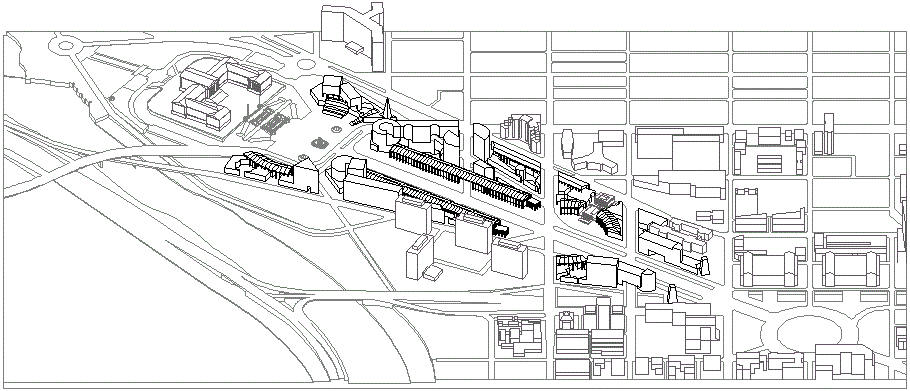
21091501.db Parkway Interpolation axonometric
2014.09.15
The End of History?
I honestly don't know if I can answer any of your questions adequately, so whatever I write here now is not to be taken as anything definitive.
The source of the various imaginations comes from the physiological processes that occur within the body. That is to say that the brain acts assimilatingly, or metabolically or osmotically, etc. That's my (short) answer to the origin of the operations. (This is perhaps the most far-fetched conclusion, yet it was learning about the various physiologies of the body and then wondering whether the brain might have the same physiologies that sparked the notion of various human imaginations. Thus, in general, any answers as to origin are to be looked for within the body itself.)
The notion of electro-magnetism and electro-magnetic imagination comes from the notion that the human heart operates as an electro-magnet, and what the heart pumps (blood) is what makes it pump. Is the heart then like a perpetual engine? Interestingly, electro-magnetic radiation defines light. Is the electro-magnetic imagination a perpetual beat of light? Who knows?
Since I feel as if my own imagination is slowly showing signs of ossification, meaning pliability has begun to harden, the implication of your third question is perhaps the best all these notions may ever be useful for, if useful at all. But, then again, the answers really shouldn't come from me, but rather from how the body operates.
2002.09.15
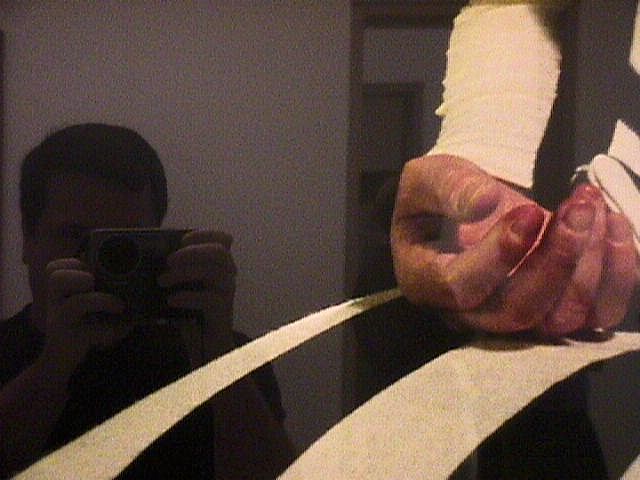
Unbekannt Self Portrait with Cindy Sherman's Hand 2002.09.15
Philadelphia Museum of Art
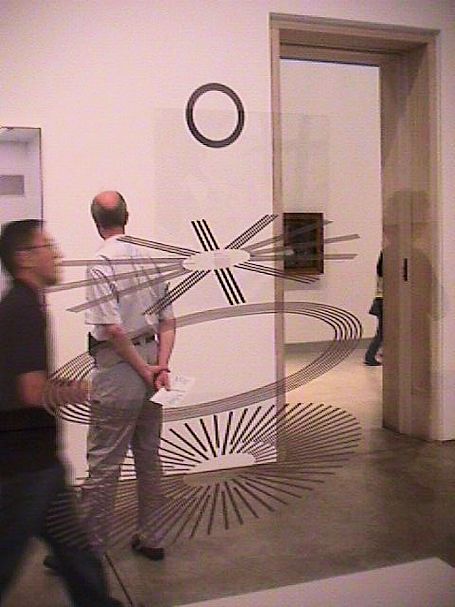 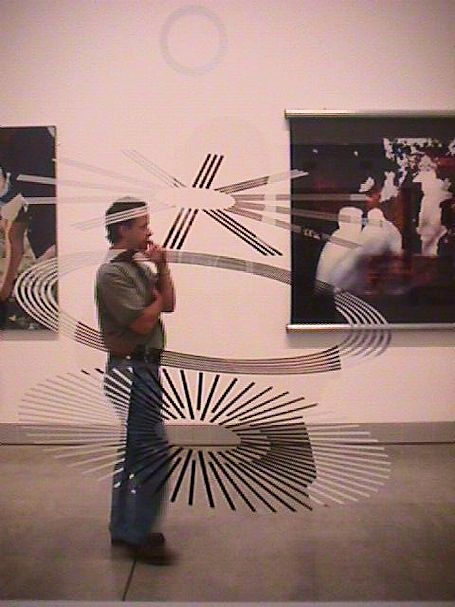
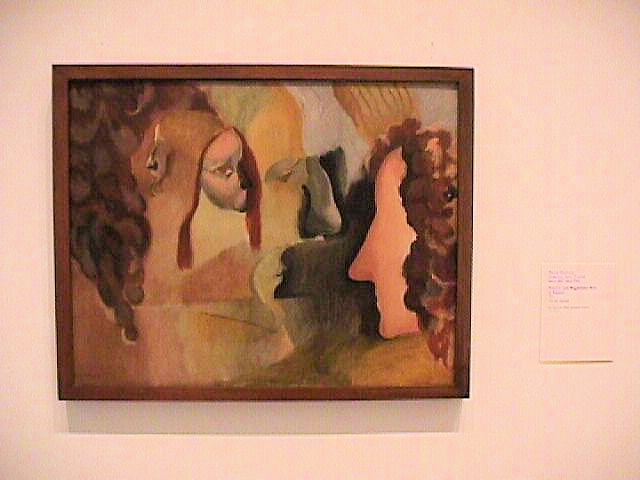
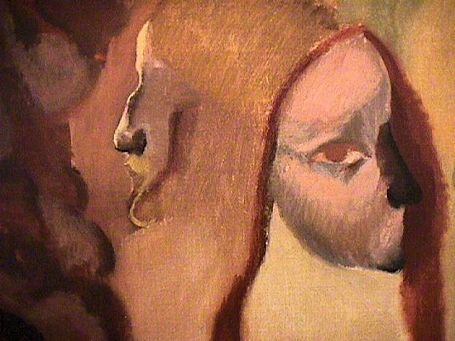 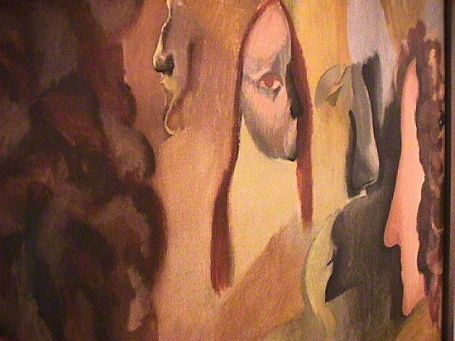
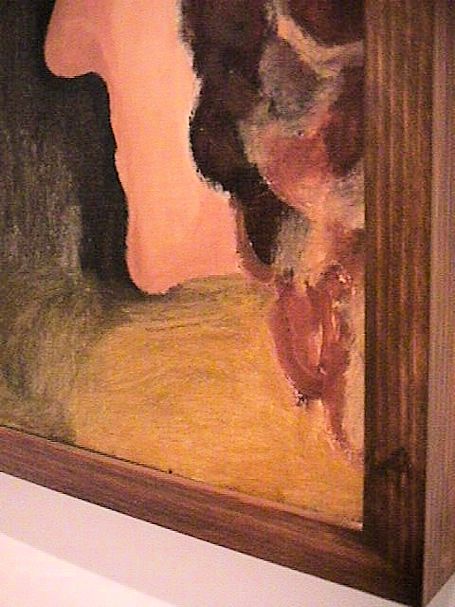 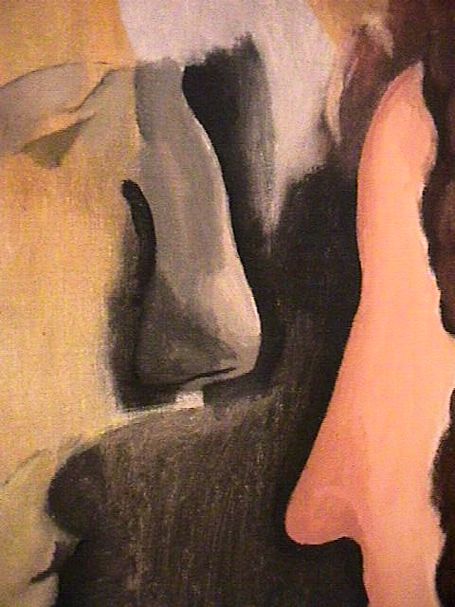
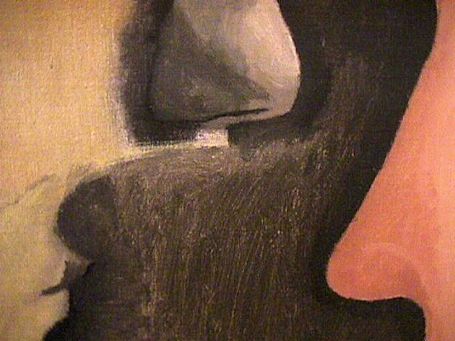 
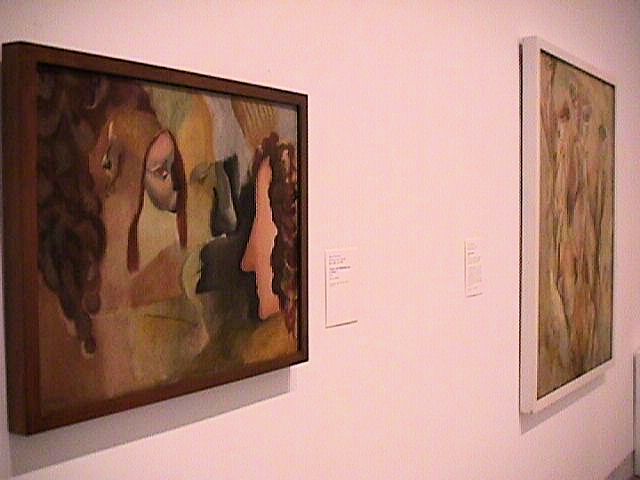
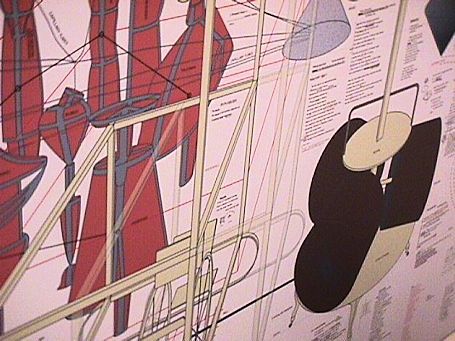 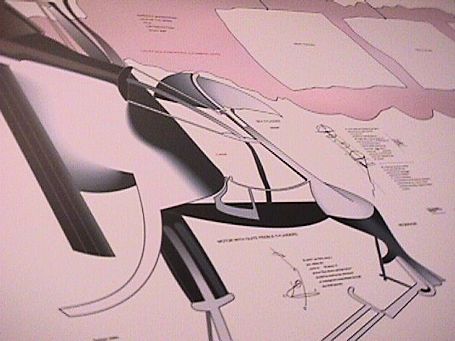
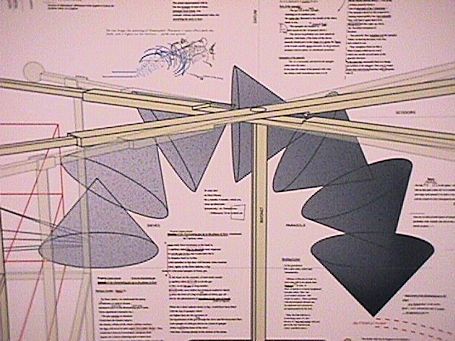 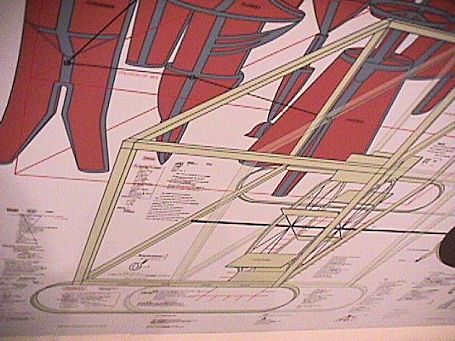
Re: yvonne and magdelene torn in tatters
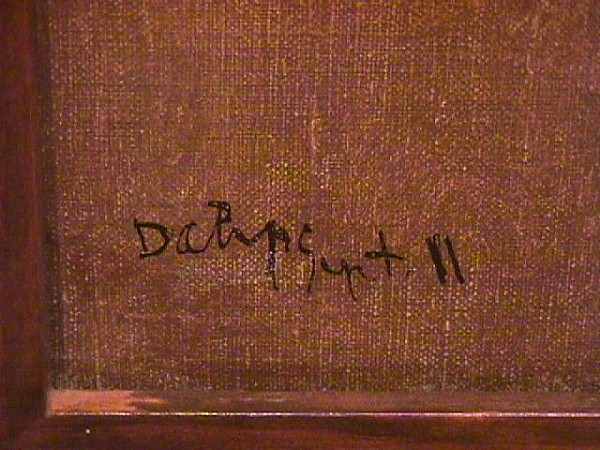
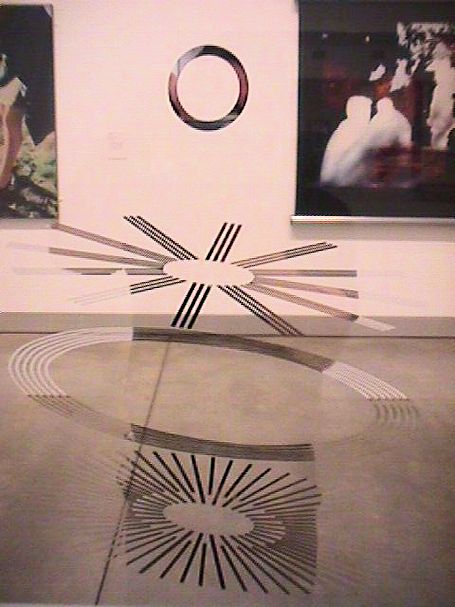
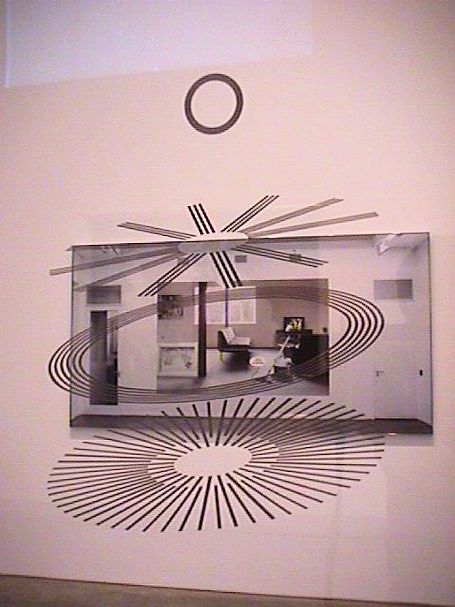
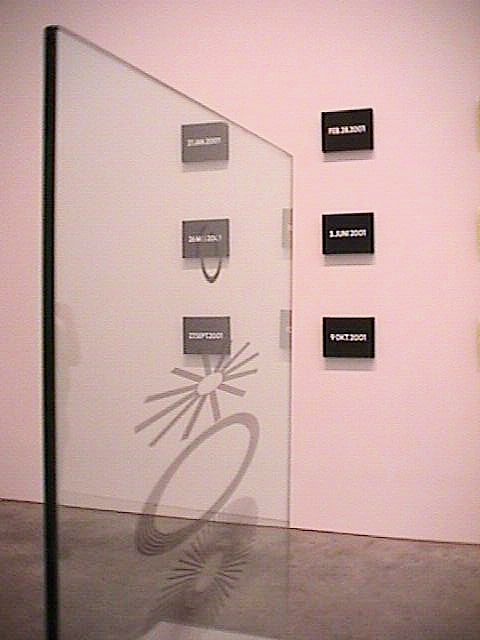
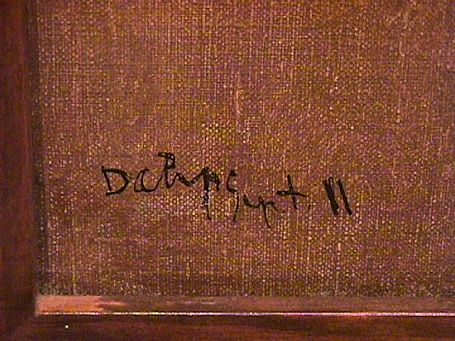
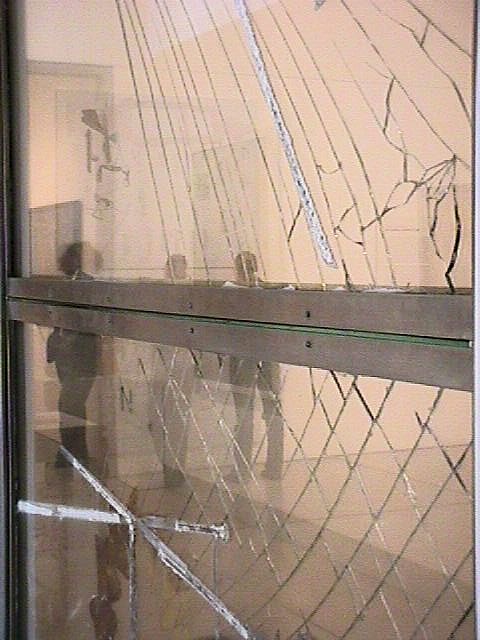
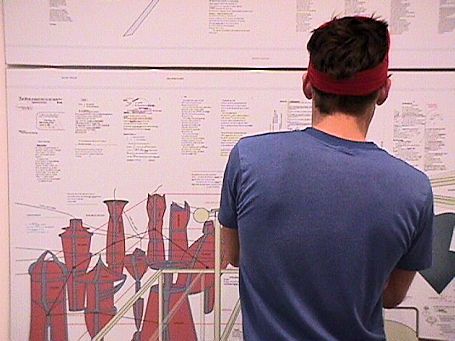
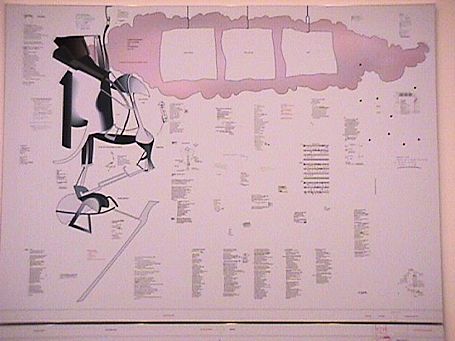
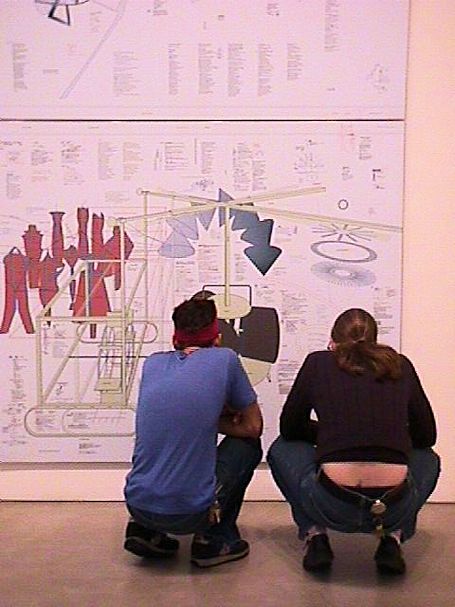
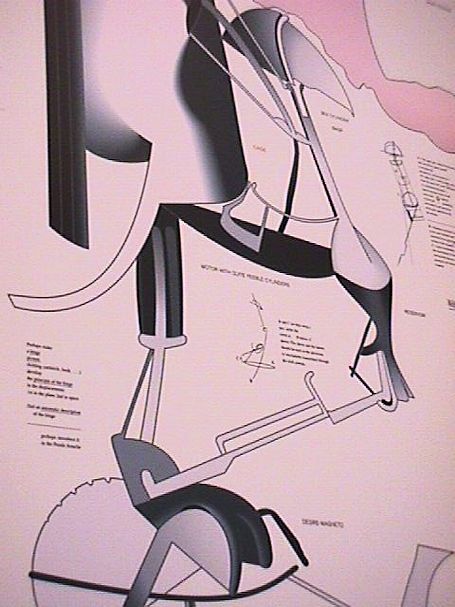
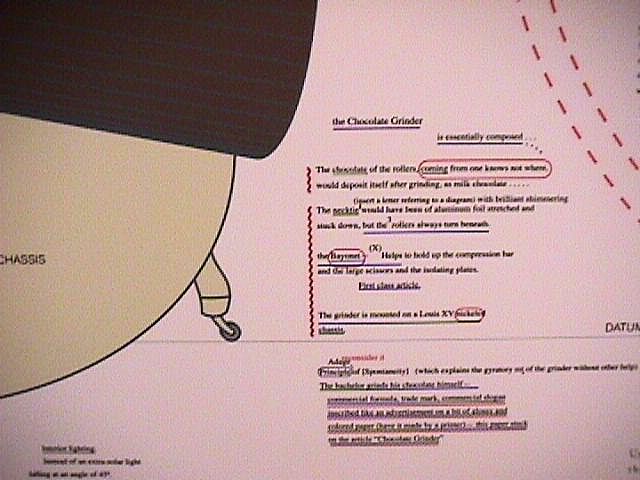
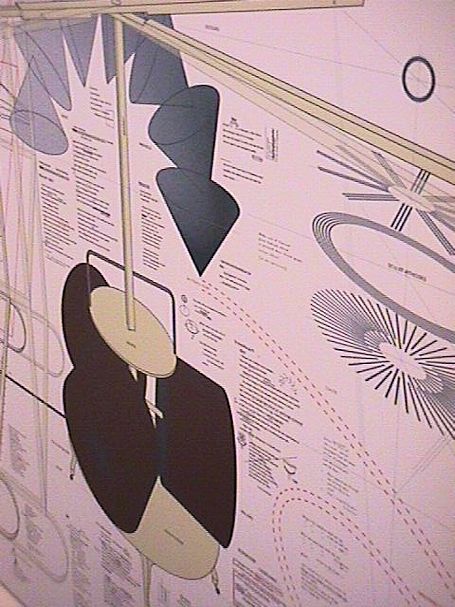
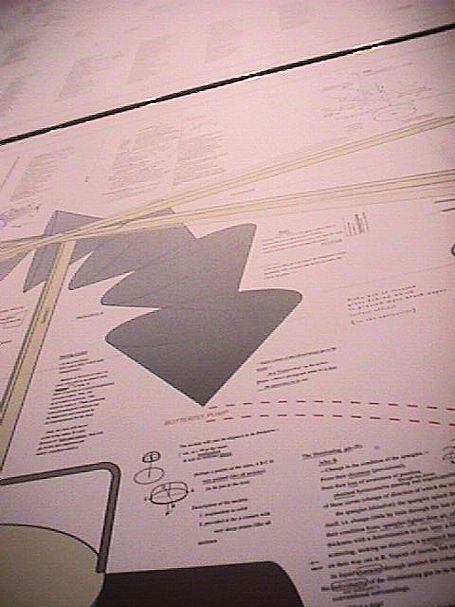
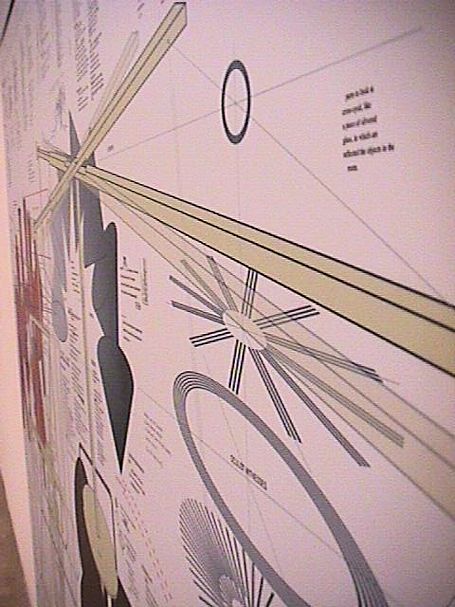
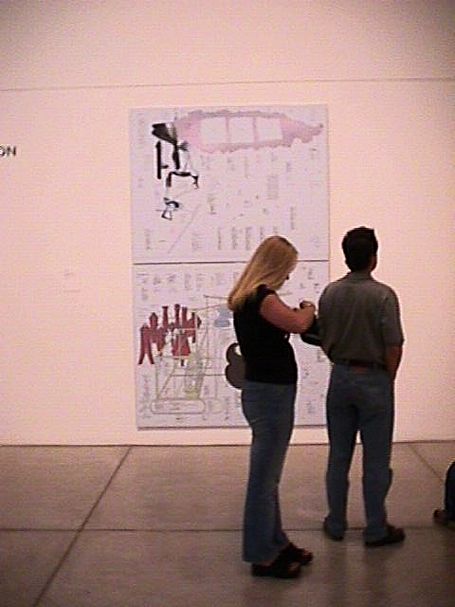
I looked at Yvonne and Magdeleine Torn in Tatters at the Philadelphia Museum of Art this afternoon, and took some digital snapshots of the painting as well. Later, at home, looking at a close-up image of the painting's signature, I notice it is signed "Duchamp Sept. 11". I found out the date means September 1911, but I still think the coincidence is interesting. Perhaps I'll start referring to the quondam World Trade Center towers as Yvonne and Magdeleine.
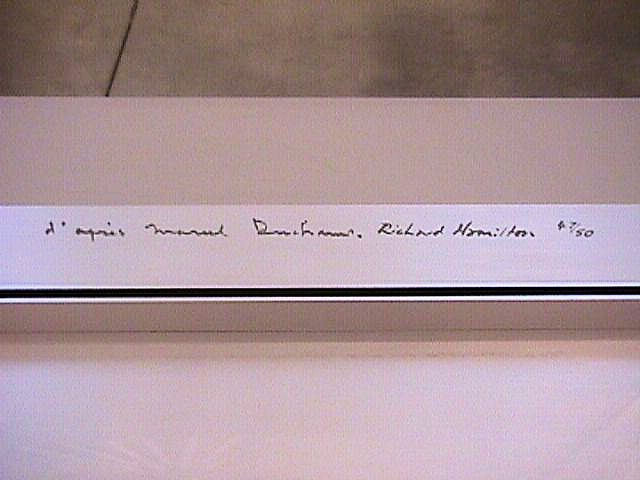
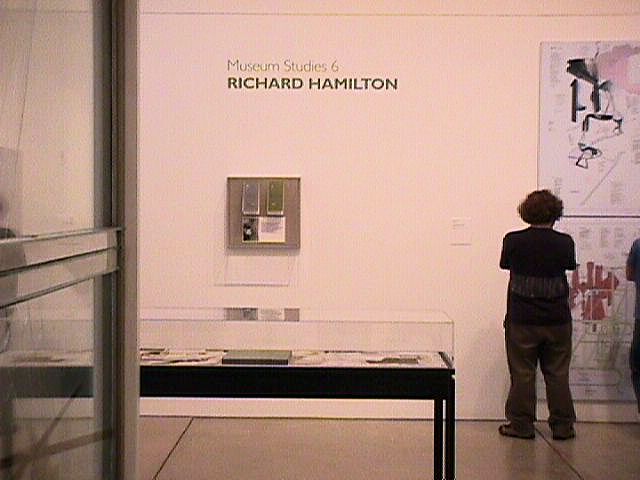
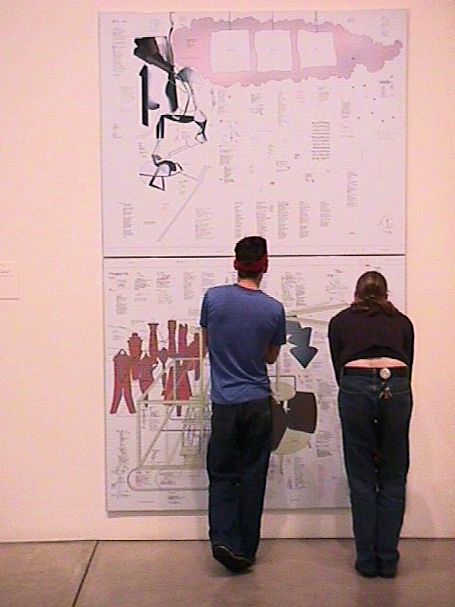
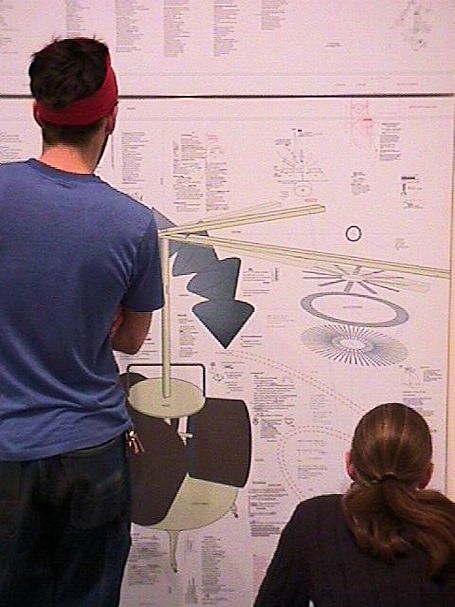
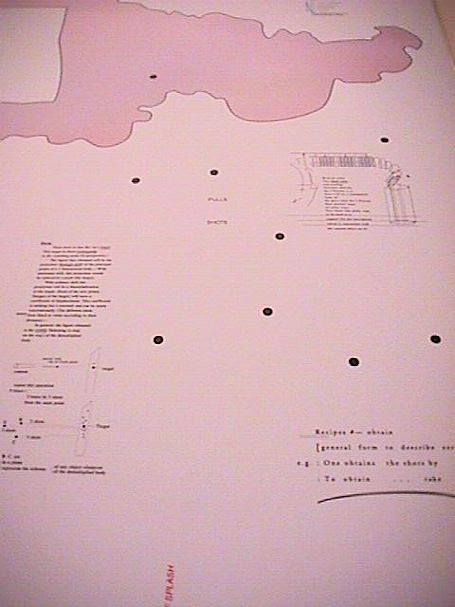
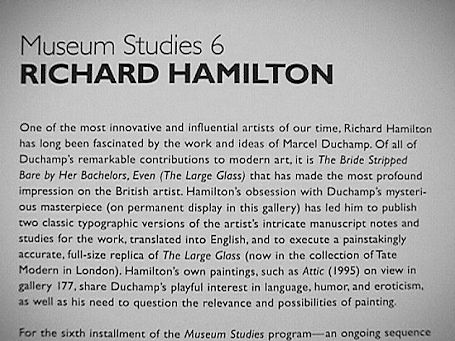
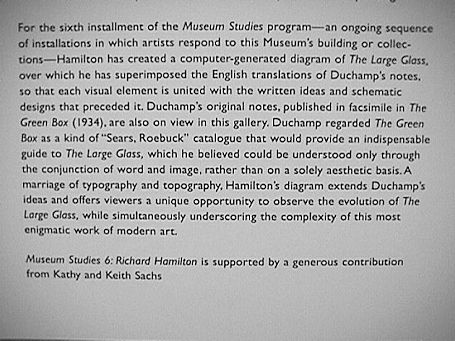
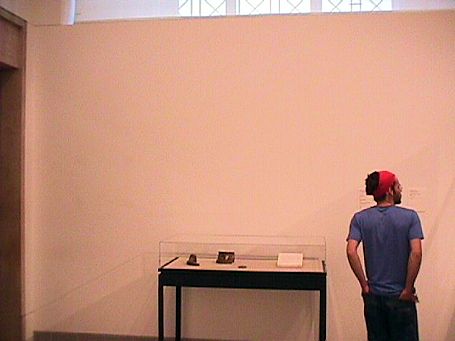
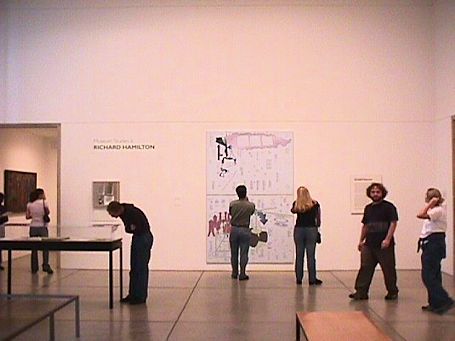
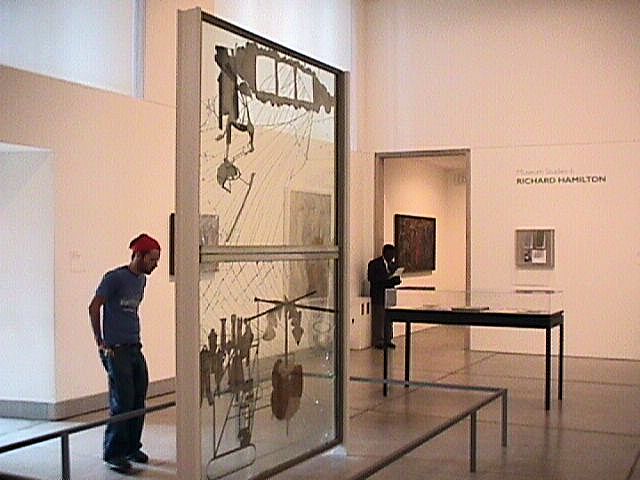
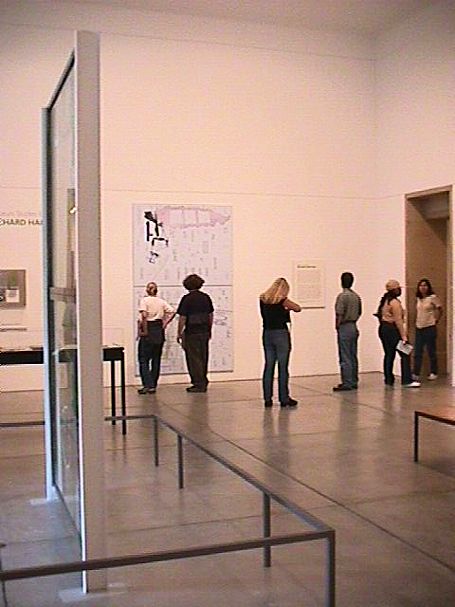
There is a special Richard Hamilton Museum Studies 6 exhibit within the PMA Duchamp gallery. I might upload some images of the exhibit at Museumpeace next month.
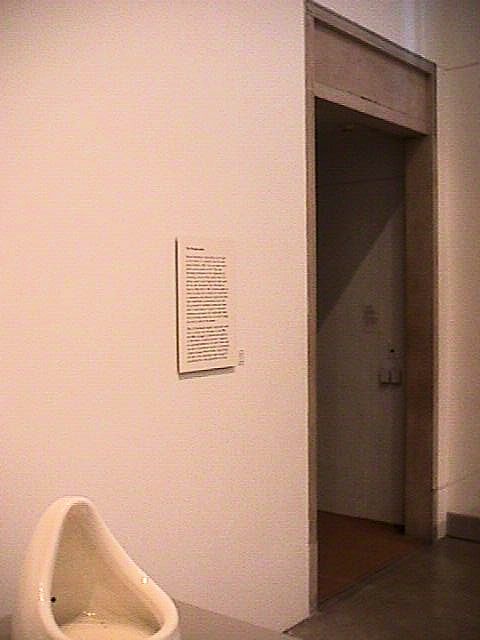
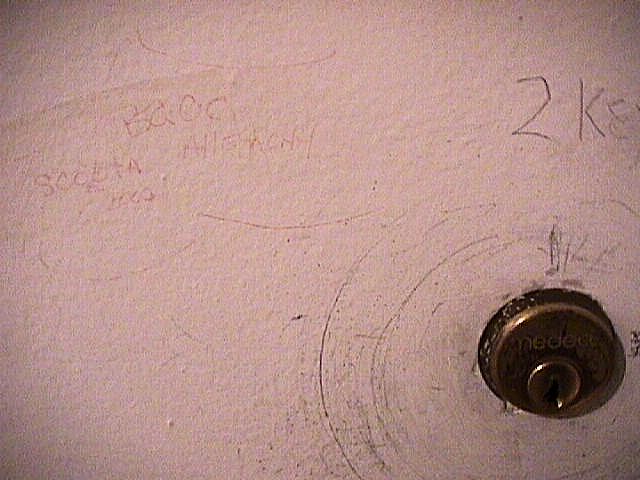
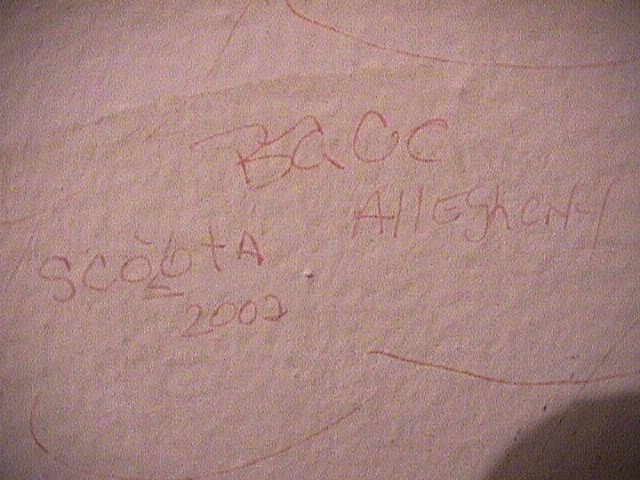
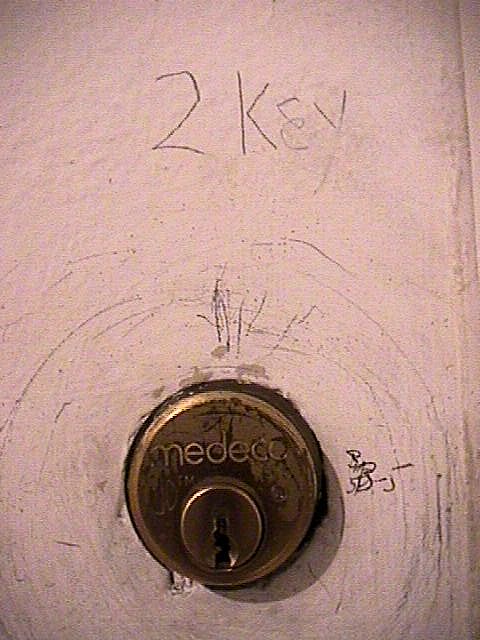
Someone has left additional graffiti on Étant donnés' back door--"BAOC Scoota Allegheny 2002". This graffiti was not there about a month ago.
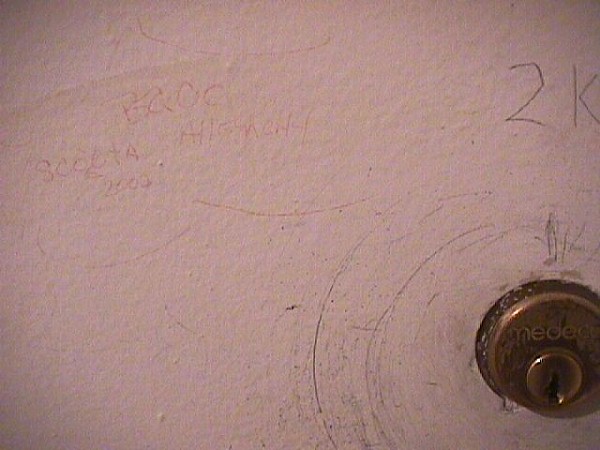
purchased at the Philadelphia Museum of Art
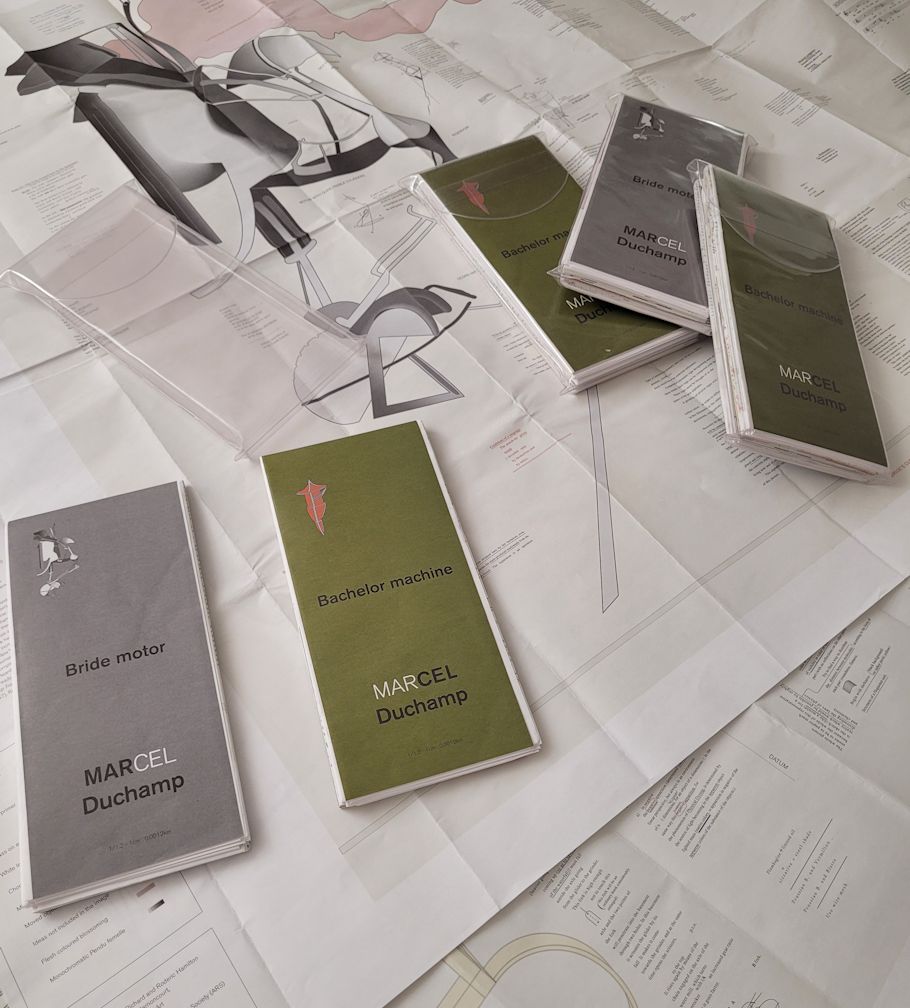
Richard Hamilton Bride Motor/Bachelor Machine : A typo/topography of the Large Glass 2002
1983.09.15
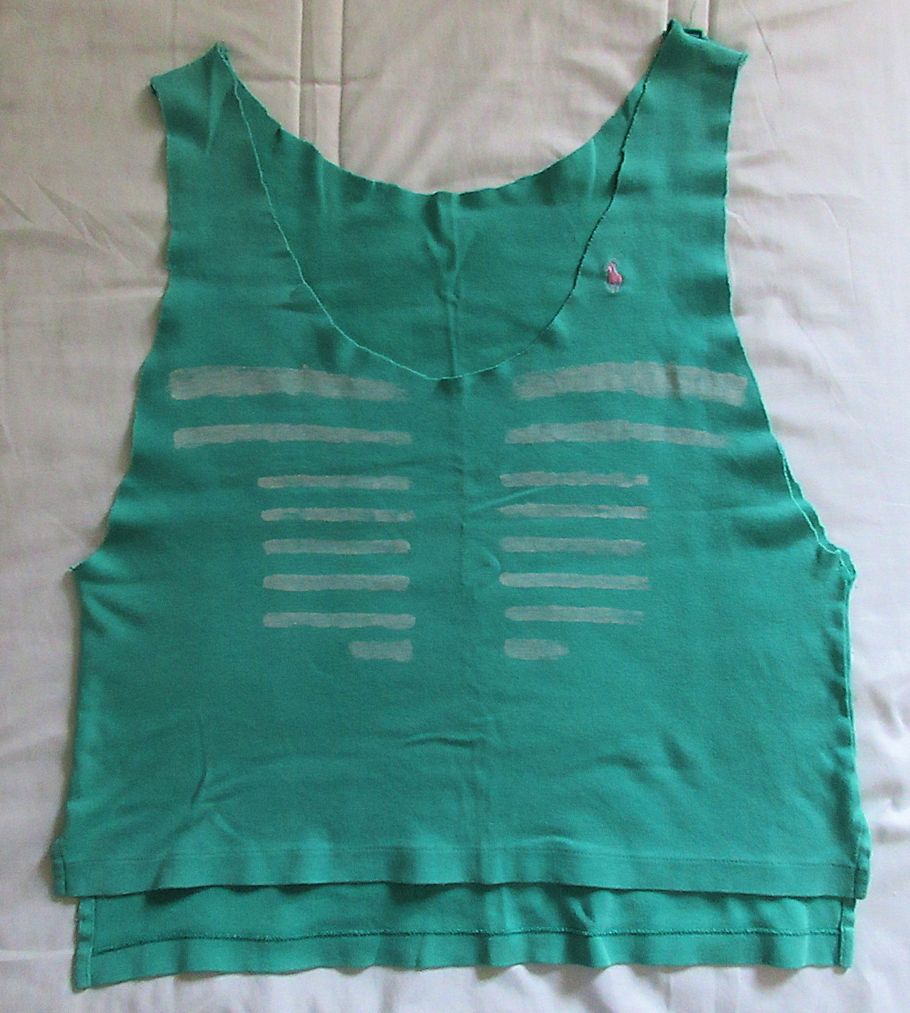
Unbekannt War Paint 1983.09.15
1951.09.15
1951. Sunday, New York City
On receiving another call for help from the Arensbergs regarding the tax demand from the state of California [8.9.1951], Marcel replies: "Your search for the origins of the purchases becomes a regular casse-tête chinois. I feel terribly sorry to see you racking your brains and probably losing sleep about it." For information about their purchases from the Modern Gallery, Marcel suggests they contact Miss Ione Ulrich at the Museum of Modern Art. "The Matisses," have been in Europe since July--and are probably not back. If in a hurry, tell me and I will make sure or, tell them to answer your letter."
Ephemerides
1937.09.15
1937. Wednesday, Paris
...Dee advises Miss Dreier in a "hasty letter" which he hopes will catch the Queen Mary. ...
Regarding the project of a museum [24.8.1937] and a building for it, Dee declines to discuss it for the moment even with Kiesler, "one of the few with whom one could talk," he adds.
Ephemerides
1932.09.15
1932. Thursday, Florence
In L'Italia Scacchistica, an unsigned article attacks L'Opposition et les cases conjuguées sont réconciliées by Vitaly Halberstadt and Marcel Duchamp, recently published by Editions de L'Echiquier, Brussels [20.5.1931], for being nothing but a plagiarism of Rinaldo Bianchetti's book: Contributa alla teoria dei finali di soli pedoni, Florence, 1925.
In fact Duchamp and Halberstadt state very clearly all their sources in what they describe as their attempt to "elucidate a question which, for twenty years, has periodically given rise to bitter articles in chess literature". Designed by Duchamp, from cover to cover [8.9.1931], on each double page spread the text in German, English and French runs concurrently in three separate columns with a fourth for the chessboard diagrams. Duchamp has devised diagrams in red and black on transparent paper, printed on both sides, using the principle of superimposition by folding along a dotted line. In a final set of diagrams, the authors "show the consistency of the method of transfer" which has enabled them to make their classification.
Ephemerides
|