2026.08.17
your own or those of others
260817_172819.jpg
2015.08.17
Architecture of Segregation
...yes you provided examples, but the issue of "architect designed housings that have been built and that have subsequently improved the occupant's economic standing" remains.
As to "the concerns of architecture," architecture itself is indifferent, e.g., an old urban row house can be a family home or a crack house, an unfinished hi-rise can remain unfinished or it can be(come) a quasi-anarchic home full of squatters, Villa Savoye was for a short time a modernist residence, then a decrepit farm building, and now a kind-of museum.
Architecture of Segregation
"Public spaces and buildings accessible to all, fair distribution of urban systems, health and educational services, public transportation, homeless sheltering, walkability of streets, architecture which compliments social equity, well-being and public engagement. Places that generate local economic opportunities and employment. Sustainable cities with stable and affordable housing and healthy non-speculative growth."
Architects can (maybe) design some (actually just a few) of these things, and, moreover they certainly cannot guarantee any of these things. A lot of the list actually requires legislation first, and then major financing, all of which is outside of and prior to any architect's involvement.
Lobbying for legislation is perhaps the most an architect can do (but lobbying these days requires a lot of (time and) money in and of itself).
2003.08.17
to see in Philly
Kahn's project for the Philadelphia College of Art was never executed, and the Mill Creek Housing project was demolished last year. There is the quondam Ahavath Israel Synagogue, Kahn's first indepedent building (1935), a couple blocks west of North Broad Street--the facade was redone sometime 2000, however. Erdman Hall, the dormitories at Bryn Mawr College, were just renovated 2002. Richard's Medical Towers still at UofP and still looking good. There's lots more obscure early Kahn in the Philadelphia area, kinda like going on a treasure hunt.
By far, there is more Venturi et al architecture in and around Philadelphia than anyplace else on the planet. Ditto for the architecture of Mitchell/Giurgola.
The Venturi, Scott Brown & Assoc. Philadelphia Orchestra Hall was never executed. Vinoly did the 'replacement' Kimmel Center though.
The Philadelphia Museum of Art Duchamp Collection is indeed the largest in the world. Try finding Etant Donnes' Back Door while you're there.
Kahn proposed marriage to Esther Israeli at the Rodin Museum. Don't miss the Gates of Hell as you go in!
Legend has it that Benjamin Franklin famously flew his kite just east of what is now Ridge Ave. and Buttonwood St. Pretty derelict place right now, but there is a electrical substation just down the street.
1990.08.17
fragments, that's all
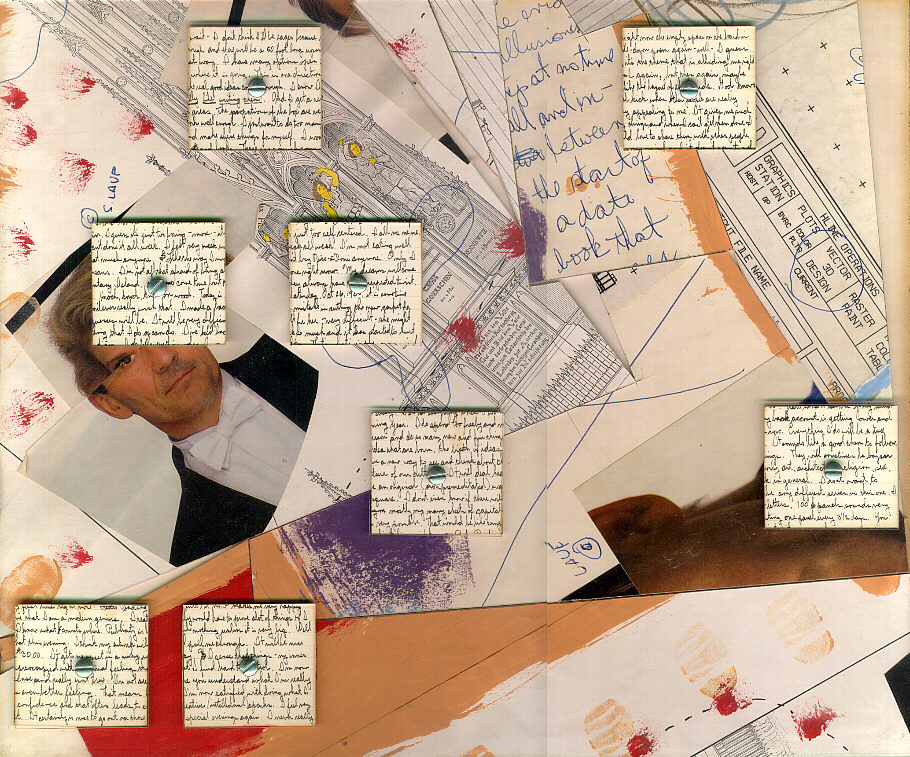
panel 3
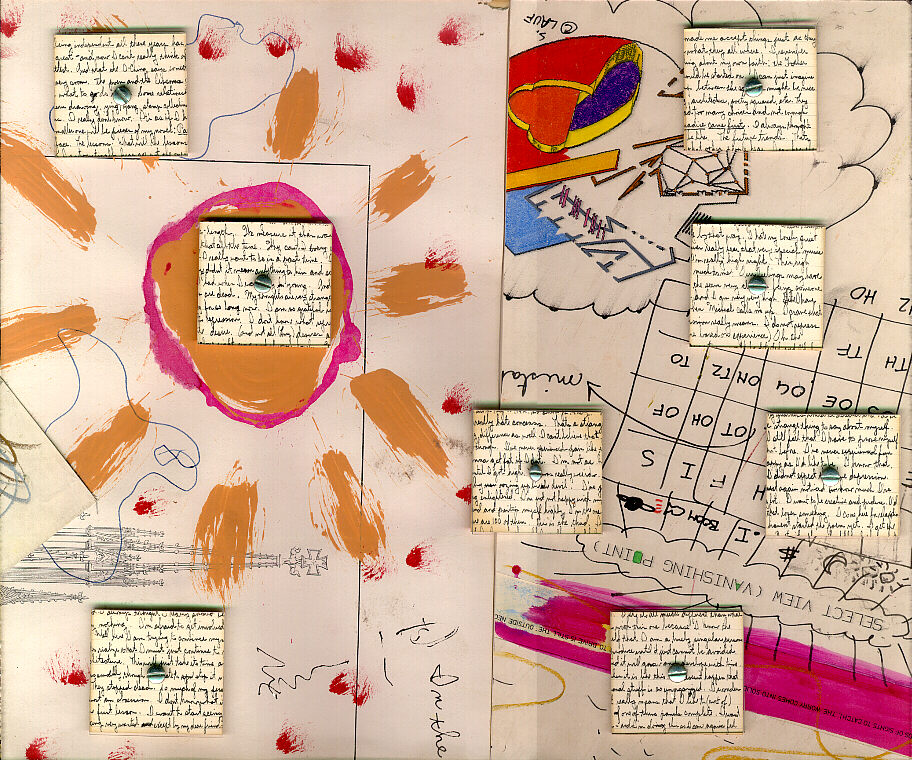
panel 6
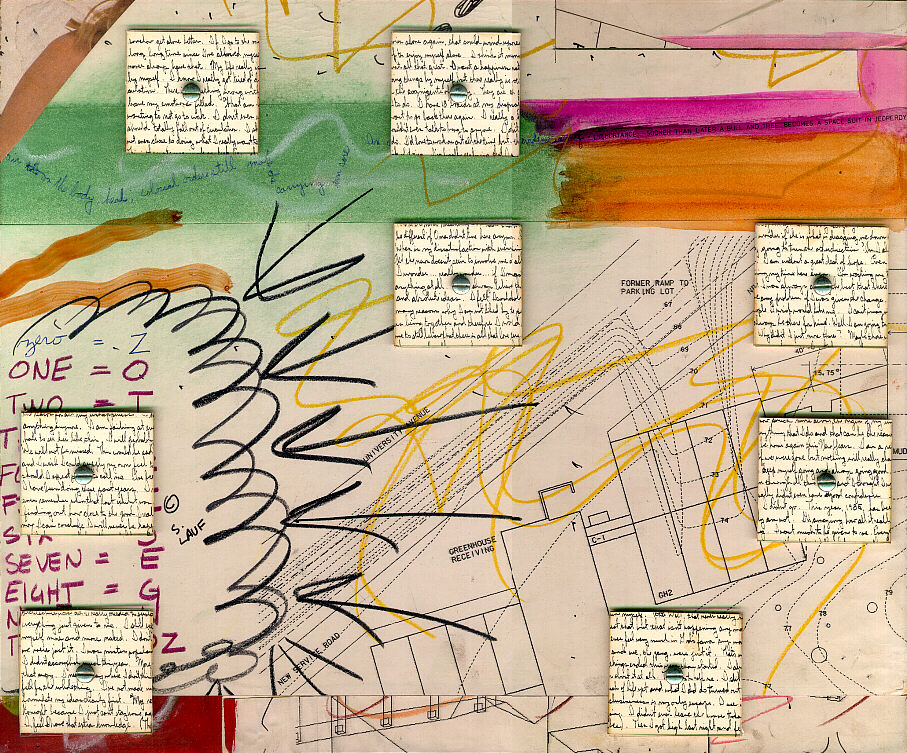
panel 10
panel 11
1977.08.17
August 17, 1977. Wednesday, Rome
Baroque churches of Rome
in transit to Venice
Churches were nice--first organized tour in a couple of days. A lot of sketching and separateness.
Ate at a horrible place around Termini.
Train at night was a horrible mistake.


exhausting, hot, ugly day
no more Villa Hélèna to go to
Italian Study Tour Journal
1952.08.17
1952. Sunday, New York City
"Agree absolutely with you," writes Marcel, replying to a long letter from Crotti discussing "L'Œuvre du XXème Siècle" [4.5.1952], "not forgetting," he adds, "that Sweeney had to organize this whole show in 6 weeks... I remember that in my conversations with him on this subject, I had suggested the idea of giving at least a small panel (very small) to Dada... He did nothing about it, naturally." To assuage his brother-in-law's disappointment at not being included in Sweeney's exhibition and as Sidney Janis has entrusted him with "the organization of ideas" for a Dada exhibition next March or April, Marcel asks Crotti if he will lend Le Clown made in 1916 [26.10.1918].
"You ask my opinion of your work, my dear Jean," says Marcel. "It's too long to say in a few words--and above all for me who has no belief at all--of the religious kind--in artistic activity as a social asset.
"Artists of all times are like Monte Carlo gamblers, and the blind lottery advances some and ruins others. To my mind, neither the winners nor the losers are worth bothering about. It's a good personal deal for the winner and a bad one for the loser.
"I don't believe in painting in itself. Every picture is made, not by the painter, but by those who look at it and grant it their favours; in other words, a painter who knows himself or knows what he's doing doesn't exist--there is no exterior sign that explains why a Fra Angelico and a Leonardo are equally 'recognized'.
"Everything happens through pure luck. Artists who, during their life, have known how to make the most of their junk are excellent travelling salesmen, but nothing guarantees the immortality of their work. And even posterity is a real bitch, who eludes some and revives others (EI Greco), but may indeed still change opinion every 50 years...
"In your particular case, you are certainly victim of the 'Ecole de Paris', this great joke that has lasted 60 years (the pupils themselves award the prizes, in money).
"In my opinion, there is refuge only in esotericism--for 60 years now, we have been watching a public exhibition of our balls and multiple erections ... "
"I will not speak to you of your sincerity--because that is the most ordinary banality and the least valuable. All liars, all bandits are sincere...
"In 2 words: do less self-analysis and work with pleasure without worrying yourself about opinions--your own or those of others."
Ephemerides
|