2026.07.21
the back cover of Duchamp & Ich
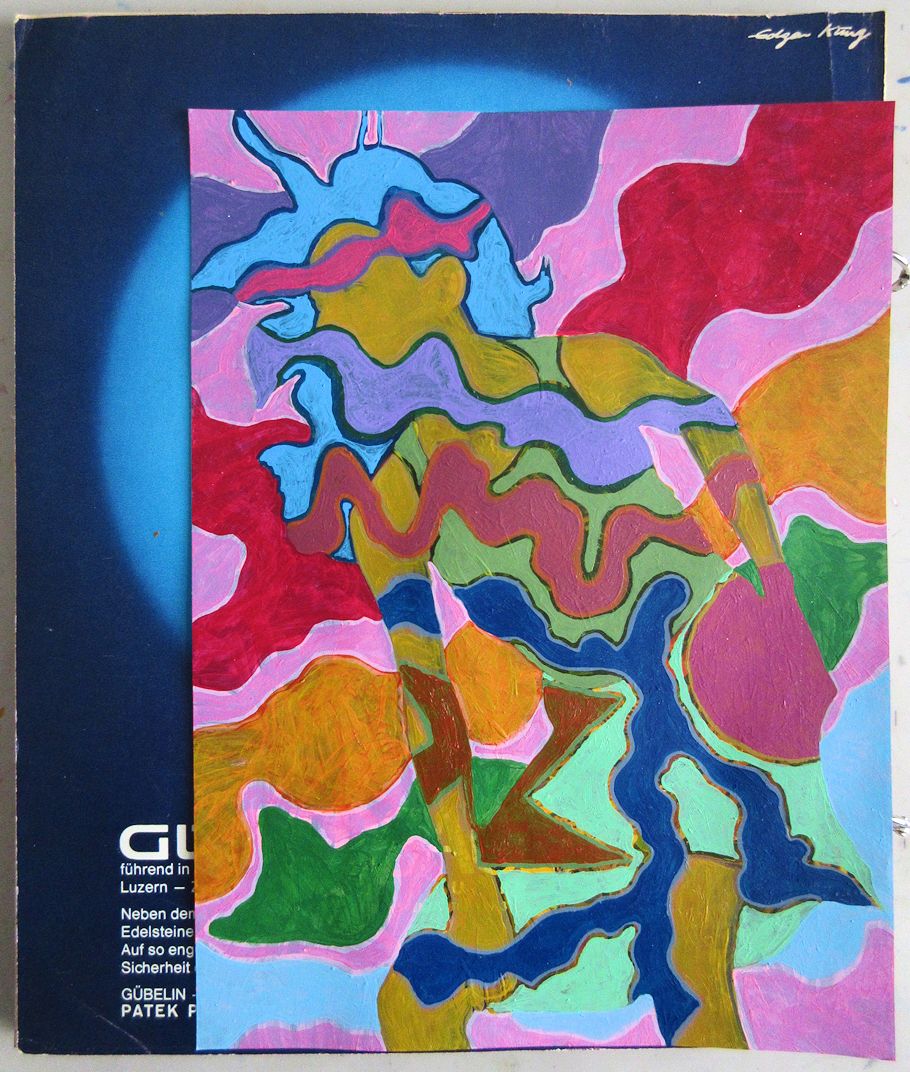
awaiting the finishing touches
2017.07.21
2D CAD database
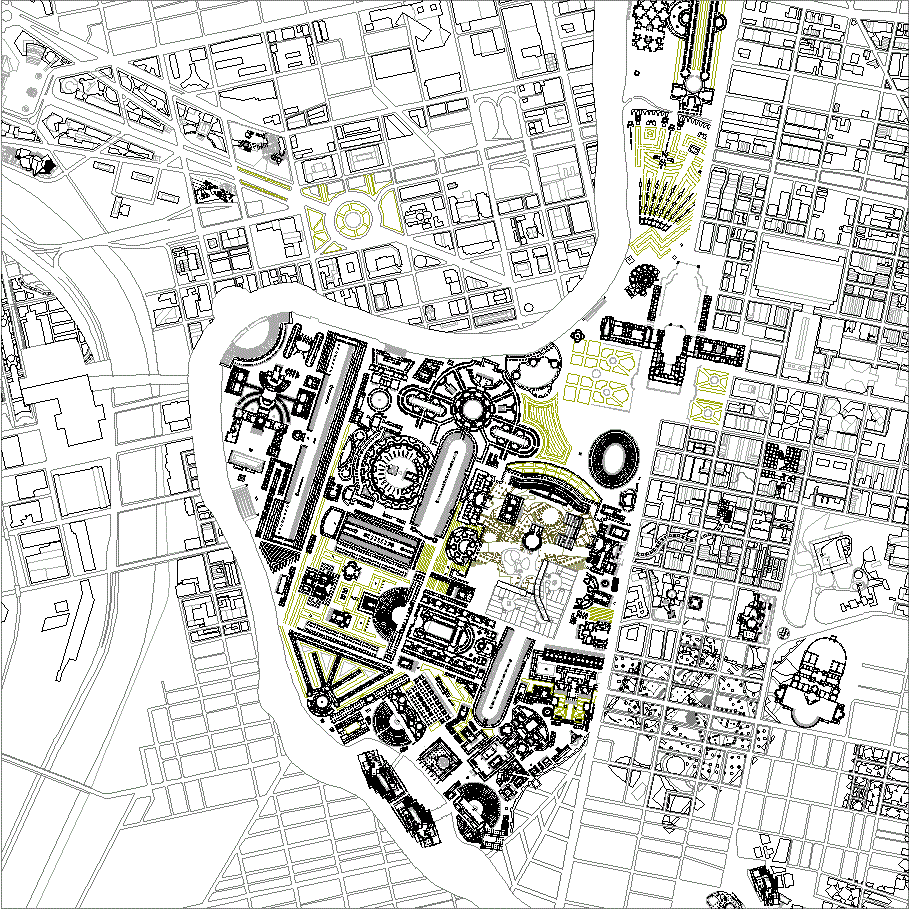
17072101.db Schizophrenic Folds within Pantheon Paradigm plans
2009.07.21
Suggestions on destroying earth
There's really no hurry. There's plenty more morphology and physiology to go through.

2008.07.21
bored with modern & contemporary, yet?
"What Stein discovered was a writing style that celebrated its grammatical mistakes. In her most radical prose, she managed to make us conscious of all the linguistic work that is normally done unconsciously. We notice the way verbs instantly get conjugated (even irregular verbs), the way nouns naturally become plural, and the way we amend articles to fit their subjects. Stein always said that the only way to read her writing was to proofread it, to pay acute attention to all the rules she violates. Her errors trace the syntactical structures we can't see, as our "inside becomes outside."* Stein showed us what we put into language by leaving it out."
* This isn't as strange a method as it might seem. Ludwig Wittgenstein hit upon a similar method for his philosophy, which, like Stein's writing, was interested in the uses of language to the exclusion of almost everything else. Wittgenstein once said that he worked by "mak[ing] a tracing of the physiognomy of every [philosophical] error." Only by mapping out mistakes could he see how best to proceed. Samuel Beckett also subscribed to Stein's literary approach. "Let us hope that a time will come," Beckett wrote, "when language is most efficiently used where it is being misused. To bore one hole after another in it, until what lurks behind it--be it something or nothing--begins to seep through; I cannot imagine a higher goal for a writer today."
Jonah Lehrer, Proust was a Neuroscientist (2007), p. 164.
Here we have 'modernist' thinking.
Alberti's thinking appears more Platonic.
Michelangelo's thinking appears more Aristotelian.
2005.07.21
Big up your home urban conurbation
Hey ether, is that Saturn 5 rocket still laying in the 'backyard' of the Space and Rocket Museum?
I learned CAD at Intergraph in Huntsville back in 1983. Those 10 days in Huntsville actually changed my life.
Big up your home urban conurbation
Thanks ether. The rocket in the back was laying in pieces back in 1983 as well. Walking between the parts is still fresh in my mind, and the fact that you could hear lots of birds cooing within the pieces kinda blew my mind. I mean, here is the greatest vehicle of flight ever made and it ends up laying next to a farm field in Alabama with lots of birds living in it. Like I said, the time I spent in Huntsville actually changed my life.
2001.07.21
Piranesi, Duchamp and Mustard
Use your imagination when it comes to the subject. The object is to be a self-publishing museum. The only artistic interactivity that I get anything out of is this kind of list serve back and forth commentating (as best interfaced by email lists). Virtual museums can be created and designed by anyone with talent now, and that's the best utilization of the virtual--self portrait as museum. There is only an obligation to yourself in cyberspace if you asked me.
But then again I don't worry about making money, and I abhor the thought of doing work for other people. Yes, I and my museums are popular, but also ignored, especially by those that assume they are better, or assume that I'm not better--I think the latter rings more true.
I have a feeling I don't have to wonder about what the hot project will be five years from now. That's because I might be already secretly doing it.
Please steal my ideas. I need the points to get into Heaven.
1954.07.21
1954. Wednesday, New York City
Monique Fong has written to say that since they last met a year ago [3.7.1953], she has got married. "cHAR MONICA," replies Monsieur
Duchamp from his studio on 14th Street. "Many things have isolated me for a (certain!) time:
1 - marriage
2 - appendicitis (operated)
3 - pneumonia (cured)
4 - prostate (operated)
... Do you never come to N.Y.? Feraites-moi signe," writes Duchamp (inventing the future imperative of the verb "to do"), asking her to let him know when she will be passing by 14th Street.
Ephemerides
1942.07.21
1942. Tuesday, New York City
At eight o'clock Marcel is invited by Peggy Guggenheim to dinner at Hale House with Sandy Calder and the Kieslers [7.7.1942].
*
Writing again to the Arensbergs [5.7.1942], Marcel refers to the Boite-en-Valise [7.1.1941] saying: "I brought one box for you, ready except for the leather case to be made ... As I put an 'original' in each box I wonder whether you would like the model-coloriage I made by hand of the 'nude'--or would you rather choose something else?" Asking for a rapid reply, Marcel continues: "I urge you to accept it as a feeble token of gratitude until I find more ways to thank you." He tells the Arensbergs that he sells the "de luxe" boxes for $200, thus hoping to make enough to live on for a year, and adds: "Do you see anyone amongst your friends in Hollywood who would want a copy?"
Ephemerides
1936.07.21
1936. Sunday, West Redding
"Perhaps you know that I have been here, for two months already," writes Duchamp to Alice Roullier in Chicago. "I am repairing my broken glass and the repairs are coming to an end." He tells her that Arensberg has invited him to California, and on 3 August "will be passing through Chicago... And if you are in town and the wait between trains is long enough," Duchamp promises, "I will telephone you." As in a week's time he will be in New York, Duchamp asks her to reply to the Carnegie Hall studio [21.4.1936].
Ephemerides
|