2026.06.11
Richard Réti vs. Alexander Alekhine: most beautiful
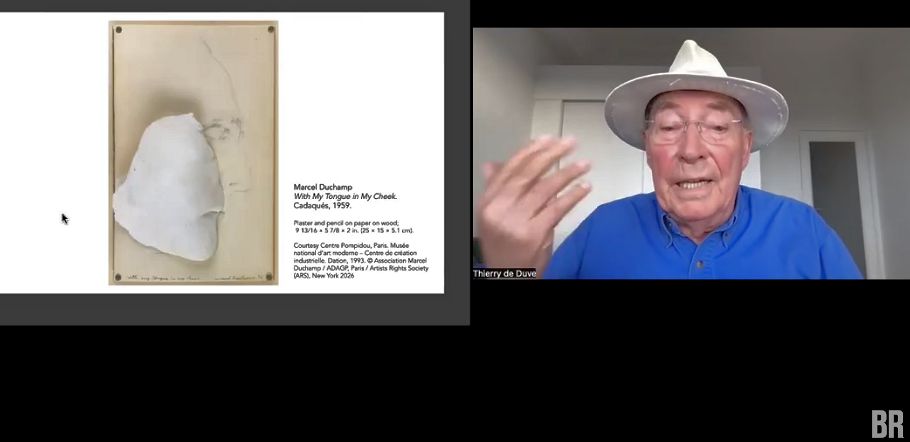
At exactly one hour into the Brooklyn Rail's New Social Environment #1367, Marcel Duchamp..., this past Tuesday, Thierry de Duve asked the curators "whether we can apply the category of beauty to Duchamp's work at all." The subsequent back-and-forth was good, good enough to even wish there was more.
So, it's with a kind of surprising joy to find Duchamp himself, 89 years ago and two days later, describe the Richard Réti vs. Alexander Alekhine chess match at the 1925 Baden-Baden tournament as "perhaps the most beautiful and most profound combination that has even been created on the chessboard."
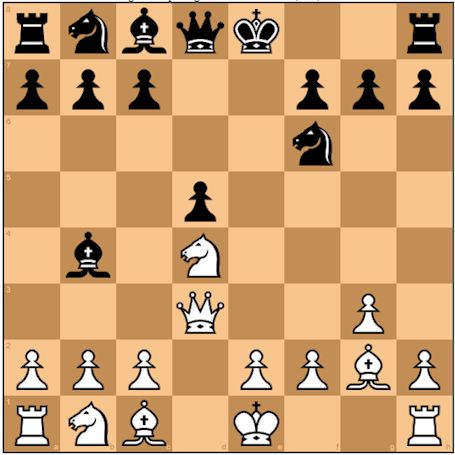 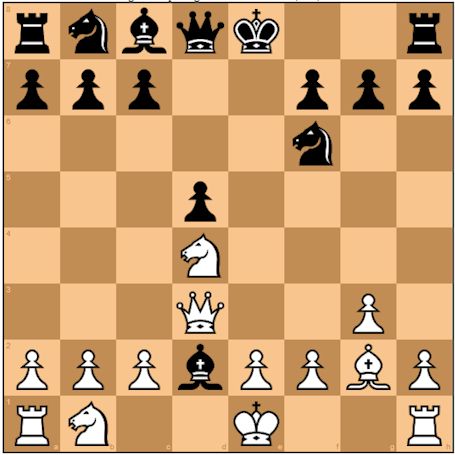
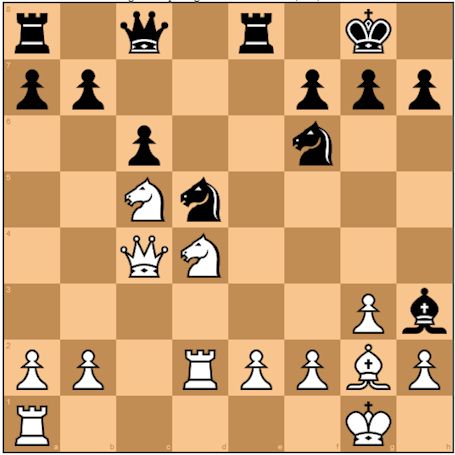 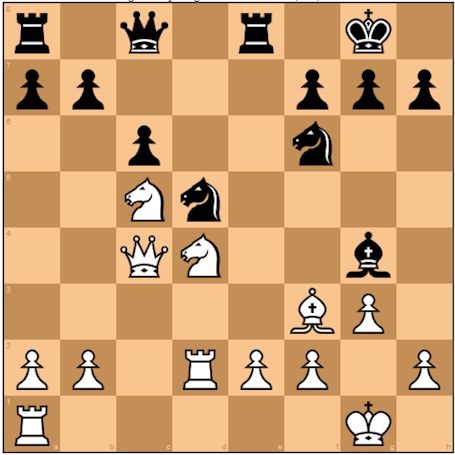
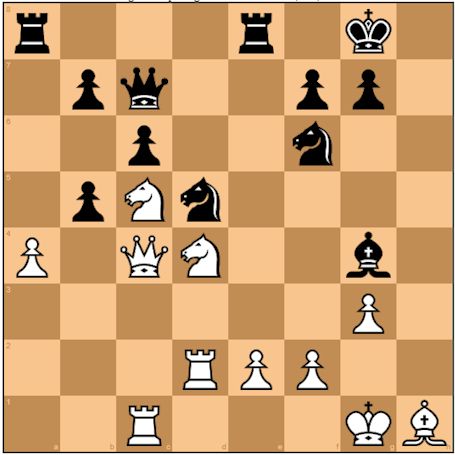 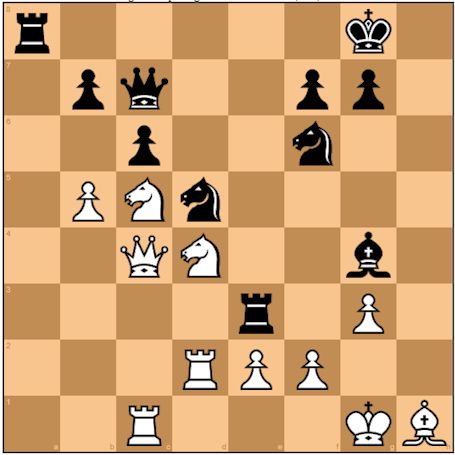
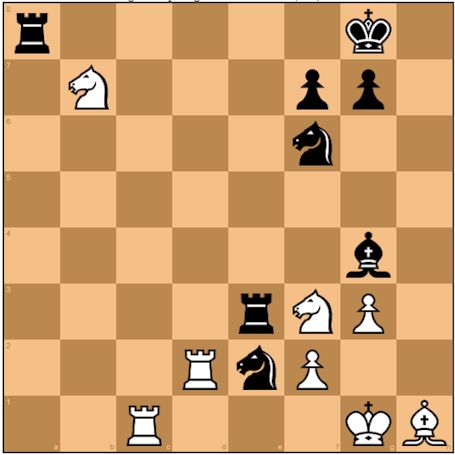 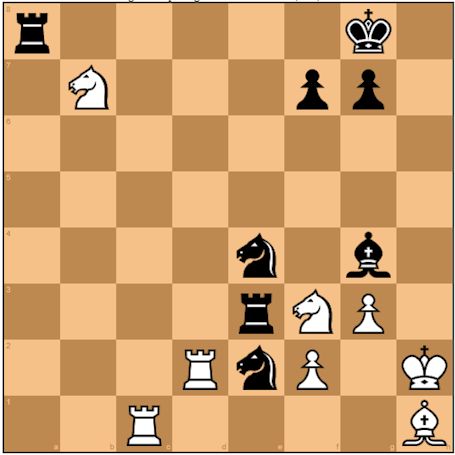
Although I now know only the fundamentals, and haven't even played a game of chess in probably 50 years, there indeed were moments of 'shock and awe' while observing Alekhine's (black) moves throughout a step-by-step reenactment of the game online.
List of unbekannt works within Duchamp After Unbekannt
500. page painting 174
501. 16120401.db GAUA 101 model work
502. House for Karl Friedrich Schinkel
503. "sacred" wood collected
504. 20120501.db Guggenheim Museum/Stonehenge plans
505. Untitled/Untitled/Untitled
506. post community service 003
507. Global Domination . . . still incomplete
508. Kingdom Come
509. post community service 004
510. Maybe a White Chocolate Bachelor, Cheap Even
511. page painting 179
512. Infinite Ways to Stuff Stuff
513. page painting 180
514. page painting 055
515. Virtual Painting 487
516. Acropolis Q
517. wood sketch 2
518. 13121004.db 30th Street Station Railyard studies IQ4 IQ7 ICM mirror-copies Pyramids axonometric (-70,0,-20)
519. outside looking in
520. gallery self portrait
521. "I wonder if this is on exhibit anywhere else in the world right now."
522. 17121203.db surface models cropped IQ63s16 plans
523. page painting 181
524. 19121301.db 30th Street Station Railyard REMs wireframe opaque
525. Virtual Architecture 024
526. Virtual Architecture 036
527. English Baroque
528. 911215n1.db ABSOLUT bottles
529. reunited
530. POPICA 011
531. Beuys Haus
532. the almost complete(ly) assisted readymade Teeny and Marcel
533. 19121801.db atypical house plans Cooper & Pratt House Mayor's House Ur-Ottopia House Green Enfilade House Zany House 001 Zany House 002 House for Otto 5 7 8
534. one of and one by, the artist
535. 19121901 Fragmented Architectural History Department perspectives
536. 041219a Romaphilia selected landmarks Parkway Vatican Bustum Hadriani etc.
537. 921219n1.db ignudi in chairs . . . . . .
2025.06.11
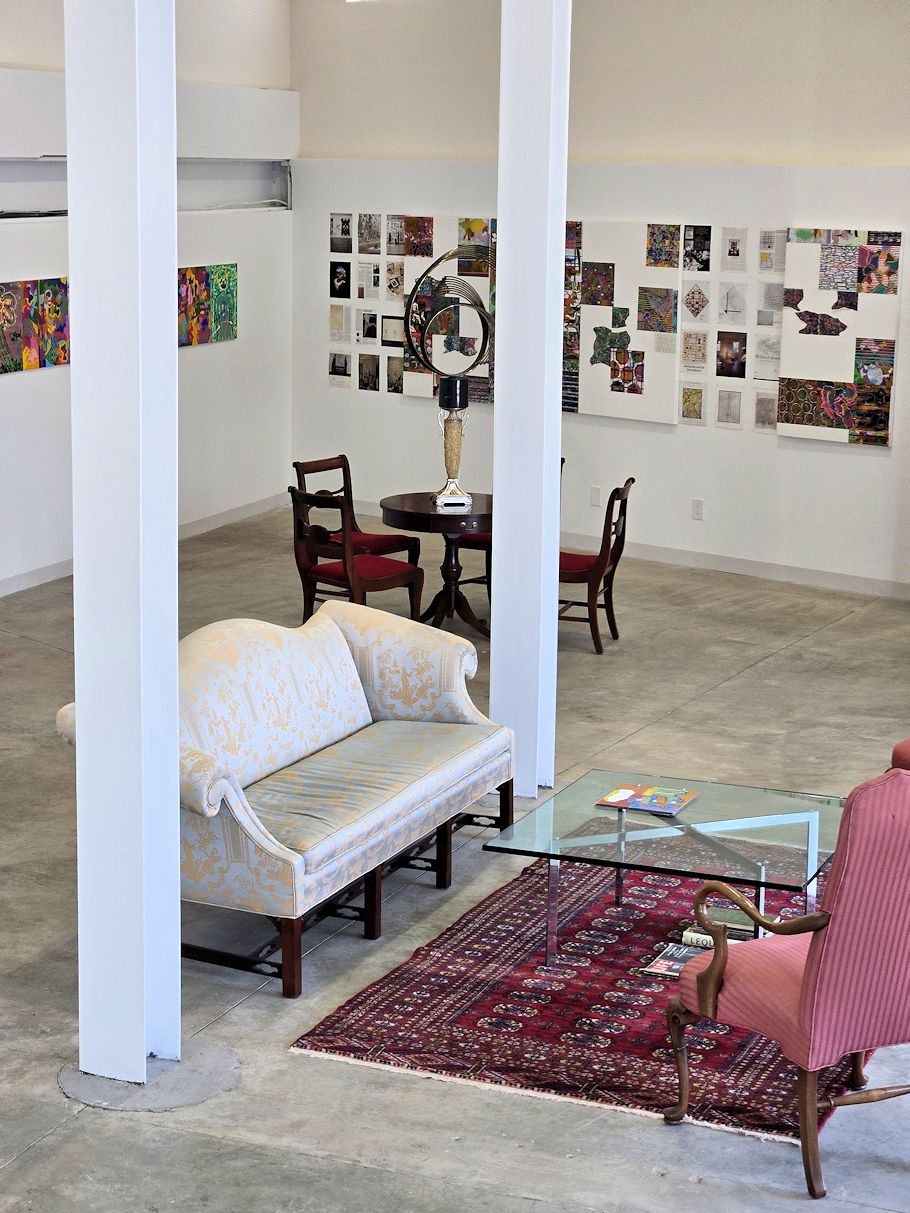
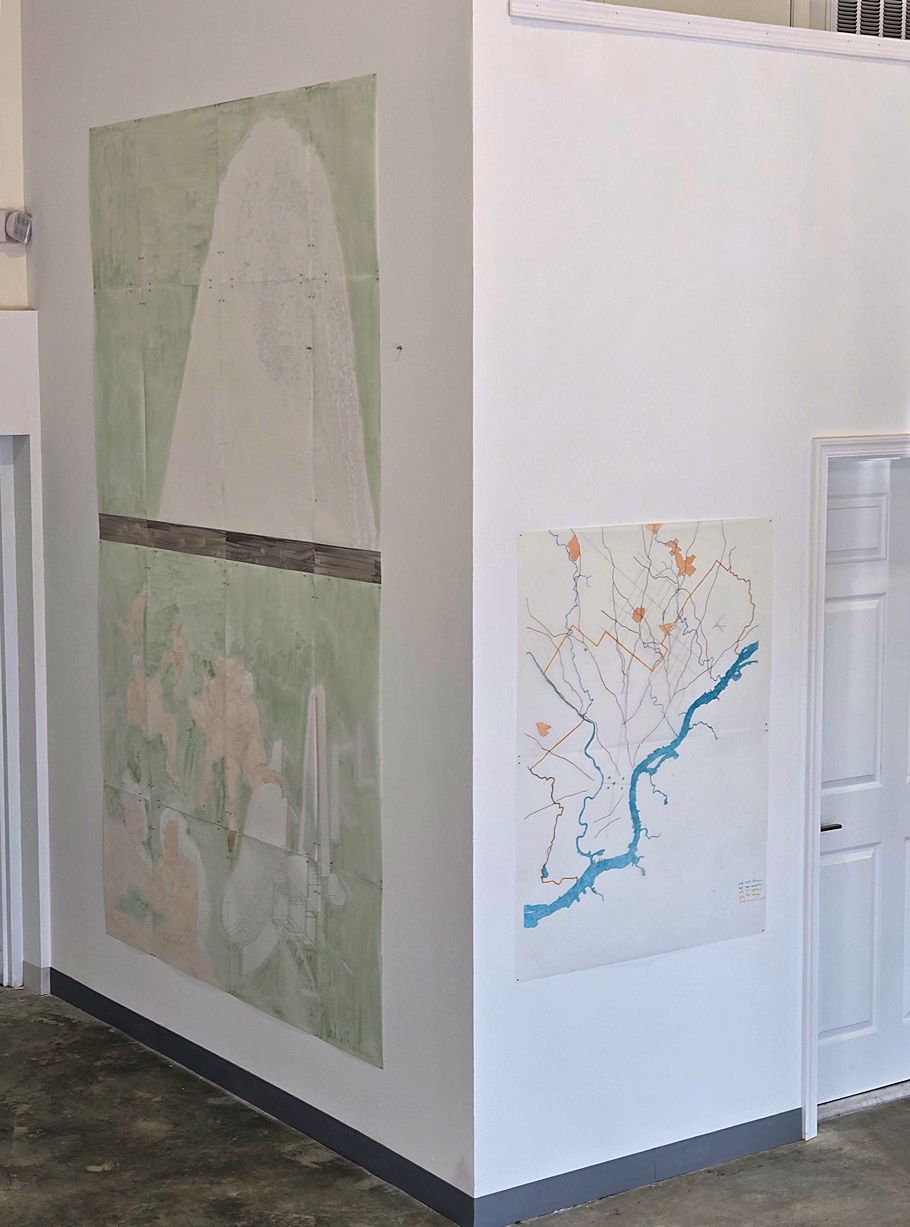
451 Rhawn Gallery
2023.06.11
From The Discovery of Piranesi's Final Project
I did not expect Piranesi's final project to have had an actual antagonist. Just like when you're rapidly whipping, in preparing the wine/cream sauce for Coquilles St. Jacques, the plot suddenly thickens.
2020.06.11
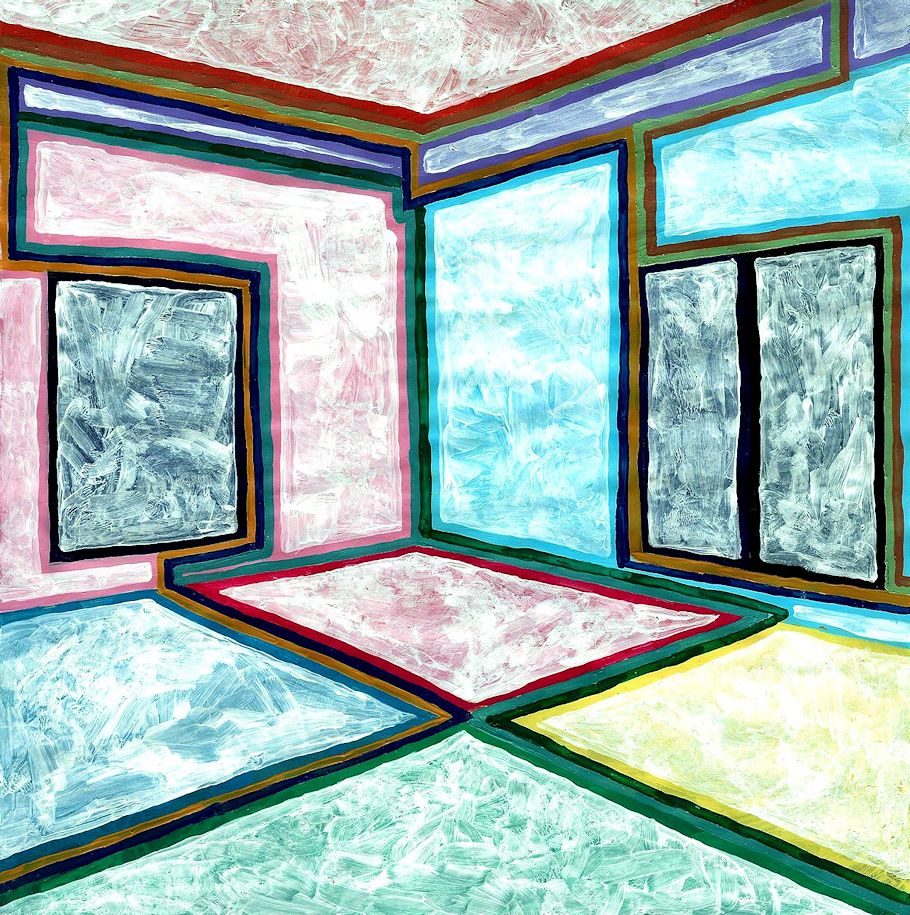
Mary Boone's 180 hours of community service hours 109 110 111
2008.06.11
architectural otherness
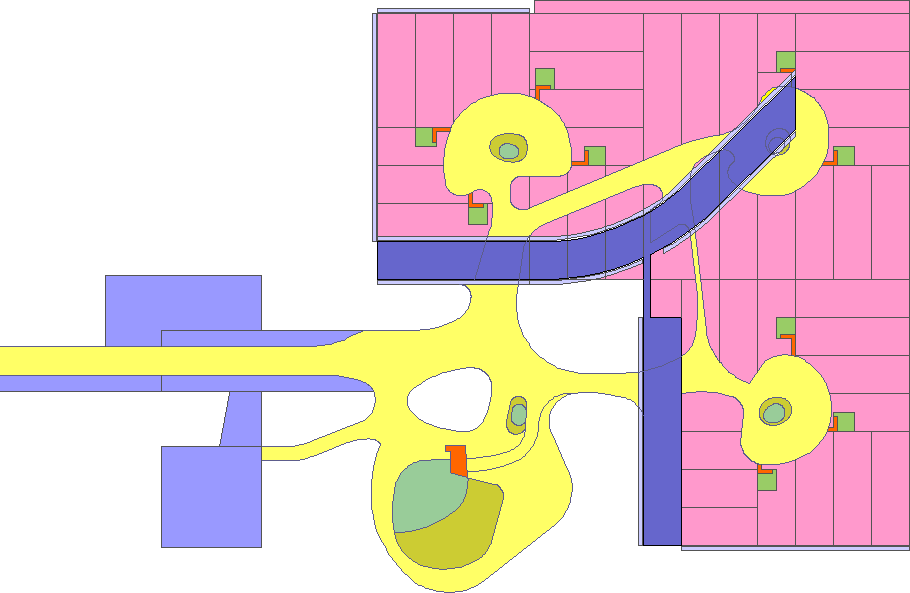
Le Corbusier Electronic Calculation Center Olivetti 1962-64
2004.06.11
life imitates art?
Last night, some inversionary reenactments were unexpectedly received from a friend.

Nice double theater.
If memory itself is humanity's primal manifestation of reenactment, and ritual is humanity's second manifestation of reenactment, is theater like number three?
"So what's double theater?"
"That's mostly baroque."
Re: is this terrorism?
I think terrorism is just going to get worse and worse, ie, more and more prevalent. As to art terrorism, maybe unisex toilet rooms in an art museum would be more terrorizing.
Has any artist every taken a picture of an art museum urinal with urine in it? Or how about a real elephant in an art museum taking a shit on a religious painting?
Doesn't Holy Terror entitle a 'tell all' book about Warhol?
The invention of 'du the du'.
1996.06.11
Einstein, History, and other Passions
From: Gerald Holton, Einstein, History, and other Passions, (Woodbury, AIP Press, 1995)
p.13-14: "Here we suddenly remember that, of course, the very same thing is true for scientists themselves. The most creative ones, almost by definition, do not build their constructs patiently by assembling blocks that have been precast by others and certified as sound. On the contrary, they too melt down the ready-made materials of science and recast them in a way that their contemporaries tend to think is outrageous. That is why Einstein’s own work took so long to be appreciated even by his best fellow physicists, as I noted earlier. His physics looked to them like alchemy, not because they did not understand it at all, but because, in one sense, they understood it all to well. From their themetic perspective, Einstein was anathema. Declaring, by simple postulation rather than by proof, Galilean relativity to be extended from mechanics to optics and all other branches of physics; dismissing the ether, the playground of most nineteenth-century physicists, in a preemptory half-sentence; depriving time intervals of inherent meaning; and other such outrages, all delivered in a casual, confident way in the first, short paper on relativity--those were violent and “illegitimate” distortions of science to almost every physicist. As for Einstein’s new ideas on the quantum physics of light emission, Max Planck felt so embarrassed by it when he had to write Einstein a letter of recommendation seven years later that he asked that this work be overlooked in judging the otherwise promising young man."
This paragraph describes perfectly the metabolic imagination, and as I copied it here, I realized how I can now also use the creative thinking of Einstein as another example of the metabolic imagination in our time.
1968.06.11
1968. Tuesday, Barcelona
In the morning at seven o'clock the Kangaroo arrives from Genoa. Marcel and Teeny disembark with the Volkswagen and drive north to Cadaqués.
Ephemerides
1937.06.11
1937. Friday, Paris
In his fifteenth column prepared for Ce Soir, Duchamp selects a chess problem by A. Goulaiev, which won second prize in a competition organized by a Soviet chess review. Presenting Alekhine's game against Héil [sic, the game was Richard Réti vs. Alexander Alekhine] in the 1925 tournament in Baden-Baden from 200 hundred collected in the world champion's book [16.4.1937], Duchamp comments that it contains "perhaps the most beautiful and most profound combination that has even been created on the chessboard". In closing, Duchamp reminds his readers that the second talk on chess is at ten past five on Radio-Paris.
Ephemerides
|