2026.06.05
So now it's more like dust settling?
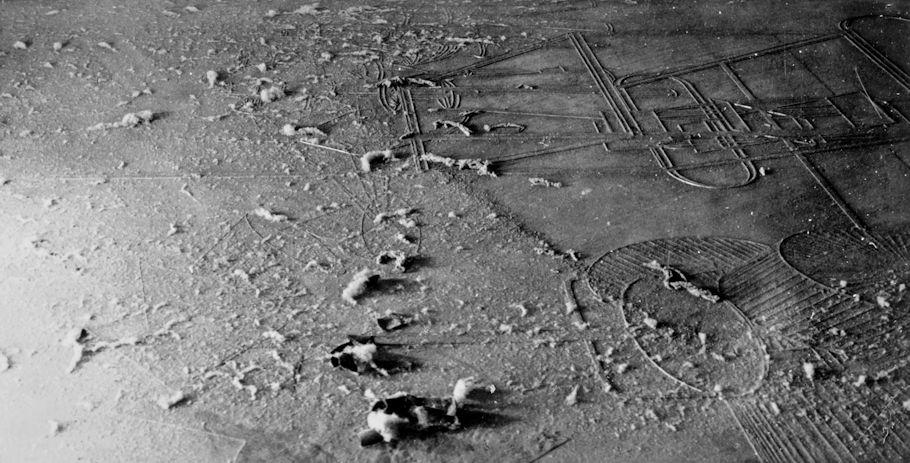
Man Ray and Marcel Duchamp, Dust Breeding, 1920, gelatin silver print, 2 7/8 × 4 3/8". © Artists Rights Society (ARS), New York/ADAGP, Paris/Estate of Marcel Duchamp.
David Rimanelli's "The Sage in the Pencil-Thin Suit: Marcel Duchamp at MoMA," his review of the current Marcel Duchamp exhibition published at/in Artforum(.com), is, in many ways, about the Establishment: "...a strictly chronological approach to the unfolding of Duchamp." ; "...the "correct" and most vetted, most intelligent, most overall approved and backed version of Duchamp today." ; "The installation at the Modern feels sedate and authoritative..." ; "...to become (once more?) the true keepers of history..." ; "It seems that "Marcel Duchamp"--that's the title of the show, "Marcel Duchamp"--is something of a return to form, not in an obviously conservative way, but in the right way, as in, we're doing it the right way." ; "This is History, not vibes." Yet, within the review, Rimanelli asks what is basically the same question four times: "What is the poetry of Duchamp? Where is the Duchampian poetry?" ; "Where was the Duchampian poetry?" ; "What is the poetry of Duchamp?" First answer: "He seems so droll yet wise--the antinomy puts forward or renders in high relief what’s extraordinary about the man." Concluding answer: "I think Duchamp would say something like, Whatever you think, if it's not too stupid, is all right with me."
Antinomy is the most operative word here. Antinomy, a real or apparent contradiction between two logical, reasonable, or accepted principles. With regard to the poetry of Duchamp, the antimony manifests in being anti-establishment while creating the Establishment anew. Marcel Duchamp was a classic Homo Ludens spoil-sport:
"The player who trespasses against the rules or ignores them is a "spoil-sport". The spoil-sport is not the same as the false player, the cheat; for the latter pretends to be playing the game and, on the face of it, still acknowledges the magic circle. It is curious to note how much more lenient society is to the cheat than to the spoil-sport. This is because the spoil-sport shatters the play-world itself. By withdrawing from the game he reveals the relativity and fragility of the play-world in which he had temporarily shut himself with others. He robs play of its illusion--a pregnant word which means literally "in-play" (from inlusio, illudere or inludere). Therefore he must be cast out, for he threatens the existence of the play-community. . . . In the world of high seriousness, too, the cheat and the hypocrite have always had an easier time of it than the spoil-sport, here called apostates, heretics, innovators, prophets, conscientious objectors, etc. It sometimes happens, however, that the spoil-sports in their turn make a new community with rules of its own. The outlaw, the revolutionary, the cabbalist or member of a secret society, indeed heretics of all kinds are of a highly associative if not sociable disposition, and a certain element of play is prominent in all their doings."
Johan Huizinga, Homo Ludens: A Study of the Play Element in Culture, pp. 11-12.
A little more than half way through the review, Rimanelli refers to La Boîte-en-valise, 1935–41, as "a reminder that he started the [readymade?] joke himself."
No doubt
there are jokes throughout
but the lion's share
of Duchampian poetry
strives to execute
a most elegant game.
List of unbekannt works within Duchamp After Unbekannt
260. zero four four
261. by the pool
262. 93060102.db ignudi left
263. 93060103.db ignudi right
264. mostly behind a piece of the Berlin Wall
265. "One sings, the other doesn't"--the movie remake
266. Crack Scam 001
267. Crack Scam 003
268. a quickly abandoned portrait of myself and a specific other, circa spring 1990
269. Double Take: Regal Gene-Splicing, etc.
270. page painting 172
271. zero four five
272. Fathers and Fathers' Father
273. Winning
274. Growing Pains
275. Self Portrait IV
276. a little game of 'before and after' Unbekannt
277. page painting 173
278. zero four seven
279. Genetic Engineering 005
280. One Artist/Name Apposing Another Name/Artist
281. Fashion Statement 008
282. page painting 174
283. organic sculpture exhibition
284. zero nine eight
285. zero nine nine
286. Taken Literally
287. Crush Money 6
288. Lauf's Forbidden Cremaster Collection
289. Critics Abuzz
290. untitled venue
291. OTTOBER 28
292. going crackers 001
293. going crackers 002
294. The Bachelors Eighty Years After
295. going crackers 003
296. going crackers 004
297. going crackers 005
298. going crackers 006
299. going crackers 007 . . . . . .
2025.06.05
451 Rhawn Gallery
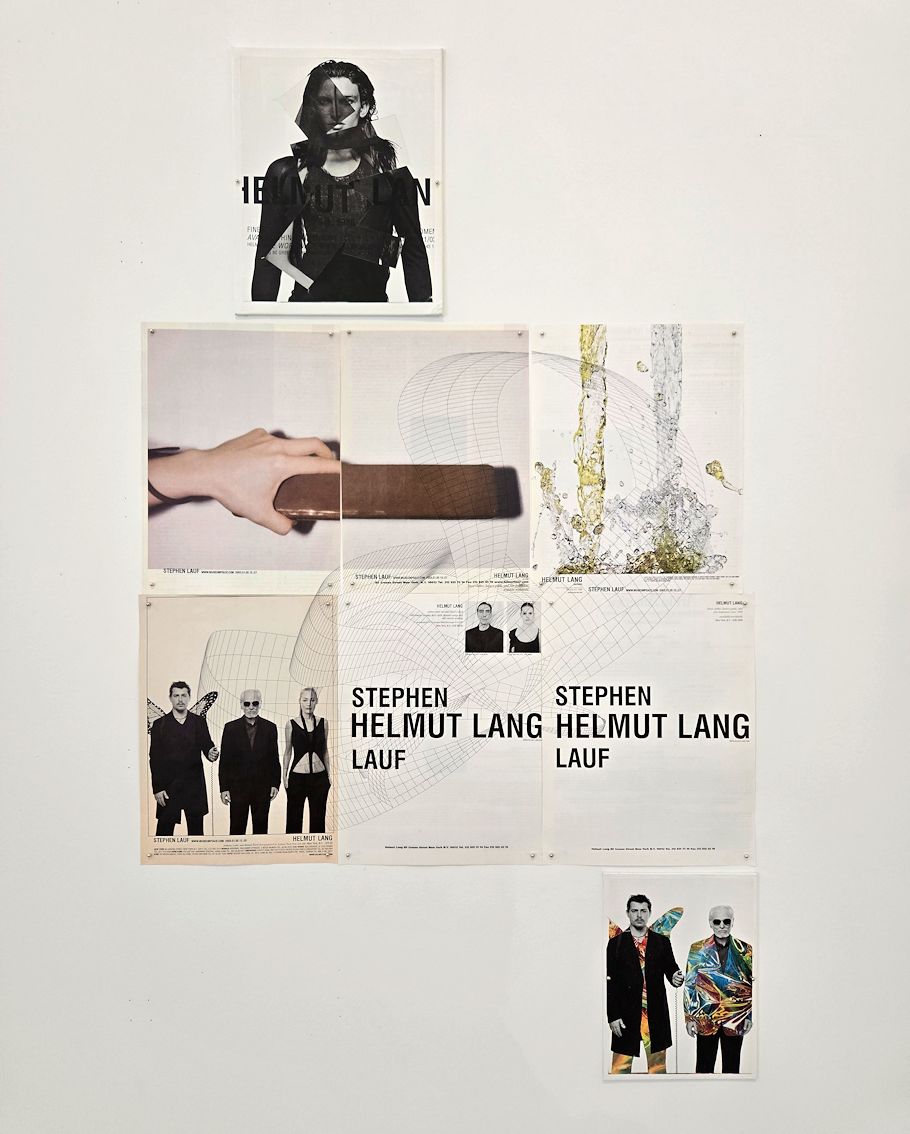
Genetic Engineering 005
One Artist/Name Apposing Another Name/Artist
Fashion Statement 008
2024.06.05
a work within This One's for George

page painting 174
Pennypack Park
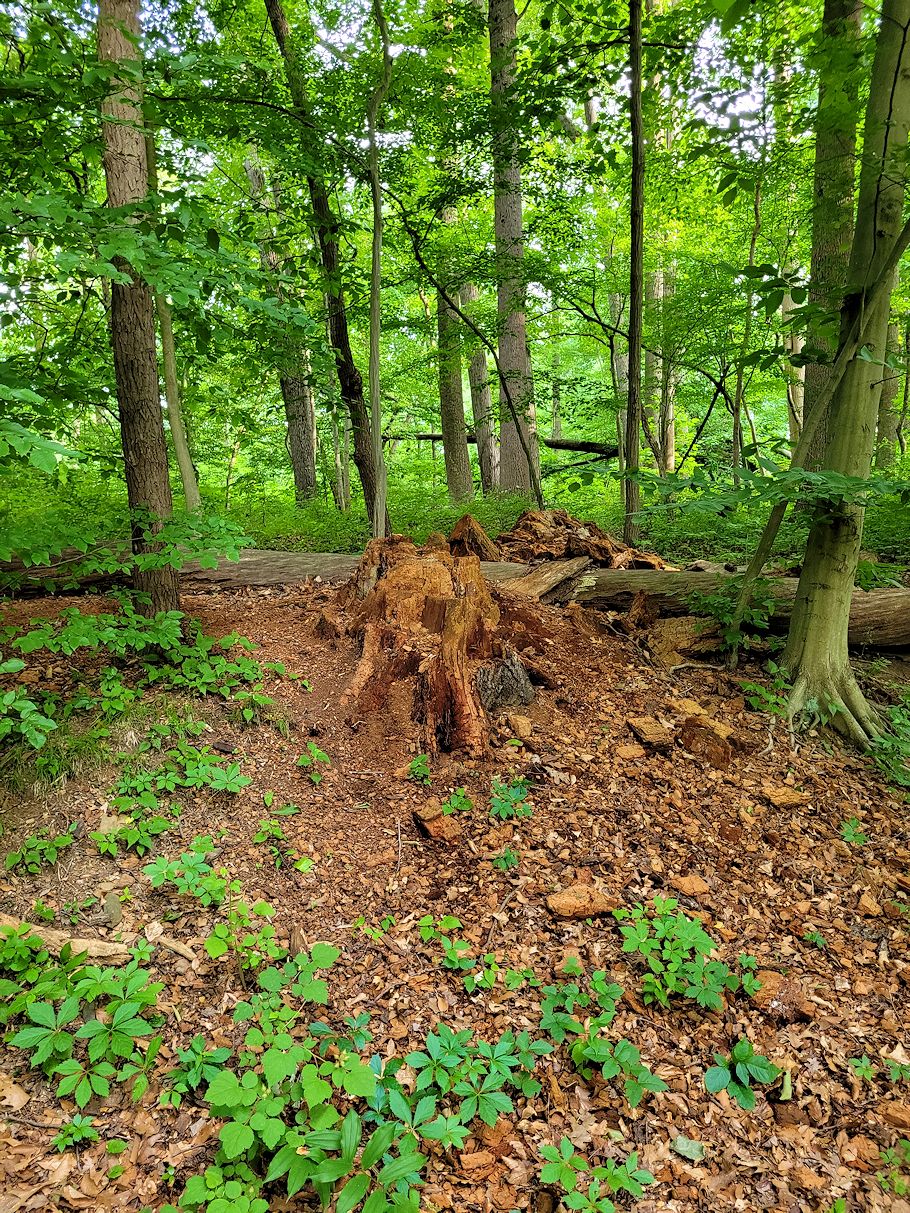
organic sculpture exhibition
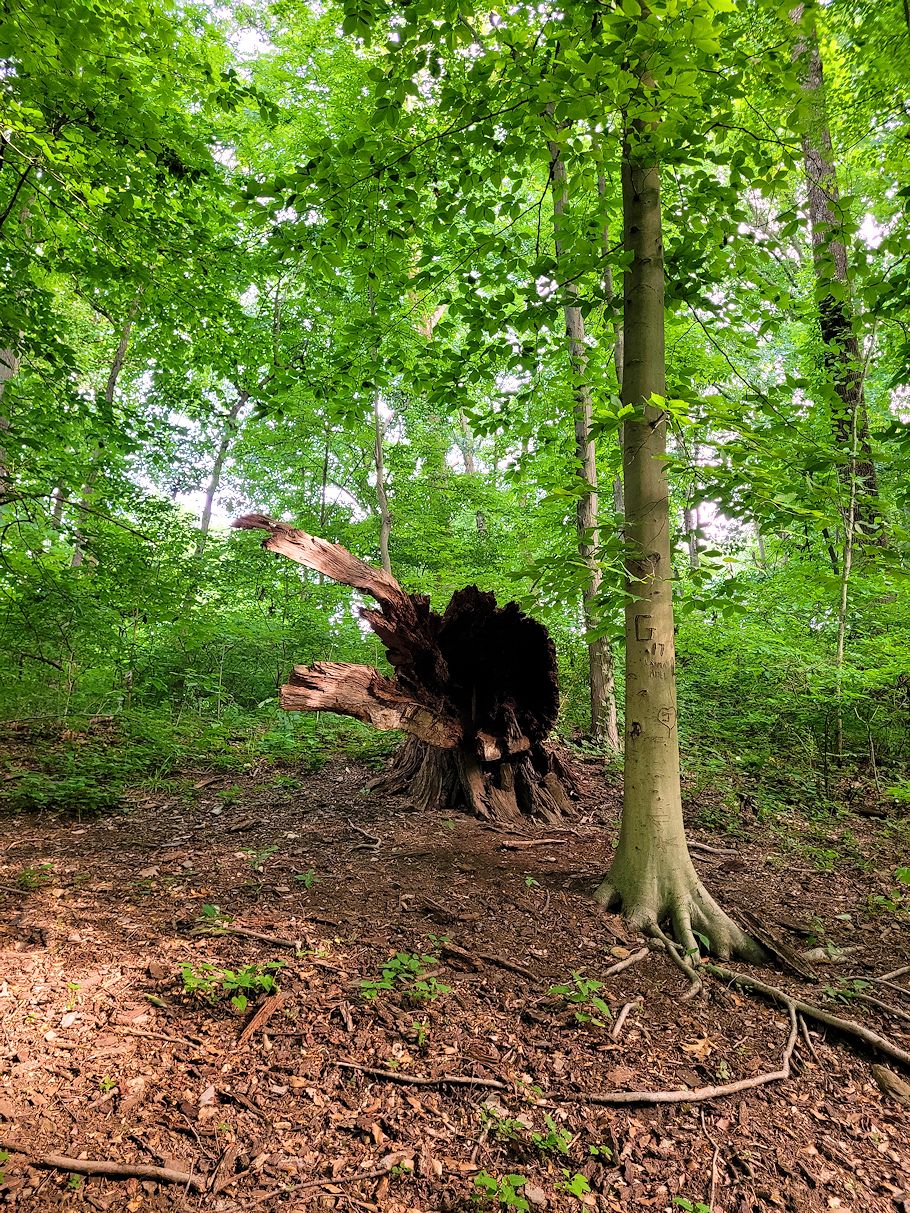
organic sculpture exhibition
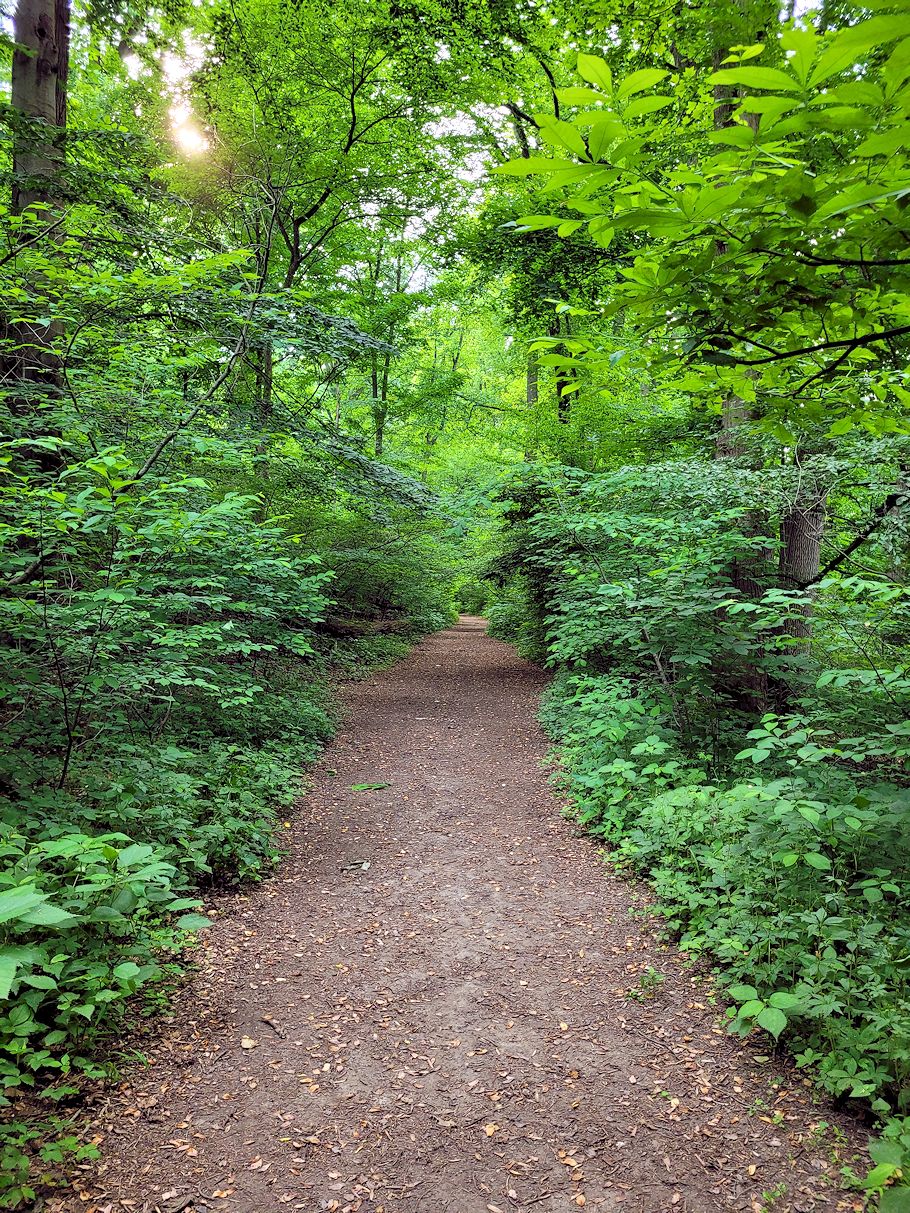
Shady Lane
2018.06.05
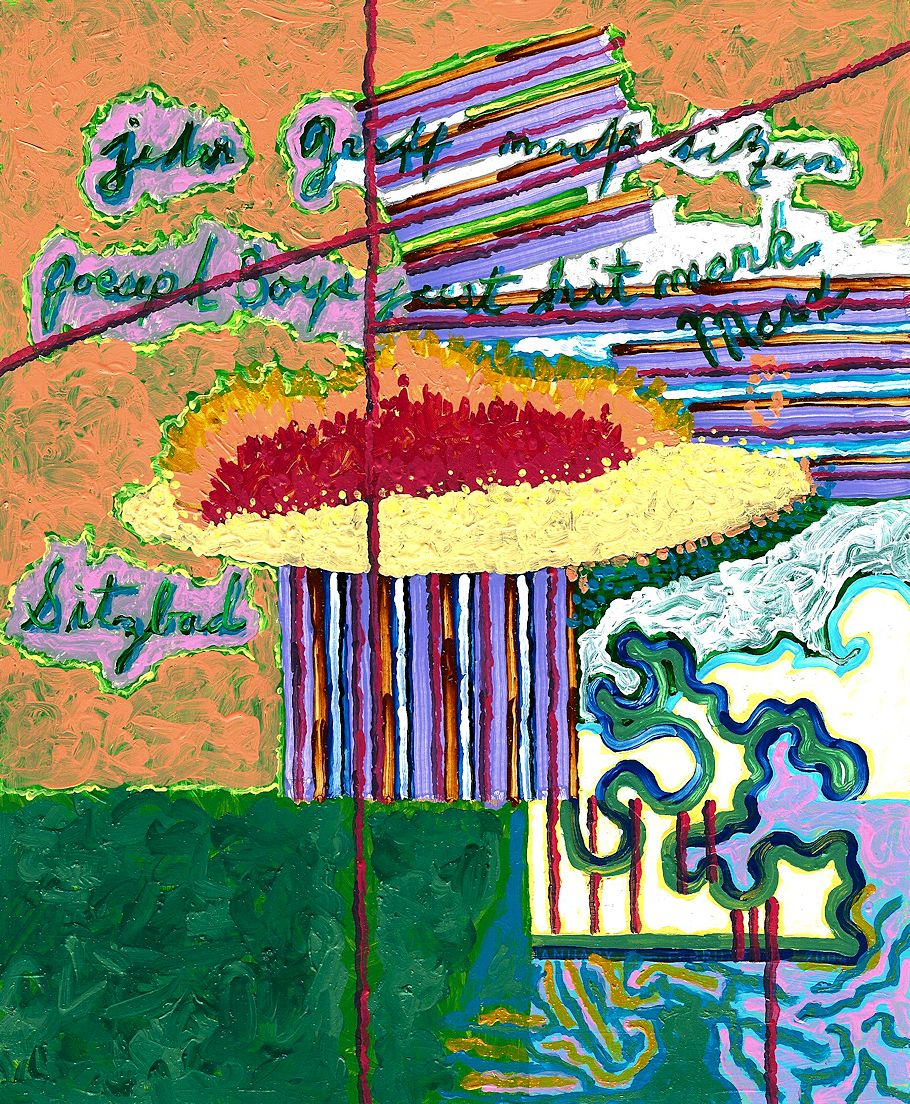
zero nine eight
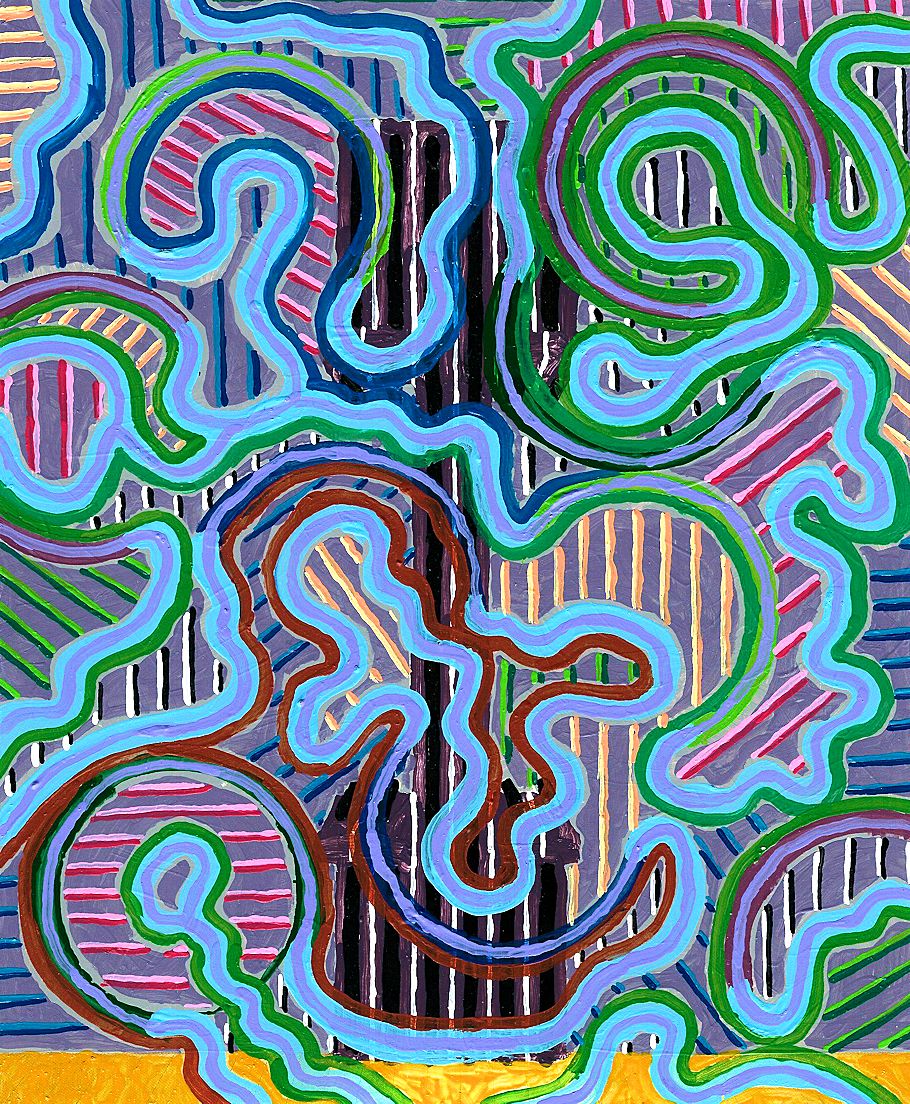
zero nine nine
2004.06.05
Best book of last year and best book of all time
Mann's Joseph and His Brothers is much better than The Magic Mountain. Liked The Holy Sinner too.
The short stories of Heinrich von Kleist are likewise worthwhile, e.g., Michael Kohlhaas.
Am I the only architect to have read Merrill's The Changing Light at Sandover?
Butler's Lives of the Saints is much more entertaining than the mediocre Da Vinci Code.
Anyone else read The Geometry of Love?
2003.06.05
Re: Anthony Vidler on Gordon Matta-Clark
What is still missing from the ongoing evaluation/analysis of Matta-Clark's work is the realization that he often manifests a/the metabolic imagination, i.e., an oeuvre comprising creative/destructive duality.
Re: Anthony Vidler on Gordon Matta-Clark
I spent an October 1994 weekend in Vidler's NYC/Chelsea studio apartment (a very restrictive space), while a large painting of mine, Taken Literally, spent over two years there--a close friend of mine sublet the place when Vidler first started teaching in LA. Vidler spent at least one week living with the painting himself, and I've often wondered if he got all the art and architectural references within the painting. There's even a sliced portion of a building, but I didn't know of Matta-Clark back then.
Vidler is/was a very good critical (architectural) historian. I've learned much from his writing, especially from the 1970s and 1980s. He starts missing the mark, however, within The Architectural Uncanny, e.g., within "Losing Face," and much of Warped Space manifests an ideological force-fit.
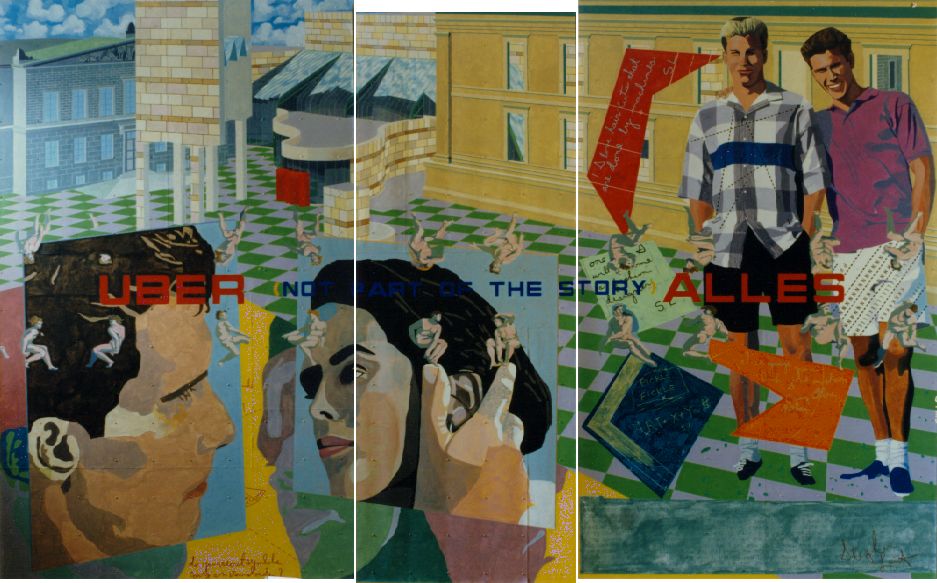
Stephen Lauf Taken Literally 1993.03.16
1998..06.05
virtual place
It is perhaps the pervasive and very reliable archival and repository nature of virtual place that makes it at an advantage over real place. It could be described as an historian's dream come true in that all transactions and data creation and transmittals are recorded in time. Time and its immediate connection to action is one of the supreme (if not the supreme) features of virtual place in cyberspace.
1984.06.05
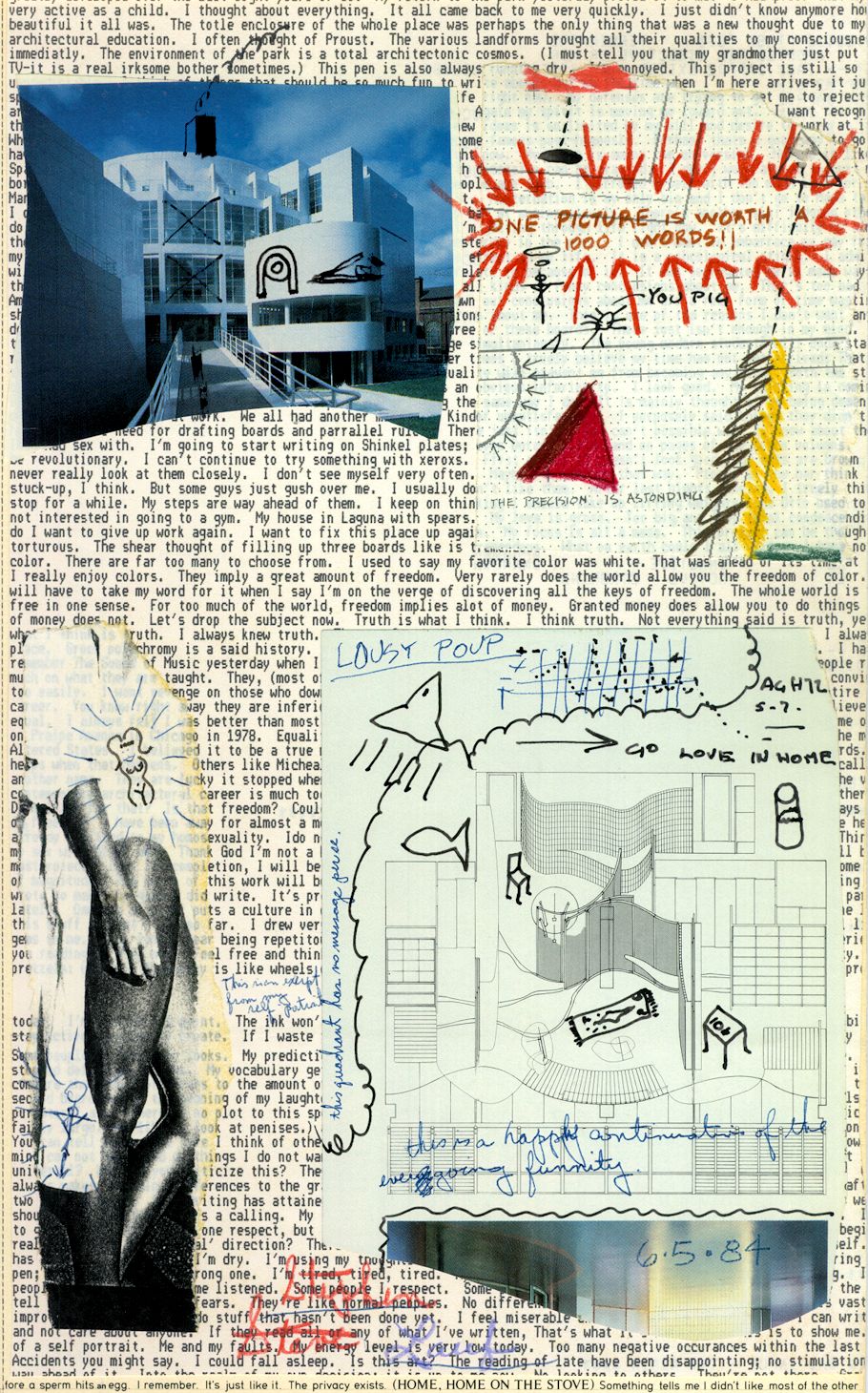
detail of 2 = odd, Dick
1968.06.05
1968. Wednesday, London
"Ambling into the new I.C.A... [Duchamp] picks his way through the overflowing audience, and for two and a half hours listened with total composure to Mr. Schwarz's high-pressure hypothesizing..."
"Credited with all manner of vagrant fancies and subterranean implications (beyond, of course, those that he himself has already thesaurized) [Duchamp] gazed into the middle distance," observed John Russell, the art critic of the Sunday Times. "Was the violin, as Mr Schwarz asserted, a symbol of onanism rather than a valuable component in family chamber music? Duchamp gazed on."
Later at supper, when he meets Arturo Schwarz, Duchamp explains: "Capital! I couldn't hear a word, but I enjoyed it very much." Teeny Duchamp and close friends, however, are deeply shocked by Schwarz's analysis of the Large Glass [5.2.1923], which is based on the hypothesis of Duchamp's incest with his sister Suzanne.
Ephemerides
|