2026.11.10
multiverse indexically so far
2007.07.23
archinect poem off
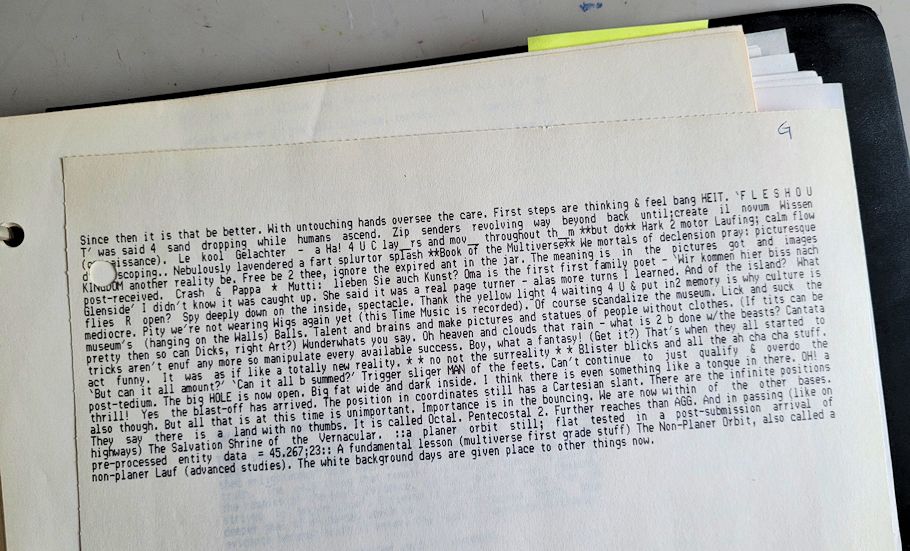
excerpt from G (1985)
They say there is a land with no thumbs.
It is called Octal.
Pentecostal 2.
Further reaches than AGG.
And in passing (like on highways)
The Salvation Shrine of the Vernacular.
::a planar orbit still;
flat tested in a post-submission arrival of pre-processed entity data
= 45.267;23::
A fundamental lesson (multiverse first grade stuff).
The Non-Planar Orbit, (advanced studies).
The white background days are giving place to other things now.
2007.08.06
archinect poem off
seeing "multiverse" in this very thread 2 weeks ago
seeing "multiverse" in today's archinect news
multiverse is multivirtual
multiverse is often found in poetry squared
multiverse is also like multi verse squared, U NO
from (1984.09.12) #10:
The toggle switch that executes the multiverse and cancels the universe.
from (1984.09.23) #16:
Welcome aboard you movie stars of the MULTIVERSE.
from ( 1984.10.22) #34:
It is that time to design travel in/for the MULTIVERSE.
from (1984.11.21) #47:
Since I invented the multiverse I guess I should spend six days making it what it is.
from (1984.11.22) #50:
(i.e. the moment you are most likely to fall in either direction in2 the Multiverse)
.
O souls of the Multiverse, how is that man, that creature of but a lower power of ten, one who consumes all but to produce waste: where in the bangs of TIME will the flesh of thought see with THE EYES CLEARLY?
from (1984.11.25) #52:
How fortunate to be creating myths of tomorrow a.k.a. Book of the Multiverse.
from (1984.11.26) #53:
She collects old ionographs of MV lev -(x,y) 7df5s (z) 10{rvo}: MULTIVERSE level Punic Carthage after first apogee VI settlement.
from (1984.12.29) #56:
- when you start to look at the MULTIVERSE, U C it in glimpses.
from (1984.12.29) #57:
Design the void and give it a Sachlichkeit shape. Are those roman/chinese senators/eyes-guys waiting to debate gosh the other{(s) in the MULTIVERSE}? the time goes by and the flowers came back and then the outs.
.
So there are the MULTIVERSES ** powers in U
from (1985.01.13) #66:
Two eyes and me the finder of multipeople - CITIZENS OF THE MULTIVESE Sing something, the tune's time has come.
and from (1985.03.06) #76:
Every minute is time - every time is moving - all in the same direction they say - They don't know the MULTIVERSE YET!!!!!!
only sounds like prophet tearing
2026.10.04
detail of 2 = odd, Dick

Stephen Lauf DEFINE VIEW AREA FD: OPERATION COMPLETE 1984.06.03
multiverse meaning
A multiverse is a hypothetical collection of multiple, separate universes that together comprise everything that exists, including all space, time, matter, and physical laws.
main theories
Quantum Many-Worlds: Every time a quantum event or decision has multiple possible outcomes, reality branches into separate, coexisting universes to realize every possibility.
Cosmic Inflation (Bubble Universes): Rapid expansion in the early universe causes different regions of space to stop inflating at different times, creating isolated bubble universes with potentially unique physical laws.
give an example of a quantum measurement having multiple outcomes
A standard example of a quantum measurement with multiple outcomes is measuring the spin-1/2 state of an electron along a specific axis (like the z-axis), which yields one of two possible outcomes: spin-up or spin-down.
Probability: The chance of getting either spin-up or spin-down depends on the exact initial state of the electron before the measurement.
Collapse: While the pre-measurement state allows for multiple potential results, the act of measuring yields only one definite outcome, causing the quantum wave function to collapse into that specific state.

is there any relationship between the work of Marcel Duchamp and the multiverse?
While Marcel Duchamp’s work predates the modern pop-culture concept of the "multiverse" and modern cosmological many-worlds theories, his artistic philosophy shares deep conceptual parallels with multidimensionality, parallel realities, and infinite branching systems.
The Fourth Dimension and Alternative Spaces
Higher Dimensions: Duchamp was deeply obsessed with non-Euclidean geometry and the concept of the fourth dimension (influenced by mathematicians like Henri Poincaré and Élie Jouffret).
The Large Glass (The Bride Stripped Bare by Her Bachelors, Even): Duchamp used higher-dimensional projection as a framework to separate and conceptualize unseen, simultaneous realms--dividing the physical space of the Bride above and the Bachelors below into separate dimensional states that interact invisibly.
The Logic of Chess and Branching Possibilities
Infinite Variations: As an avid, high-level chess player and theoretician, Duchamp viewed chess as a mental landscape where a single starting board spawns an infinite number of parallel, potential game-histories and divergent futures depending on choices made.
Alternate Realities: Much like the branching timelines of a multiverse, a game of chess contains countless unplayed, latent realities existing simultaneously in the mind of the player.
Conceptual Loops and Mirrors
Non-Linear Geometries: Duchamp's later works and notes explored topological forms like Möbius strips, Klein bottles, and chirality (left-and-right handed asymmetries), which fold space onto itself and suggest continuous, multi-layered realities.
Transcendence of Space-Time: Duchamp famously stated that art was the only activity enabling humans to "move beyond the animal stage because art opens onto regions dominated by neither time nor space"--effectively pointing toward a conceptual realm outside our standard physical universe.
While he wasn't plotting quantum mechanics or sci-fi alternate universes, Duchamp's systematic subversion of reality, logic, and standard three-dimensional space laid a philosophical groundwork that resonates strongly with how we think about parallel dimensions today.
2026.10.06
Live and Let Die or The Tragic End of Marcel Duchamp
 
A sojourn within the multiverse, I suppose.
2026.10.07
mentions of Philadelphia within Lequeu: An Architectural Enigma
pages 70-71 within the "From Ledoux to Le Corbusier, The Rite of Neue Sachlichkeit chapter:
[Emil] Kaufmann's analysis of Lequeu's work, which began in Vienna, ended in the USA in Philadelphia in 1952, with his Three Revolutionary Architect, Boullée, Ledoux, and Lequeu published by the American Philosophical Society, and it was in Philadelphia that Marcel Duchamp was, so carefully, to supervise the display of his own principal works.
pages 76 ending the "From Ledoux to Le Corbusier, The Rite of Neue Sachlichkeit chapter:
Tropological space has thus widened to infinity between Vienna and Philadelphia. Von Lequeu bis Duchamp: Demountable Approximations, which became Duchamp's last major work, served him in the putting together of his most disconcerting work, Etant donnés . . . of 1946-66.
pages 98 within the "Demolishing an Architect: Le Corbusier chapter:
The Paris-Jura road', which in reality means Vienna-Philadelphia, culminated in Duchamp's last mysterious work, which is shown in a side room in the Philadelphia Museum of Art--though only since Le Corbusier's death in 1965. This is Etant donnés: 1° la chute d'eau, 2° le gaz d'éclairage (Given: 1. The Waterfall, 2. The Illuminating Gas), of 1946-66. Marcel Duchamp, the encyclopede, reinvented encyclopaedism with the help of Lequeu, the 'apprentice in the sun'.
All this comfirms my belief in the possibility of an unbekannt Philadelphian's multiversal sojourn throughout the entirity of Duboy's architecturally enigmatic text.
2026.10.08
where to begin?
A vital importance is attached to any multiversal sojourn's point of departure, namely, the more obscure the point the better.
As to Philadelphian obscurity, the place where, in 2022, Piranesi's final project was discovered, where, in 1884, Harriet Crawford invented the hoax that Ury House originated as a 1645 New Sweden fort, where, in 1824, Charles Willson Peale drew a sketch of Ury House, where, in 1812, Miers Fisher, the man who named Ury House, entertained the first Russian ambassador to the United States, where, in 1811, Benjamin Henry Latrobe painted a watercolor of Ury House, and where, in 1803-04, the teenaged John James Audubon lived the first four months of his life in the United States, abundantly fulfills the obscurity quotient.
Francesco Piranesi 1758 - 1810
Jean-Jacques Lequeu 1757 - 1826
Miers Fisher 1748 - 1819
In the immortal words of Morgan Fairchild, "Fashion your seatbelts."
31-32 y.o. Francesco Piranesi 1790
Collezione delle piu belle statue di Roma
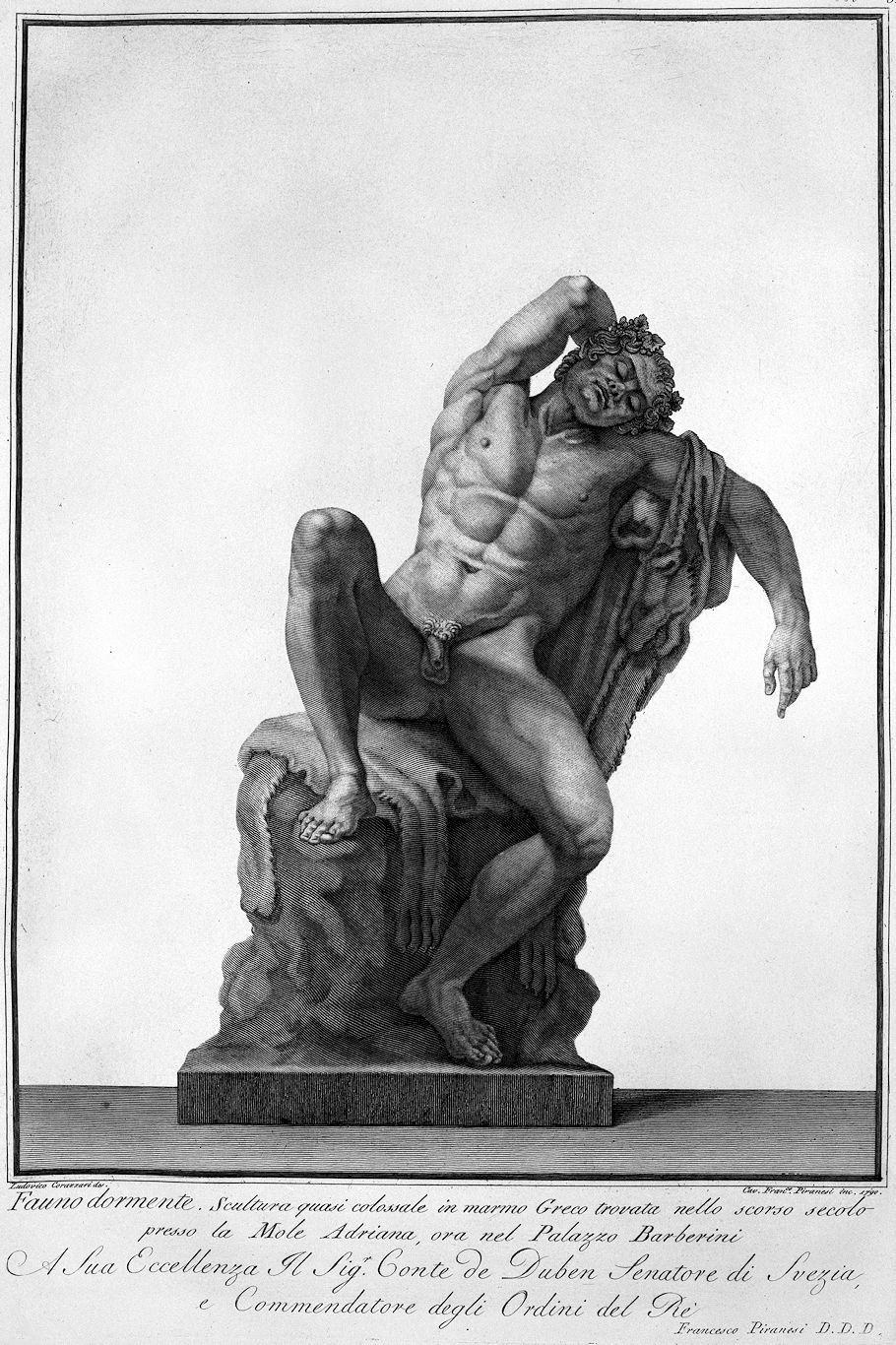
Sleeping faun. Almost colossal sculpture in Greek marble found in the last century at the Mole Adriana, now in the Palazzo Barberini
To His Excellency The Count de Duben Senator of Sweden, and Commander of the King's Orders
Francesco Piranesi D. D. D.
Ludovico Corazzari drawn Francesco Piranesi engraved 1790.
Where did Francesco Piranesi live and work in 1800?
In 1800, Francesco Piranesi lived and worked in Paris, France.
Following the fall of the short-lived Roman Republic (where he had served as a government official), he fled Rome in late 1799 alongside his younger brother, Pietro. Once in Paris, the brothers established a branch of their family printmaking enterprise known as Piranesi Frères (Piranesi Brothers).
During this time, they worked out of Paris republishing their father Giovanni Battista Piranesi’s famous collections of architectural etchings, along with republishing Francesco's own collection of architectural and art etching, and expanding their business to manufacture and decorate terracotta vases
circa 1984/1985
G
2024.11.10
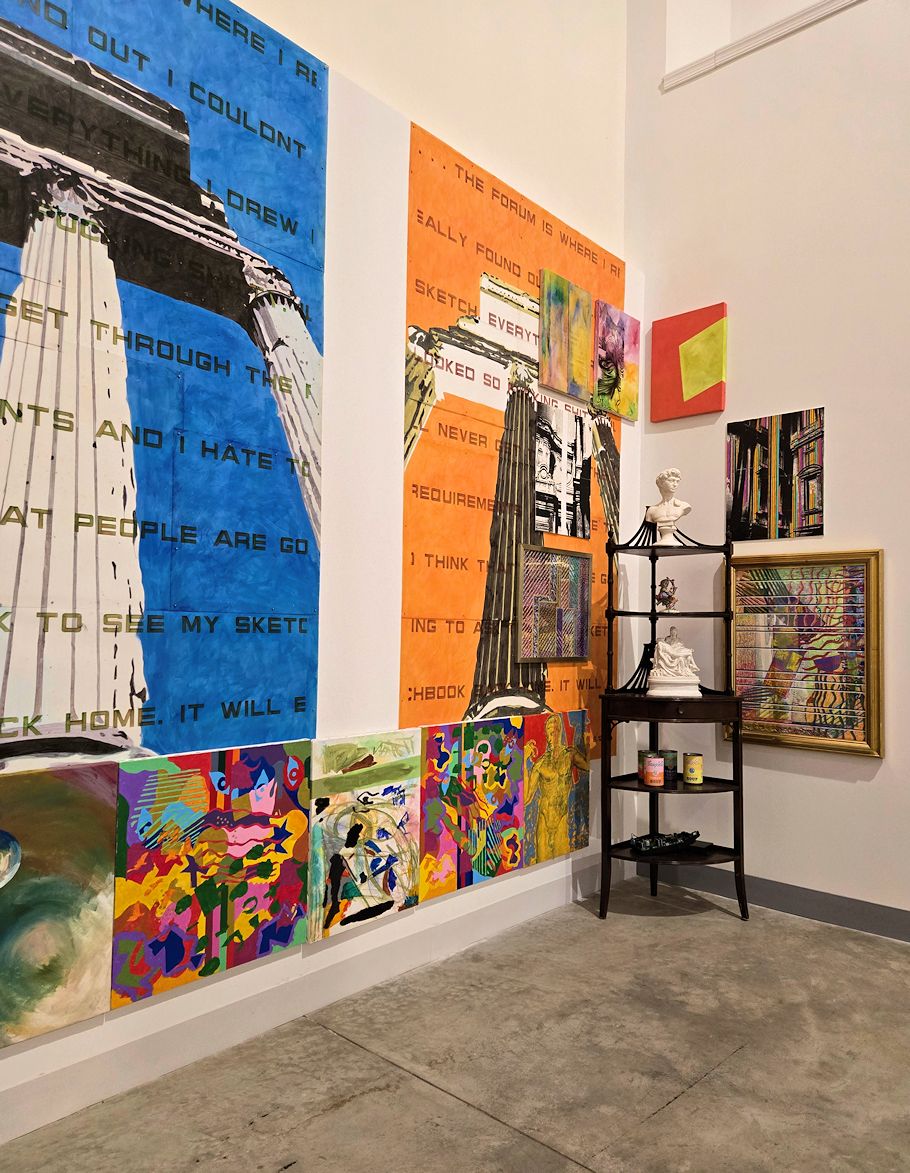
451 Rhawn Gallery
2021.11.10
Fox Chase Farm

2020.11.10
photography
2018.11.10
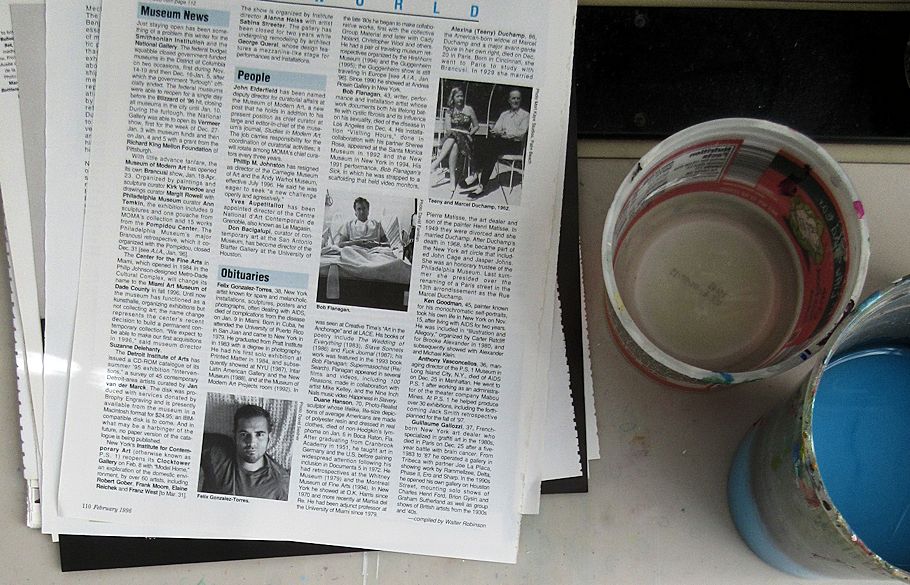
page paintings

024

025
2007.11.10
3D CAD database

07111001.db surface rotation play
2004.11.10
Re: Concrete Comedy: A Primer
Anybody else here ever read Lequeu: An Architectural Enigma by Philippe Duboy?
"...with meticulous research to decipher the conundrumical nature of an eighteenth-century maverick artist whose drawings have established him variously as a visionary architect, forerunner of surrealism, and inventor of bad taste."
"He suggests that Duchamp and Raymond Roussel tampered with the Lequeu drawings to concoct a character and oeuvre even more involved than was previously thought possible."
"History is no mystery."
2004.11.10
Re: Concrete Comedy: A Primer
he ain't heavy, he's concrete comedy
piss on a crack, break a trillionaire's back
concretized his interest in primitive aesthetic impulses by remaking the western
connect the dots
hardly covert corbu (in concrete no less)
zoom out, get the bigger picture
hey, remember that curator's ass crack?
there's Piranesi in there, somewhere
It's not the oberpyramid that sphinx in here!
2002.11.10
now look who's reenacting
I didn't have to read more than the first few paragraphs of what Muschamp writes in today's NYTimes before the notion of writing something myself took over. Muschamp's first paragraph reads:
"Elizabeth Diller and Ricardo Scofidio have defined a new building type for the contemporary city: the urban viewing platform. Invention of this caliber doesn't turn up every day. Diller and Scofidio could spend the rest of their careers reworking this one idea over and over again and not be judged harshly for repeating themselves. The basic concept is that good, and its potential applications are various. Many cities will want to try out variations on the theme. But Boston will receive the first authentic edition in 2004, when the city's Institute of Contemporary Art is expected to open its doors."
The "urban viewing platform" is in NOT a new invention created by Diller and Scofidio. Every time I visit the Philadelphia Museum of Art I also visit a quite remarkable "urban viewing platform." Of course, Philadelphia's "urban viewing platform" has already been embedded into popular culture via a climatic scene in the movie ROCKY, as in "flying high now!" There is, however, much more culture embedded within Philadelphia's "Fairemount" in that it reenacts the Acropolis, which, incidentally, is much closer to the invention of the "urban viewing platform" than anything Diller and Scofidio ever did or do. So let's not confuse invention with what is really reenactment.
I didn't bother to finish reading Muschamp's piece because (I feel) its contents are predictable, thus I will write a little more about Philadelphia's viewing platform, which will probably be akin to things that Muschamp says. The stairs that Sylvester Stallone ran up in the movie also many times act as enormous theatrical seating with the head of the Benjamin Franklin ("inventor" of electricity, as long as invention awards are being passed around) Parkway as the stage and the Philadelphia skyline as backdrop. Beyond that, there are always a variety of life vignettes occurring on the steps and up in the Museum forecourt. I particularly like seeing wedding pictures taken up on the "viewing platform"/forecourt; it reminds of a similar scene I once saw at the Campidoglio in Rome, which, incidentally, is another great "urban viewing platform" (and the view from the Campidoglio is the Campo Marzio! Wow, Quondam and the Campidoglio actually have something very much in common. Does that mean Quondam is also a reenactment of an "urban viewing platform" My goodness, will reenactment wonders never cease?).
Ah reenactment! I'm so glad you're there, especially since so many so easily forget.
1967.11.10
1967. Friday, London
The Petersburg Press announces their subscription offer for the Oculist Witnesses, a detail of the Large Glass [5.2.1923], which has been prepared by Richard Hamilton in close collaboration with Duchamp [18.10.1967] and signed jointly "d' après Marcel Duchamp, Richard Hamilton" [4.9.1967]. The edition of 50 is to be available in December.
Ephemerides
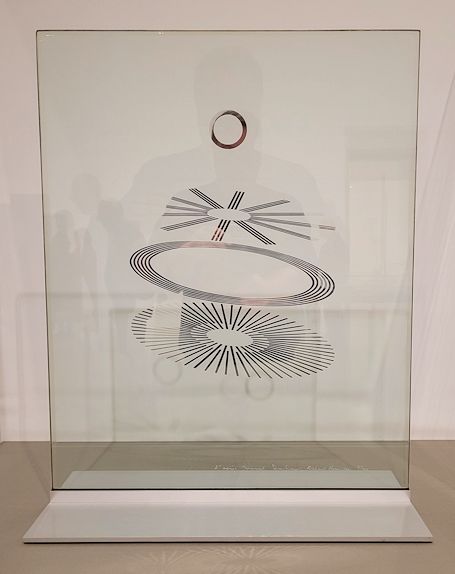 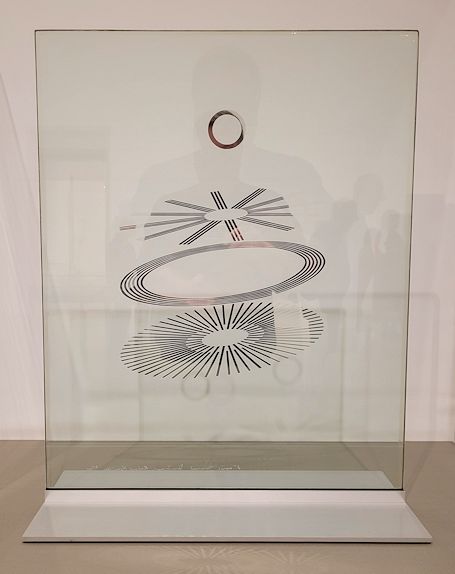
1962.11.10
1962. Saturday, New York City
"This Neo-Dada, which they call New Realism, Pop Art, Assemblage, etc. is an easy way out, and lives on what Dada did," Marcel has told his friend Hans Richter, who is writing a history of Dada. Proposing to use Marcel's statement in his book, Richter sends it today in a letter to Marcel: "When I discovered readymades I thought to discourage aesthetics. In Neo-Dada they have taken my readymades and found aesthetic beauty in them. I threw the bottlerack [15.1.1916] and the urinal [9.4.1917] into their faces as a challenge and now they admire them for their aesthetic beauty..."
Ephemerides
|