2026.11.08
partial hot ass inventory

2025.03.27
 
2025.03.30
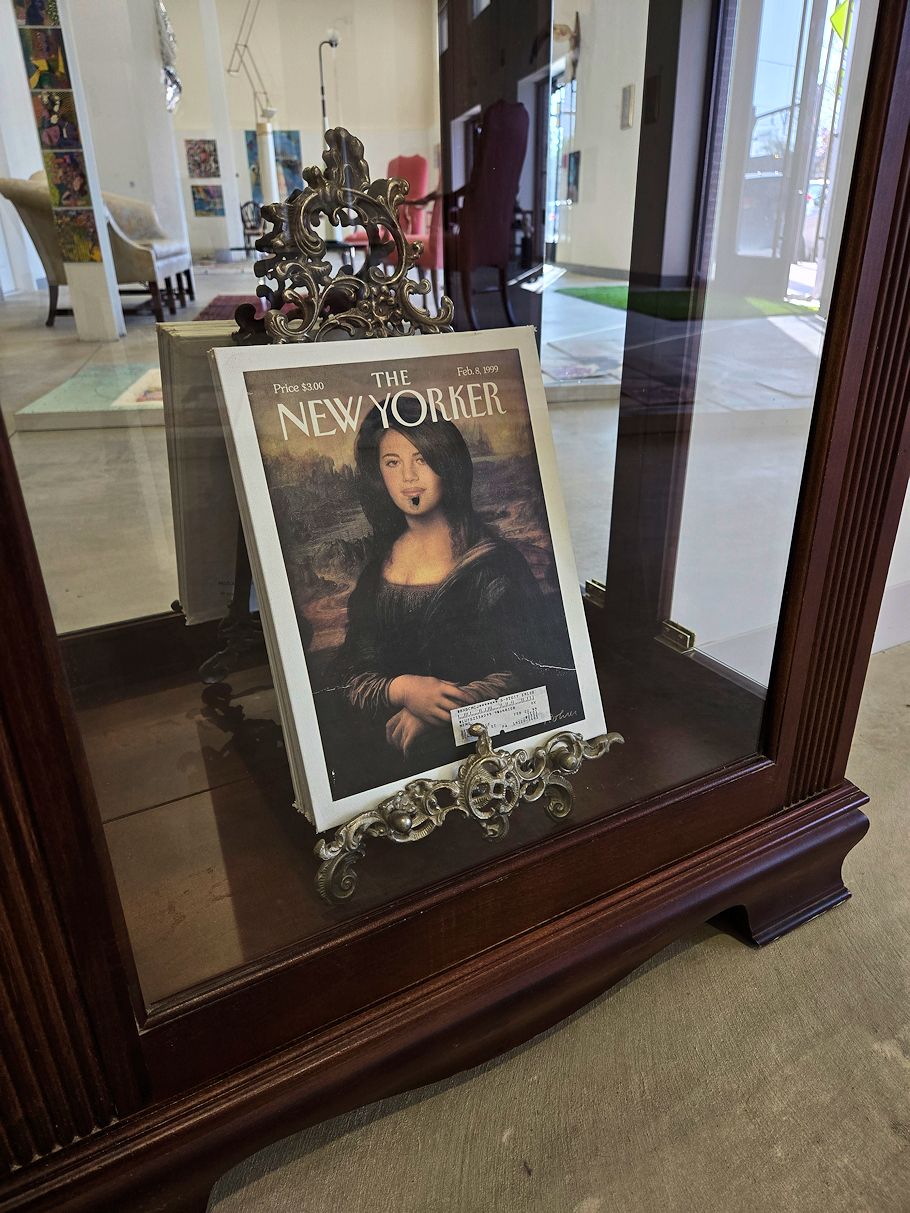
2025.04.23

2026.05.08

2026.05.25
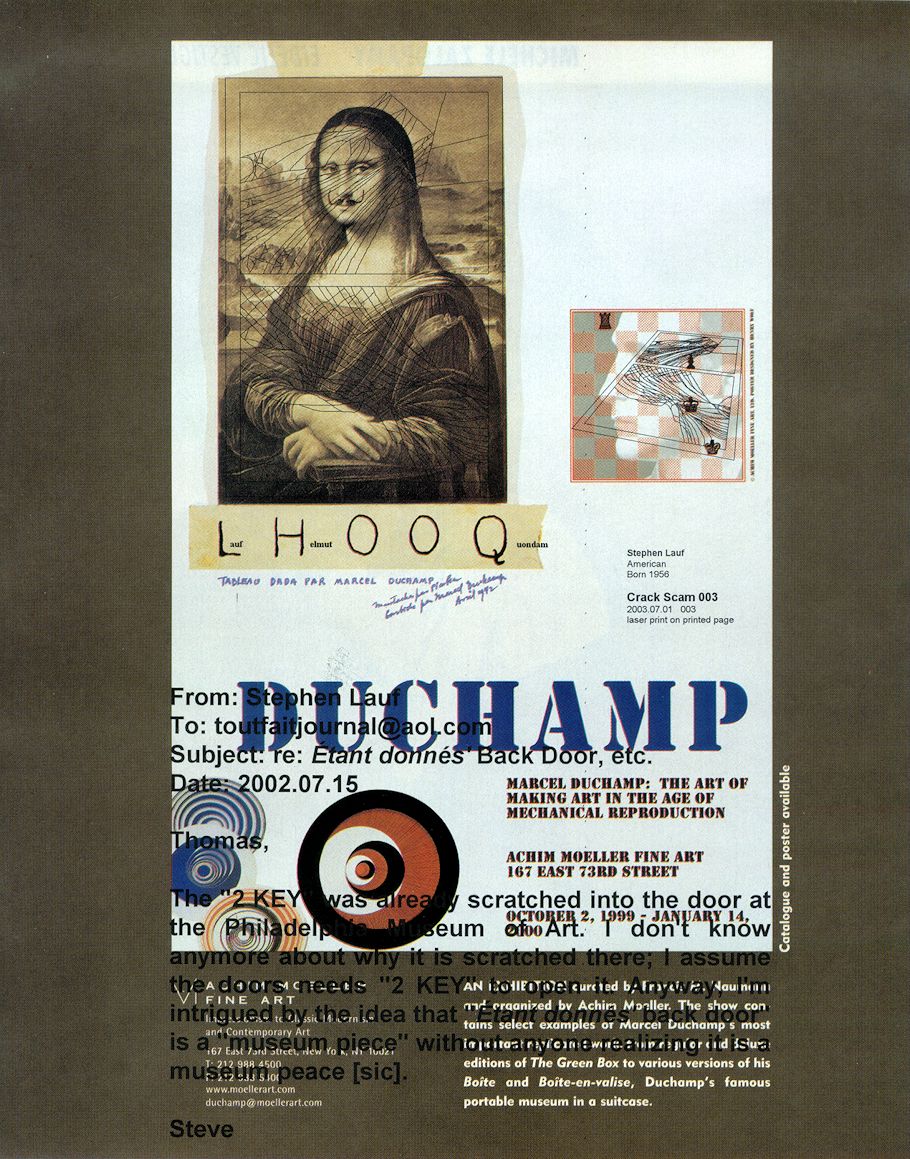
2003.07.01

2026.07.13
 
2024.07.25

2026.08.08

2026.09.10

2026.10.12

2026.10.22

2026.10.23

2026.10.27
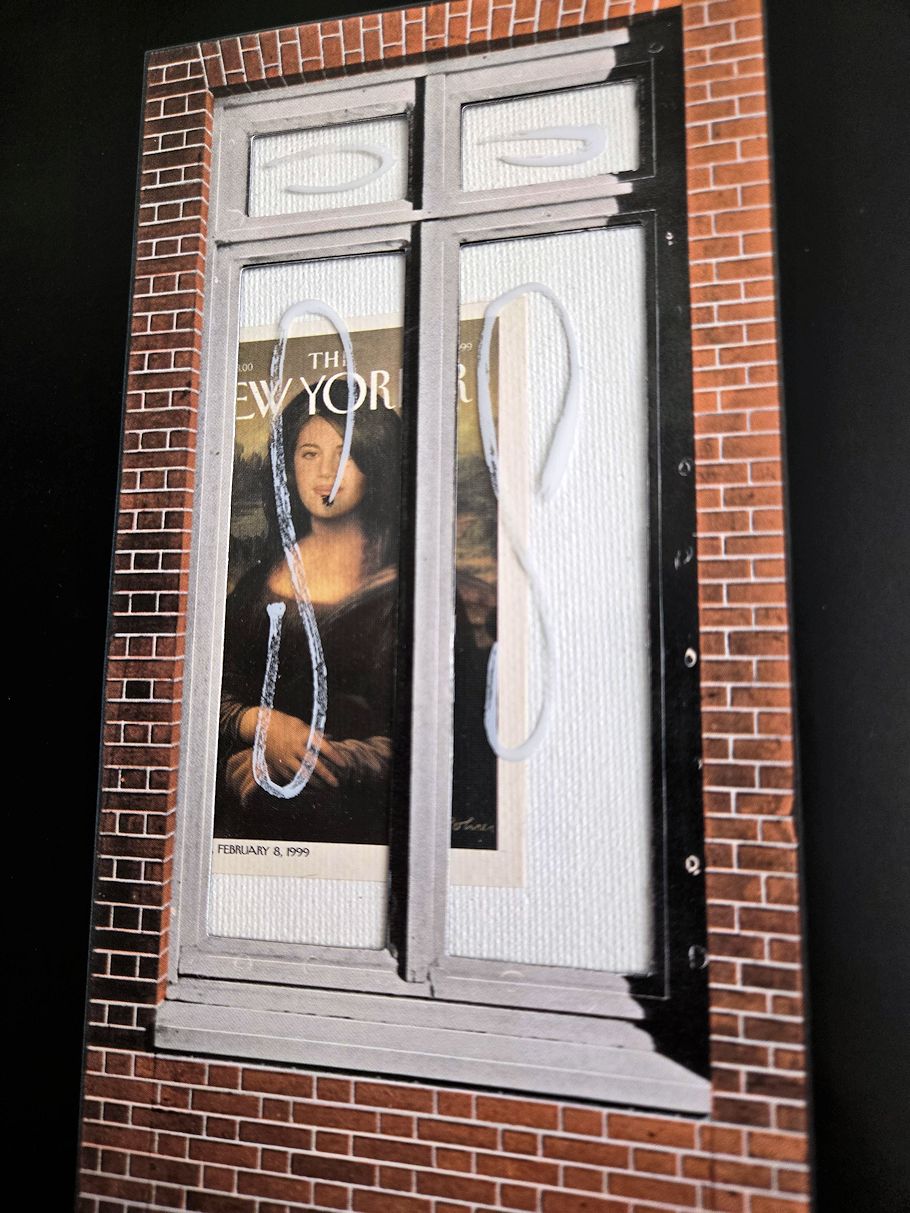
2026.02.05

2026.02.12

2026.02.20
2023.11.08
From The Discovery of Piranesi's Final Project
8 November 2023 Wednesday
There was some election results talk in the morning, and then mention of the electric bus crash.
"Oh yeah, where did that happen?"
"Where Nancy Pelosi's from."
"San Francisco."
George unexpectedly joined in.
"Steve, who's the artist/musician that did the song San Francisco?"
"Ahhh. . .The Village People."
To my surprise George started laughing, "Yeah, The Village People," and George rarely laughs.
And then I started singing the words "San Francisco," "Y.M.C.A" and "In the Navy." That's literally all I could remember, but then I remembered: "You know, Bruce Jenner was in a movie with The Village People, Can't Stop the Music, 1980."
"You mean Kaitlyn Jenner."
Oh boy, talk about changing history.
In the afternoon, I unexpectedly met Ro and Steve at the supermarket, and, again, there wasn't a moment when one of us wasn't saying something.
In the evening, I was thinking how, with the end of The Discovery of Piranesi's Final Project, there also comes the unburdening of my ever again having to wonder whether I'll fulfill the long-time ambition and desire of writing a major work on Giovanni Battista Piranesi. Having now done it is indeed a relief, and likewise an unexpected gratification because I never imagined writing about Laura Piranesi and Francesco Piranesi as well.
And one more unexpected thing: The Timepiece of Humanity right now on exhibit at GES-2 House of Culture, Moscow affording the potential to shift from thinking about the making and changing of history to thinking about the making and changing of the future.
2018.11.08
page paintings

006

010
2011.11.08
Quondam's Fifteenth Anniversary


2005.11.08
It rocked Eisenman on his chair...
The following is part of an unexpected email I received about an hour ago.
I am a student at the Yale Graduate school of Architecture. We have [Peter] Eisenman as a professor and he makes us analyse, among others, Piranesi's Campo Marzio. Along with my own analysis, I used some of the more striking parts of your very interesting and excellent analysis. It rocked Eisenman on his chair and he is now inquiring into your analysis, of which he had not heard.
2004.11.08
Re: Concrete Comedy: A Primer
Perhaps it's just me, but if I were to write (for an 'international' art magazine) about metabolic imagination, for example, I'd (at least try to) do it metabolically, even.
1988
Barry Bergdoll Lequeu: An Architectural Enigma review Journal of the Society of Architectural Historians
4/4
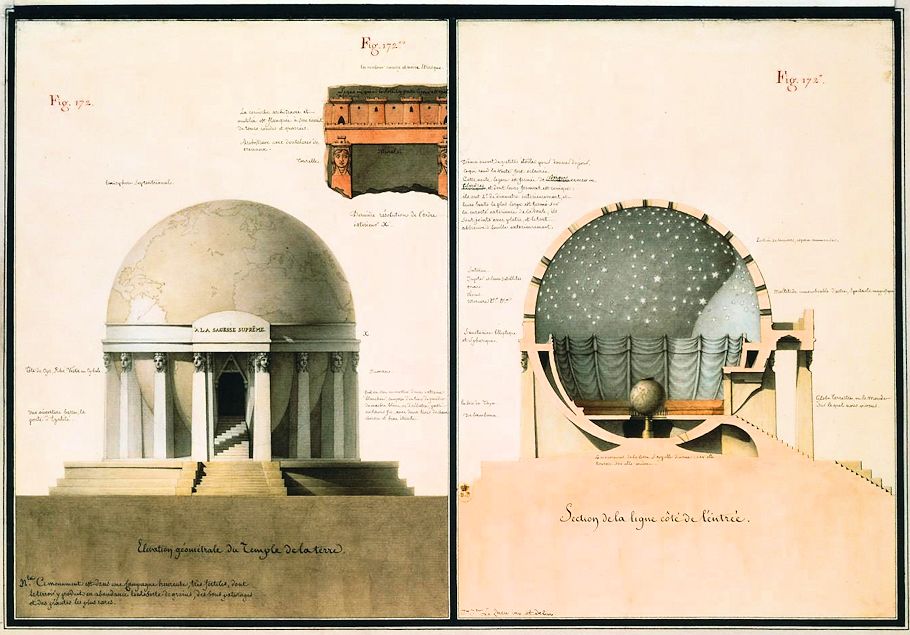
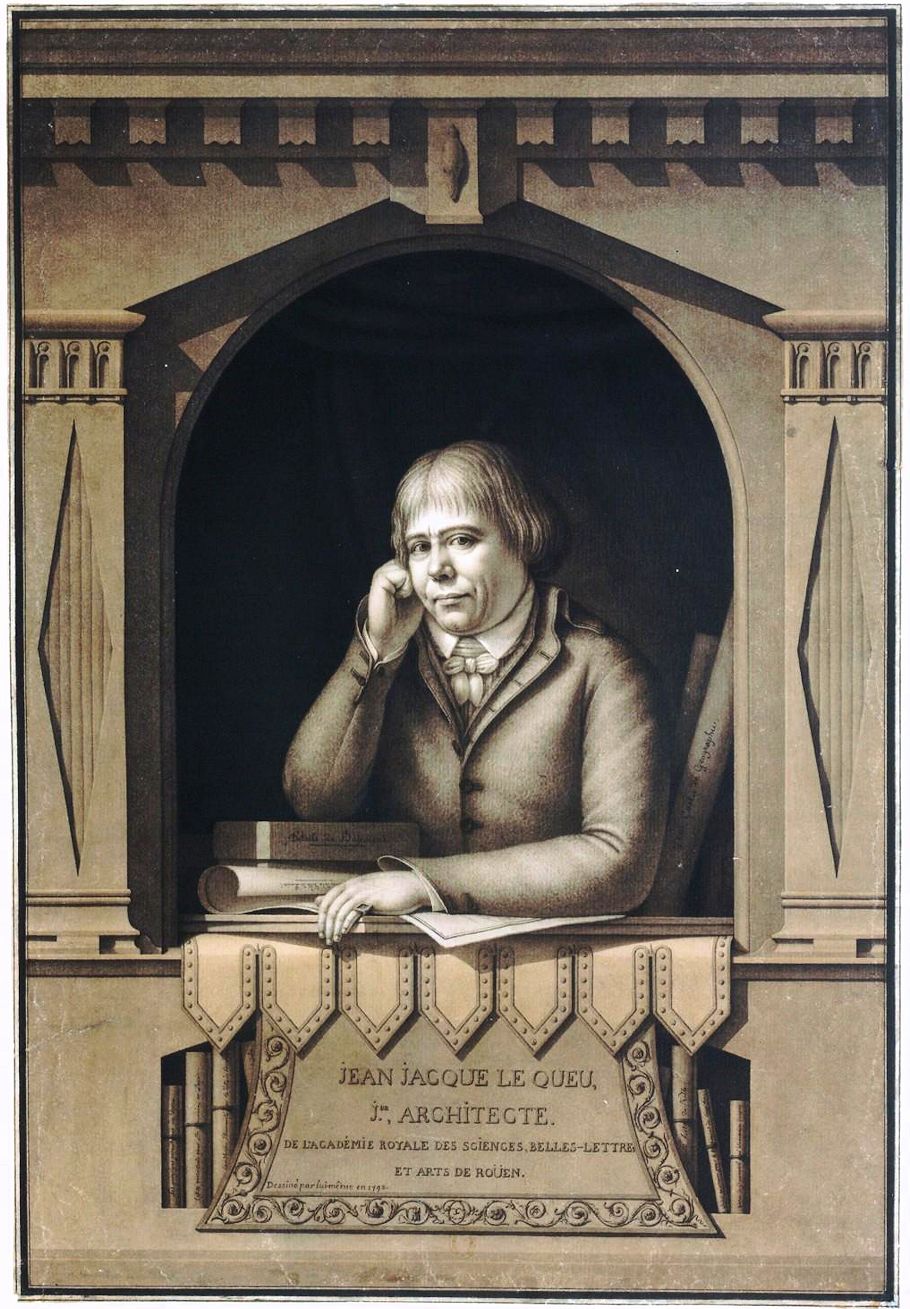
All of this might seem tremendously self-referential had Duboy not discovered a polemical edge to Duchamp's antics. After all, Lequeu was an architect whose real or fictional existence scarcely changes our understanding of the architectural mainstream of the Enlightenment, even if a very different analysis might have revealed much of its darker underside. But the brilliant aspect of Duboy's work is the exposé it offers, equally
subtle, on the historiography of "visionary" or "revolutionary" classicism: The period of supposed tampering with the Lequeu bequest coincides precisely with the official "rediscovery" of Lequeu by the historian Emil Kaufmann, who first cast Lequeu along with Boullée and Ledoux in the progressive scenario of his polemical Von Ledoux bis Le Corbusier of 1933. With Kaufmann was created that notion that the geometric, severe neoclassicism of the eve of the French Revolution anticipated the purism of the early modern movement. The so-called "revolutionary" architects were prophets who had enjoyed a vision of the Holy Land of abstract white "autonomous" architecture, soon to be eclipsed by the eclecticism and ornamental excesses of the 19th century. Kaufmann could scarcely be aware that the material he was presenting might be in part the creation of a
modern-day jokester who had planted the seeds of an elaborate and punning attack on Le Corbusier, left quietly in place for some later kindred spirit to disentangle. Duboy presents compelling evidence that Lequeu's erotic plates already contained a heavy dose of parody of contemporaries from the aesthetic theoretician Le Camus de Mezières to the optimistic Condillac, one inspired in part by Piranesi's sharp and sometimes scatological attacks on his opponents in the Etruscan controversy. But the real irony emerges in Duboy's suggestion that another level of sardonic polemic is interwoven by a later hand. "Turning himself into an 'architectural draughtsman' like Lequeu, Duchamp was to be the most violent opponent of what he called Le Corbusier's nudisme, an all-too-blatant apologia for Machine Civilization" (p. 91). The ultimate irony then is that Lequeu rode to fame on the coattails of Ledoux and Boullée as one of the prophets of purism, a historiographical irony that is but one of the unsolved enigmas in the overlapping worlds of arcane word games, acidic humor, and pornographic wit nowhere laid totally bare even in Duboy's engrossing text.
1967.11.08
1967. Wednesday, New York City
When Yo arrives at Kennedy airport, a week before the opening of her exhibition, she has instructions from Teeny to take a porter after going through customs and to tell him that she wants a taxi. Teeny will be waiting in the hall before the taxis, standing under a huge Calder hanging from the ceiling. If they miss each other, Yo is to telephone 28 West 10th Street. After consulting with Yo, Teeny has reserved room 907 at the hotel nearby [21.10.1967].
Ephemerides
1966.11.08
1966. Tuesday, New York City
"In complete agreement to change the dates and to start with Rouen in April and to finish the Paris exhibition around 15 July [1.11.1966]," confirms Duchamp, replying to Mile Olga Popovitch. For her official letter requesting loans, Duchamp gives her Dr Evan Turner's correct title, director of the Philadelphia Museum of Art, and adds: "Good luck and please keep me informed."
Ephemerides
1965.11.08
1965. Monday, New York City
Invited to tea or a drink at five-twenty, Monique Fong arrives at 28 West 10th Street and the Duchamps tell her that Robert Rauschenberg has not replied and they do not know if he is coming. "He travels a great deal," explains Marcel, "or he's a Monsieur who doesn't reply to letters..."
The conversation turns to Paris and the "assassination" of Duchamp at the Galerie Creuze [6.10.1965] which, according to Monique, Marcel recounts with his customary grace: "It's the man's right," he declares. André Breton's anger, Marcel believes, is explained by his terror of old age and death.
Ephemerides
1947.11.08
1947. Saturday, New York City
In the afternoon between two-thirty and six Marcel poses for Frederick Kiesler. The result, made of a galaxy of rectangles covering eight sheets of paper, is a full-length portrait of Marcel stripped to the waist in a characteristic, relaxed pose, his hands in his trouser pockets.
Ephemerides
|